


This article is a sponsored feature from Mining.com.au partner ABx Group. It is not financial advice. Talk to a registered financial expert before making investment decisions.
From its origins as a pure-play bauxite explorer to a company now advancing three businesses, ABx Group (ASX:ABX) has laid the foundations to drive end users to its door.
Severe global bauxite supply constraints and the fact that ABx has previously mined bauxite and can potentially bring its mines into operation fairly quickly has seen customer enquiries increase.
Managing Director Mark Cooksey says ABx has had many discussions with potential offtakers, but the recent supply chain constraints have increased these even further.
“Our small bauxite mine in Tasmania could be operating in 2025, subject to achieving final planning approval,” he tells Mining.com.au.
“This bauxite will be supplied to cement and fertiliser plants.”
Cooksey is referring to the 5.7-million-tonne DL130 Bauxite Project in northern Tasmania, which is covered by a formal agreement with all landholders, has been granted environmental approval and is waiting on final approval of the planning permit application by the Meander Valley Council.
In September 2023, ABx secured a five-year agreement to supply a forecasted 90,000 to 120,000 tonnes of cement-grade bauxite from the mine to Adelaide Brighton Cement’s Birkenhead cement manufacturing operation in South Australia.

The company previously mined cement and fertiliser-grade bauxite at its Bald Hill Project in Tasmania between 2015 and 2020 and has since fully rehabilitated the site at the conclusion of operations.
In parallel, ABx is investigating the potential for a direct shipping ore (DSO) operation at its 37-million-tonne Sunrise Bauxite Project in Queensland.
DSO describes minerals that can be dug up, transported to port and loaded straight onto a ship without the need for processing. This minimises capital and operating costs and reduces the time to reach production. This can reduce the risk and improve the economic return of a project.
“For the Sunrise Project in Binjour, Queensland, we have intensively studied options for near-term production,” Cooksey notes. “It is possible to commence production in 2026.”
ABx has mapped out a plan for 1.2 million tonnes of production each year at 42% aluminium oxide and 5.2% silicon oxide that would be exported through the Port of Bundaberg 200km away.
The company also owns the Taralga Bauxite Project in New South Wales, which hosts a resource of 37.9 million tonnes.
Guinea, China drive bauxite disruption
From September 2024 to January 2025, the price of bauxite delivered from Guinea to China increased more than 50% to just below US$120 ($183) a tonne. Since July 2023, the price has jumped over 80%.
“The supply disruptions are being driven by decisions in Guinea and China,” Cooksey explains.
“In Guinea, the government is restricting bauxite exports to encourage companies to construct alumina refineries in the country.”
A dispute between the Guinea Government and Emirates Global Aluminium has restricted exports from subsidiary Guinea Alumina Corporation’s (GAC) bauxite mine and has also reportedly resulted in supply to EGA being restricted from other Guinea mines.
Meanwhile, China is shuttering operations and its bauxite resources are declining.
“In China, many small mines have been closed for not meeting environmental standards,” Cooksey says.
“As decisions can change quickly, ABx is positioning itself to take advantage of near-term opportunities. The recent bauxite price spike provides an opportunity to accelerate the development of ABx’s bauxite projects.”
“As decisions can change quickly, ABx is positioning itself to take advantage of near-term opportunities”
Guinea is the world’s largest exporter of bauxite, mainly to China, and Australia is the second largest producer and exporter, according to the Australian Aluminium Council.
With China’s resources declining and Guinea restricting exports, buyers will be looking more closely at Australia, which has much lower freight costs than Guinea.
There are also limited bauxite prospects globally, with ABx having its foot on two of the few prospects in Australia. Another two exploration-stage projects are located in Guinea and Cameroon.
Cooksey says the long-term structural trend is that bauxite demand is continuing to increase, and there are limited opportunities for new supply.
“This suggests that prices could increase over the long term,” he says.
Turning waste into critical feed material
From an initial sole focus on bauxite mining, ABx saw an opportunity to expand further down the bauxite-aluminium supply chain to address an environmental dilemma facing aluminium producers while generating a valuable end product in short supply.
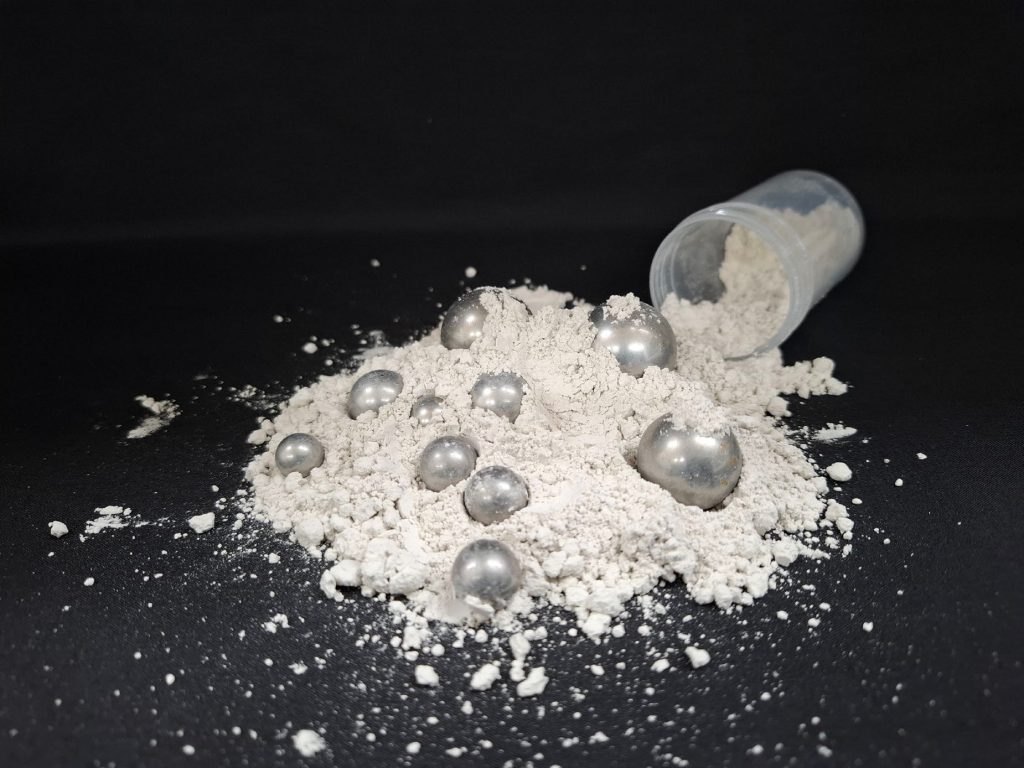
In the aluminium smelting process, a liquid bath is used to dissolve the alumina, allowing it to be converted to aluminium metal using electricity. During this process excess bath material is produced which contains about 50% fluorine.
ABx’s 83% owned refining technology subsidiary ALCORE has developed a process to recycle fluorine waste into industrial chemicals from this excess bath.
One of these industrial chemicals is hydrogen fluoride, which is an essential chemical for aluminium metal production.
Australia is the largest producer of primary aluminium metal without its own domestic aluminium fluoride production, so aluminium smelters in the country rely entirely on imported aluminium fluoride. Over 80% of that supply comes from China.
“The ALCORE opportunity came about because we were looking for alternative markets for bauxite other than alumina refining,” Cooksey says.
“We had an idea to convert bauxite directly into aluminium fluoride. Subsequently, we established that a lower cost source of fluorine was essential, and identified excess aluminium smelter bath as an ideal source.”
Earlier this year, ALCORE secured a lease agreement with Rio Tinto (ASX:RIO) Aluminium for an industrial facility adjacent to the Bell Bay aluminium smelter in northern Tasmania.
The deal provides the company with an ideal location for its pilot plant and a steady supply of bath waste from the Bell Bay smelter.
Rare earths add strategic dimension
The third opportunity came from the fact that the company’s bauxite is associated with clay, which can also host valuable rare earths.
“The rare earths opportunity came about because we recognised that ionic adsorption clay deposits were becoming more important, and we knew that our bauxite was associated with clay,” Cooksey tells this news service.
The rare earths market has had a shake-up in 2025, with China restricting exports of high-demand rare earths such as dysprosium and terbium – both of which are critical for high-performance magnets used in military technologies and offshore wind turbines.
Of the rare earths, dysprosium has the most acute supply risk, according to ABx.
China currently dominates the global rare earth market, refining almost 100% of the world’s dysprosium and terbium. The export controls have further highlighted the urgency for alternative, secure, and sustainable sources of these critical minerals.
“For all mineral products, it is critical to understand customer needs,” Cooksey says.
“Although there are global markets, in most cases a supplier still needs a specific customer to decide to purchase the supplier’s specific product. Therefore suppliers like ABx need to deeply understand the technical and commercial requirements of its customers.”
ABx has an ionic absorption clay rare earth resource with high heavy rare earth content in Tasmania. The company also has already established strong relationships with potential processing operations in the US.
In September 2024, ABx signed a memorandum of understanding to work towards a binding agreement for the supply of mixed rare earth carbonate from its Deep Leads Rare Earth Project in Tasmania to Canada-based Ucore Rare Metals (TSX-V:UCU).
The Deep Leads project has a resource of 89 million tonnes grading 844 parts per million total rare earth oxides.
Desorption tests conducted by the Australian Nuclear Science and Technology Organisation showed the highest extractions under relatively neutral conditions reported from any clay-hosted resource in Australia.
ABx says this means its resource has the highest ionic proportion of any clay-hosted rare earths resource in Australia. The deposit also contains the highest dysprosium and terbium grade of any ionic clay rare earths deposit in Australia and among the highest globally, according to the company.
Cooksey says ABx’s diversification into aluminium fluoride and rare earths was a combination of a deliberate hedge and a natural progression from the company’s original bauxite exploration.
“We monitor global minerals markets to identify and evaluate potential opportunities,” he says.
“Each opportunity is first evaluated on its own merits; it should be attractive as a stand-alone project or business. Then we assess whether it complements our existing projects.
“Having more than one project or business provides diversification, which makes ABx more resilient to changes in one business. However, it can create complexity. In ABx’s case, we are effectively managing the three businesses and creating multiple opportunities for shareholders.”
Write to Angela East at Mining.com.au
Images: Mining.com.au & ABx Group