Apple’s iPhone boom highlights critical minerals powering smartphones
Apple’s (NASDAQ:AAPL) iPhone sales are doing more than boosting the...
15 November 2026



| Company name: | Glencore |
| Ticker: | ASX:GLC (also LSE:GLEN and JSE:GLN) |
| Sector: | Diversified mining and commodity trading |
| Key projects: | Mount Isa, McArthur River, Murrin Murrin, Australian coal, Collahuasi, Antamina, Kamoto Copper Company |
| Headquarters: | Baar, Switzerland |
Glencore (ASX:GLC) is one of the world’s largest natural resource companies, combining a global mining business with one of the biggest commodity trading operations in the world. It mines and markets copper, cobalt, zinc, lead, nickel, ferrochrome, and coal, and also trades oil, gas, and agricultural products through its marketing arm. In Australia, it is the country’s largest coal producer and a leading producer of zinc, lead, nickel, and cobalt, with operations in Queensland, New South Wales, Western Australia, and the Northern Territory.
Glencore began trading on the ASX on 14 October 2026, so many Australian investors are now searching for the Glencore share price, ASX GLC news, and how the company compares with BHP Group (ASX:BHP) and Rio Tinto (ASX:RIO). This page explains what the company does and brings together Mining.com.au’s coverage of Glencore as new stories are published.
The business began in 1974 as a commodity trading firm founded by Marc Rich in Switzerland. Its managers bought the company in 1994 and renamed it Glencore. Over the following years it moved from pure trading into mining by taking stakes in the assets that supplied its marketing business. In May 2011, Glencore listed in London and Hong Kong, and in 2013 it merged with Xstrata, the mining company in which it already held a large stake. That deal brought major Australian assets, including Mount Isa, McArthur River, and a large coal portfolio, into the group.
More recently, the company acquired a 77% interest in Elk Valley Resources, the steelmaking coal business of Teck Resources (NYSE:TECK), in 2024. In January 2026, Glencore confirmed preliminary talks with Rio Tinto on a possible combination, but the talks ended in February 2026 after the two sides could not agree on terms.
The company’s Australian listing is a secondary listing. Glencore’s ordinary shares are listed on the London Stock Exchange, and investors on the ASX buy CHESS Depositary Interests (CDIs), each representing one London-listed share. CHESS is the ASX’s Clearing House Electronic Subregister System, which settles Australian share trades. No new shares were issued as part of the listing. Glencore also has a secondary listing in Johannesburg.
Copper sits at the centre of Glencore’s growth plans, and the company aims to lift annual production to about 1 million tonnes (Mt) by the end of 2028. Its mining business also produces cobalt, zinc, lead, and nickel, along with ferrochrome in South Africa. Glencore is one of the world’s largest exporters of seaborne thermal coal and also mines steelmaking coal in Australia and Canada.
Mount Isa Mines in north-west Queensland is the hub of Glencore’s Australian metals business. Its underground copper mines closed in July 2025 after about 70 years of production, but the George Fisher zinc mine continues to operate. The Mount Isa copper smelter now processes copper concentrates bought from other miners, and its anodes are refined into copper cathode at Townsville. In October 2025, the federal and Queensland governments committed up to $600 million over three years to keep the smelter and refinery running.
In the Northern Territory, McArthur River is one of the world’s largest zinc mines. It produced 132,900 tonnes of zinc in concentrate in the first half of 2026 and ships its product from the Bing Bong loading facility on the Gulf of Carpentaria. At Murrin Murrin in WA, Glencore produces nickel and cobalt metal, exporting through Kwinana, south of Perth.
Coal is the largest part of the Australian business by volume. Glencore runs mines across Queensland and NSW, including Hail Creek in the Bowen Basin, Ulan in the Central West region, and Mangoola in the Hunter Valley. In the first half of 2026, its Australian coal operations exported 25.8Mt of thermal coal and produced 3.2Mt of steelmaking coal. The company has also outlined plans for $2.5 billion of capital investment in the Mount Isa region over six years.
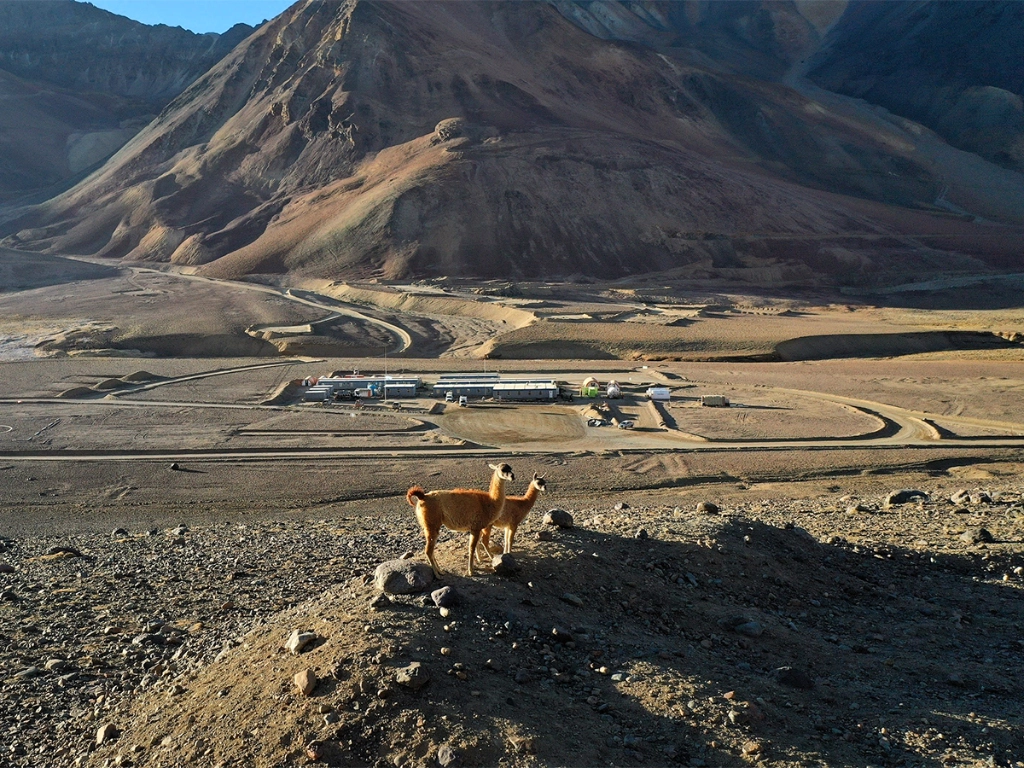
Outside Australia, Glencore’s largest copper assets include stakes in Collahuasi in Chile and Antamina in Peru, the Antapaccay operation in Peru, and the Kamoto Copper Company and Mutanda mines in the Democratic Republic of the Congo (DRC). The DRC operations also make Glencore one of the world’s biggest cobalt producers. In Argentina, the company is restarting the Alumbrera mine, with first production now expected in the second half of 2027.
The group’s coal business extends to Cerrejón in Colombia and Elk Valley Resources in British Columbia, Canada. Its marketing division buys, sells, and transports commodities produced by Glencore and by third parties, and in recent weeks has provided funding and offtake agreements to companies such as Orion Minerals (ASX:ORN) and Cornish Metals (AIM:CUSN).
Gary Nagle has been chief executive officer since July 2021, when he succeeded long-time chief executive Ivan Glasenberg. Nagle previously ran Glencore’s coal business and has led the company’s push into copper growth and its decision to list in Australia. Kalidas Madhavpeddi has been non-executive chairman since 2021. A former senior executive at Phelps Dodge, he also sits on the board of Sinda (NYSE:SIND), which listed on the New York Stock Exchange in June 2026.
Glencore reports in US dollars. For the six months to 30 June 2026, the company reported revenue of US$174.4 billion ($249.2 billion) and adjusted earnings before interest, tax, depreciation, and amortisation (EBITDA) of US$10.1 billion, up 86% on the same period in 2025. Net income attributable to shareholders was US$4.4 billion, compared with a loss a year earlier, while net debt fell to US$10.2 billion. The board declared a special distribution of US$0.085 per share and launched a new US$500 million share buyback.
Own-sourced copper production rose 15% to 397,000 tonnes in the first half, while cobalt and zinc output fell. On its first day of ASX trading, Glencore’s CDIs closed at $11.23. Australian dollar conversions on this page use the exchange rate implied by that closing price. Large miners still carry risk, as earnings move with commodity prices, trading conditions, and regulatory change, and Glencore’s thermal coal exposure is a factor some investors weigh carefully. This is general information, not financial advice. Readers should consider their own circumstances or seek independent advice before making any investment decision.
Operating in countries such as the DRC brings significant governance and community challenges, and Glencore’s record has drawn scrutiny. In 2022, the company pleaded guilty to bribery and market manipulation charges in the US, the UK, and Brazil, and has since overhauled its compliance program and publishes an annual ethics and compliance report. On climate, Glencore has chosen to retain its coal business over time rather than spin it off, and it has an ambition to reach net zero total emissions by 2050. That approach remains a point of debate for Australian superannuation funds, several of which have reduced their exposure to thermal coal.
Mining.com.au follows Glencore’s ASX trading, results, production reports, deals, and offtake agreements, along with the copper, cobalt, and coal markets that shape its earnings. The articles tagged to this page update as new stories are published, giving investors, suppliers, and industry professionals a single place to follow the company’s activity in Australia and around the world.
Image Credit: glencore.com

Stay Informed on up-to-the-minute mining news
Events
The Future Minerals Forum brings together governments, industry leaders, financiers, multilateral organisations,...