

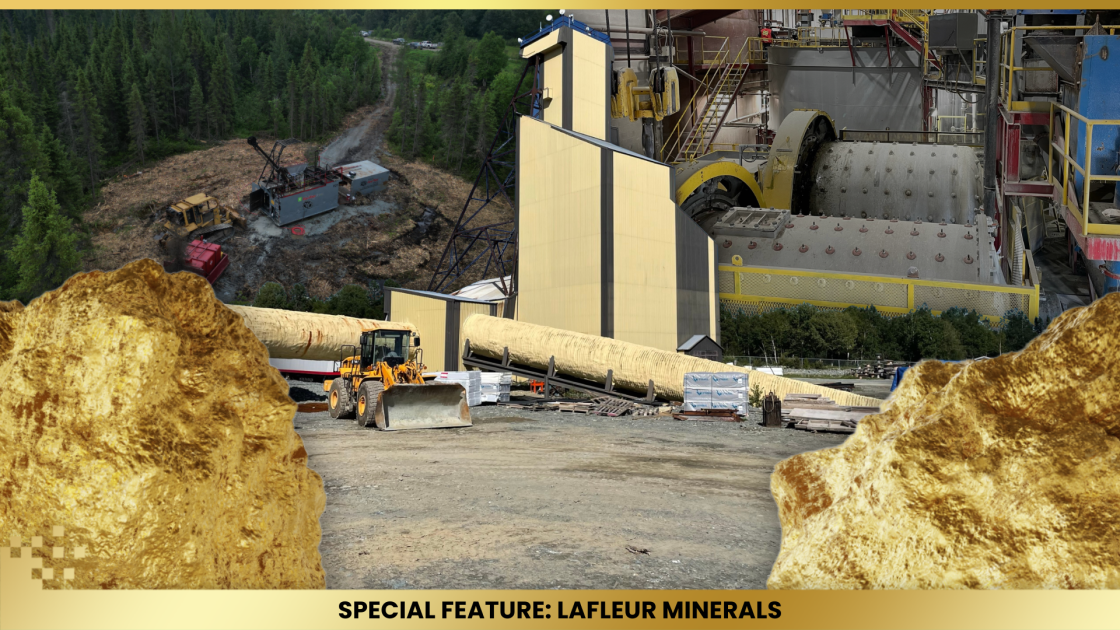
This article is a sponsored feature from Mining.com.au partner LaFleur Minerals. It is not financial advice. Talk to a registered financial expert before making investment decisions.
“This is a timing story, and it’s a gold story, and it’s an investment story all in one,” says Kal Malhi, Chairman of LaFleur Minerals (CSE:LFLR).
Malhi’s confidence stems from LaFleur’s strategic positioning at a rare market intersection: the company controls a wholly-owned permitted gold processing facility in Val d’Or, Québec—a top-tier jurisdiction — and is moving toward near-term production right as gold prices and margins hit peak levels. Malhi was interviewed in January after the company closed an upsized and oversubscribed financing for over C$7.8 million, capital to be used for gold production restart.
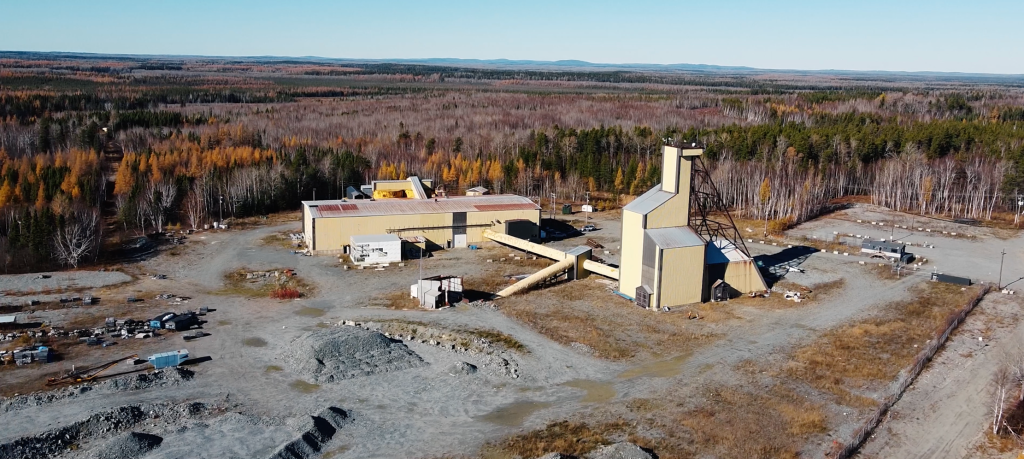
LaFleur controls a fully permitted and recently refurbished gold processing facility in Québec’s Abitibi Gold Belt, one of the most prolific gold regions on the planet. While most junior projects spend a decade or more navigating discovery, permitting, and construction, LaFleur is targeting first gold production in early 2026 — less than three years after the company was formed.
Where the global average time from discovery to production runs roughly 16 to 18 years, according to S&P Global Market Intelligence, LaFleur’s timeline is measured in months, not decades.
Beginnings in a different gold market
LaFleur’s story begins during a very different gold market.
In 2023, gold spent much of the year below US$2,000 an ounce. Monarch Mining—having invested roughly C$20 million to upgrade the Beacon Gold Mill near Val-d’Or — entered bankruptcy shortly after restarting production.
“Monarch had upgraded their gold mill for about C$20 million and started producing when gold was about US$1,800,” Malhi explains. “They couldn’t get over their debt hurdles, and they were put into bankruptcy. We were able to go in and buy the Beacon Gold Mill and the Swanson Gold deposit and structure that into a public company.”
That transaction became the foundation of LaFleur Minerals — named both as a nod to Québec’s French heritage and to hockey legend Guy Lafleur. More importantly, it delivered something exceptionally rare: ownership of a fully permitted gold mill acquired at a fraction of replacement cost. Luck played a role, Malhi admits — but so did decisiveness.
“Now gold is trading above US$5,000,” notes Malhi.
Restarting The Mill
The first critical step in LaFleur’s restart plan was securing the necessary capital to move from maintenance to active production. The company recently closed a financing round to fund the process. In January the company announced an upsized financing of C$7.8 million.
With funding in place, the company is finalising the technical and economic roadmap for the facility. Two major firms are steering this phase: Bumigeme, a Montreal-based engineering firm that Malhi points out “actually authored a report that valued our mill,” and Environmental Resources Management (ERM).
ERM is currently completing a preliminary economic assessment (PEA) expected by early February, with recent updates released on 26 January, noting major advancements including technical studies evaluating the restart of gold production and retrofits to increase production rates at Beacon, as well as establishing requirements to expand its existing permitted tailings facility, all key components supporting the upcoming PEA which is in the final stage.
Malhi emphasises the importance of this study, noting it will “summarise the economics of producing gold at the Beacon Gold Mill with supply from Swanson”.
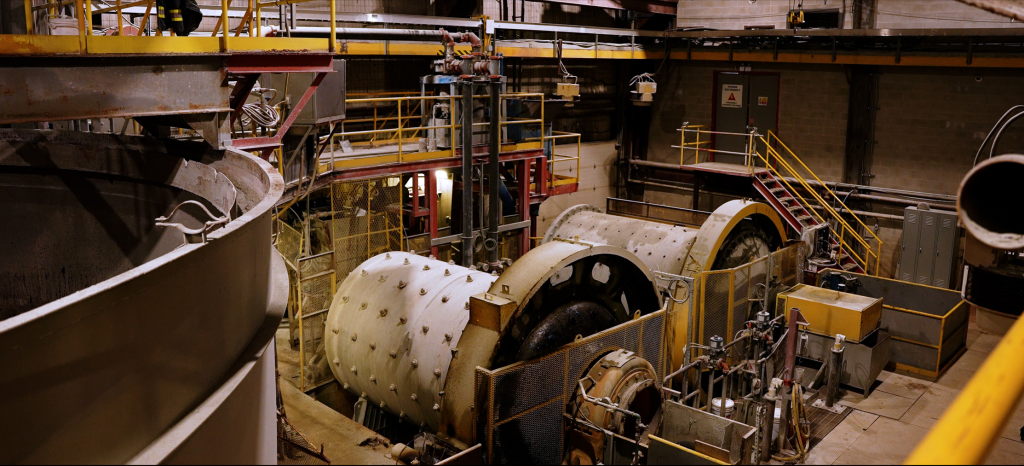
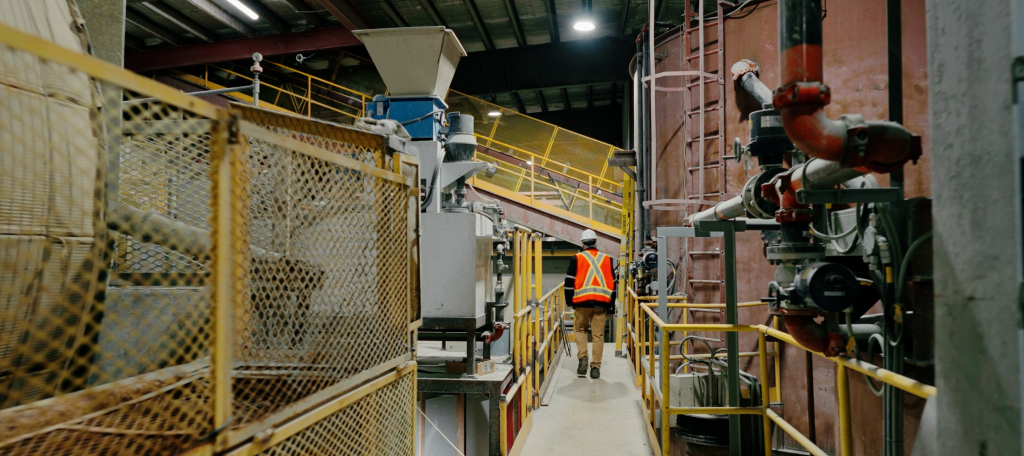
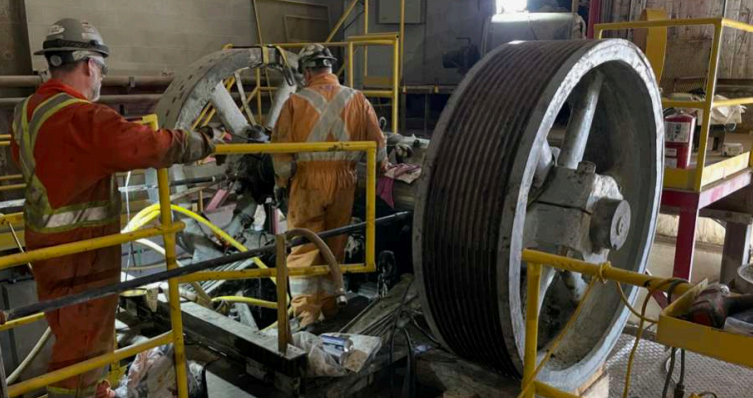
Physically, the mill requires a targeted refurbishment before it can handle daily throughput. Although the previous owners, Monarch Mining, invested roughly C$20 million into the facility in 2022, LaFleur has budgeted a smaller sum for final upgrades. Work is focused on bringing the circuit back online and ensuring the processing system is optimised for the incoming ore.
The final step is the commencement of operations. The company is targeting a specific window for its first gold pour, with Malhi confirming, “Our target is to produce ounces March-April of 2026.” Once operational, Malhi says the focus will be on achieving steady-state production. “I think now it’s just a matter of… pouring the first ounces.”
Feeding The Mill
The mill’s initial feed will come from LaFleur’s wholly-owned Swanson Gold deposit, located roughly 50km from Beacon in the heart of the Abitibi Belt. The project spans more than 18,000 hectares and includes multiple gold and critical-metal prospects consolidated from Monarch Mining, Abcourt Mines, and Globex Mining.
Swanson hosts a combined indicated and inferred mineral resource of approximately 188,000 ounces of gold, per the latest NI 43-101 technical report, and LaFleur plans to extract a bulk sample to supply the mill once final permits are received.
“We’re getting that ready for a bulk sample,” Malhi says. “That permit’s well along the way.”
Once approved, ore will be trucked directly to Beacon—linking mine and mill in a simple, low-risk operational loop.
Regarding the regulatory hurdles for this step, Malhi is optimistic, stating, “we’re also getting that ready for a bulk sample. We’re waiting on a permit… but that permit’s well along the way.”
Jurisdiction and team
Jurisdiction is central to LaFleur’s investment thesis.
“Canada has always been a leader in mining,” Malhi says. “And Québec has been a leading province —it’s politically safe, environmentally manageable, and has designated mining lands where permits are achievable. Everybody wants to be investing in locations where they know their capital is going to be safe. I think Canada and Val-d’Or are probably the safest mining jurisdictions in the world right now.”
The Val-d’Or region offers something increasingly rare in modern mining: infrastructure and a skilled workforce.
Drilling at Swanson costs roughly C$100 per metre — dramatically lower than the C$600 to C$700 per metre seen in remote jurisdictions, making the economics of LaFleur’s fully integrated operations increasingly compelling.
“Our crews can drive to site and go home at the end of the shift,” Malhi says. “That’s a massive advantage when it comes to costs, staffing, and execution.”
LaFleur is led by Kal Malhi, a veteran entrepreneur and capital markets executive who has raised more than C$300 million for early-stage companies across the mining, technology, and energy sectors. Heading up day-to-day operations is Paul Ténière, a seasoned mining executive and professional geologist with over 25 years of global experience. Ténière has led technical programs from early exploration through mine development.
Now is the time to be a gold producer
Beyond company-specific execution, LaFleur is leveraging a supportive macro backdrop.
“We’re in a world of change and chaos,” Malhi says. “In periods like this, money flows to safe-haven assets, and that’s gold.”
With geopolitical risk elevated and capital seeking stability, Malhi sees sustained support for gold prices—and heightened interest in near-term producers.
“The fact that we’re ready to produce now, not in three to five years, differentiates us,” he says. The economics are reinforced by today’s gold price environment.
“When Beacon last produced, gold was at US$1,800. We’re anticipating production costs in that range—C$1,800 to C$2,000—which gives us a lot of leeway.”
With gold trading above US$5,000, LaFleur expects significant margin potential once production begins.
“That’s the beautiful part. There’s a lot of economic room for us.”
Write to Michael McCrae at Mining.com.au
Images: LaFleur Minerals