


Appian Capital Advisory, a London-based mining and metals investment advisory firm, has expanded its presence in Africa by opening its first office in Casablanca, Morocco.
This comes just weeks after the firm announced plans to mobilise US$5–7 billion ($7.5–10.5 billion) globally in the next 12 to 24 months, with roughly US$2 billion of that allocated to Africa.
The Casablanca office represents the firm’s growing interest in African resources, with founder and CEO Michael Scherb highlighting the country’s stable regulatory framework and growing demand for patient, technically led capital for new projects.
“This office brings us closer to the opportunities we’re already tracking and strengthens our relationship with key stakeholders in the market,” Scherb says.
To date, the firm has made six investments in Africa across precious and base metals. It currently holds three investments, having exited three others amid geopolitical instability in the countries where those projects were located.
In October 2025, Appian partnered with the International Finance Corporation to launch a US$1 billion fund supporting responsible development of critical minerals and mining projects in emerging markets, with a focus on Africa and Latin America.
Scherb has included Morocco, Namibia, and Botswana as key jurisdictions of interest, but also notes that he is open to opportunities in Ghana, Côte d’Ivoire, Mauritania, and Senegal.
Morocco has emerged as a key country of focus for critical minerals, as previously reported, positioning itself as a manufacturing hub for the European automotive market.
It’s also seen as a gateway connecting Africa with both Europe and Asia, serving as a key trade and logistics bridge.
Geological wealth meets investment bottlenecks
The African continent holds over a quarter of the world’s known reserves of critical minerals, including high-grade copper deposits, manganese, bauxite, lithium, platinum group metals, cobalt, and more.
A report by McKinsey & Company notes that Africa’s strategic place within the international critical minerals supply chain is growing as demand accelerates and the industry faces an overall tightening of supply.
The report highlights key structural challenges impeding the growth of Africa’s mining sector, including infrastructure, logistics, and operating environments, while suggesting ways Africa can convert its mineral wealth into a sustained competitive advantage.
These include a coordinated clustering approach, stronger capabilities in capital project execution and operational excellence, and technological innovation to accelerate development. This could help unlock up to US$40 billion in incremental value across Africa’s mining ecosystem, creating over three million jobs by 2035, and increasing the continent’s gross domestic product by 4%.
As global demand for critical minerals accelerates, Africa is well positioned to supply the market, provided development aligns with a growing continental push for local value-addition.
The G20 Critical Minerals Framework, adopted at the G20 Summit in Johannesburg in 2025, frames inclusive growth and sustainable development as key to the global minerals trade.
Across Africa, governments are increasingly backing that push with strict trade controls to capture more domestic value — from Zimbabwe’s suspension of raw mineral and lithium concentrate exports and the Democratic Republic of the Congo’s (DRC) cobalt export quotas, to beneficiation mandates in Namibia and Malawi.
McKinsey notes that despite the continent’s geological advantage, early-stage mine development continues to lag behind other global leaders, including Australia, Chile, and the US.
Annual exploration spending in Africa over the past five years averaged US$1.2 billion, about half the amount invested in Australia (US$2 billion) and Canada (US$2.2 billion).
The report notes that country risk, legal and jurisdictional uncertainty, permitting delays, and community conflict often stall projects. Underinvestment in key infrastructure is another major constraint.
“As a result of these factors, Africa’s natural geological advantage is being eroded,” the McKinsey report states.
“Less than 10% of the continent’s US$9 billion critical mineral projects pipeline has secured financing or progressed to the construction and feasibility stages, according to MineSpans data, reflecting investor caution.
“What investment there is tends to be concentrated in a small number of large, tier-one assets that can absorb risk and deliver scale.”
As a result, capital is flowing mainly to what the market considers safer mega-projects, while little is reaching the early-stage exploration projects needed to deliver the next generation of critical mineral supply.
Building a competitive critical minerals ecosystem
McKinsey has outlined three key actions to help Africa become the competitive critical minerals powerhouse it has the potential to be.
On clustering, McKinsey suggests that integrating investments and sharing infrastructure, such as ports and processing plants, could increase ore production volumes by up to 5% while reducing unit production costs by about 20%. Clustering is also seen as a way to minimise risk for investors.
“Four key critical mineral clusters in southern Africa could unlock between US$15 billion and US$20 billion in revenue and create about 1.85 million jobs in the medium term, while West African bauxite and iron ore clusters could add another US$17 billion and create 1.3 million jobs across Guinea, Liberia, and Sierra Leone.”
The second key action is to streamline operating costs and optimise major investments. McKinsey reports that optimising project scope through right-sizing the starter project, phased development, and prioritising shallower or higher-grade ore can reduce a project’s capital expenditure by up to 15%.
It provides the example of Ivanhoe Mines’ (TSX:IVN) Kamoa-Kakula Copper Complex, co-owned by Zijin Mining (HKEX:2899), Crystal River, and the DRC Government. The project exceeded production targets through a focus on operational and capital expenditure management.
Finally, McKinsey suggests technological innovation as potentially the fastest way for African mining operators to improve productivity, with technology capable of increasing throughput by 12–22% while reducing operational expenditures by 8–13%.
AI and data analytics are already playing a significant role, while McKinsey & Company estimates that deployment of generative AI at scale could add between US$5.3 billion and US$8.5 billion in economic value to Africa’s mining sector.
As global competition for critical minerals intensifies, Africa’s mining sector stands at an inflection point.
Africa holds the resources the world needs, but converting that geological endowment into investable, competitive operations depends on addressing gaps in infrastructure, permitting, and political stability.
By pairing patient private capital, such as Appian Capital Advisory’s US$2 billion regional push, with shared infrastructure clusters, disciplined project execution, and smart technology, operators and governments can unlock more early-stage exploration projects. These measures can also help build a resilient and sustainable supply chain that delivers lasting economic value across the continent.
Write to Amy Rotman at Mining.com.au
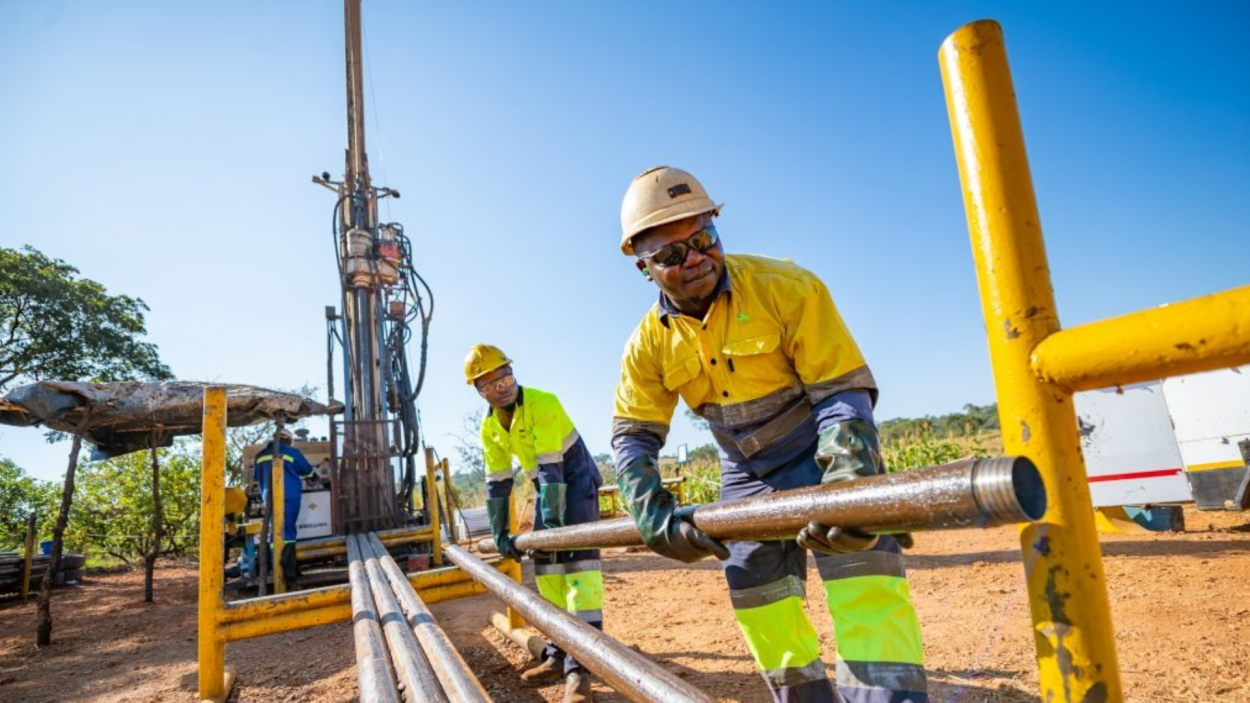
Main image: Ivanhoe Mines


