


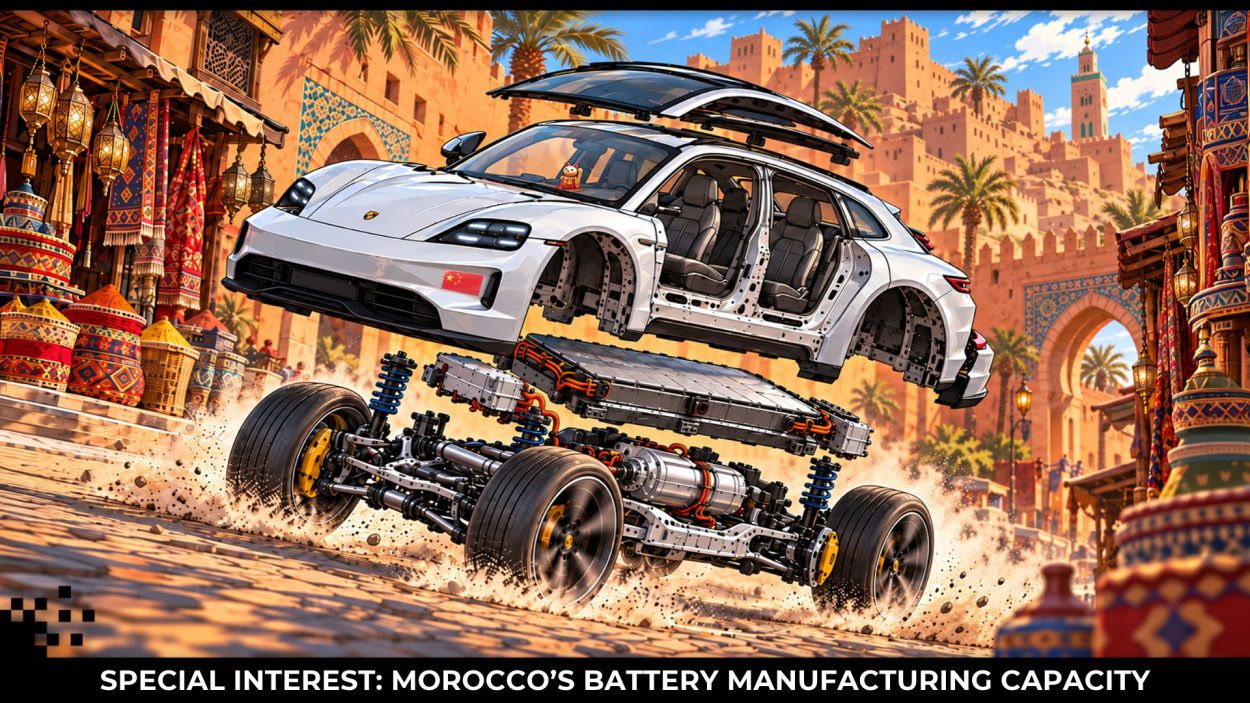
As the global race to secure electric vehicle (EV) supply chains intensifies, Morocco is positioning itself as a manufacturing hub linking Europe’s automotive market with Asia’s battery industry.
Morocco’s emergence as a battery manufacturing hub could create new opportunities for lithium miners, developers, and explorers as the country positions itself to supply Europe’s EV market.
Chinese companies are investing US$6 billion ($8.5 billion) in Morocco’s battery supply chain, as previously reported.
The investment targets battery cell and cathode material production as manufacturers seek to diversify their operations amid changing trade dynamics between China and the European Union (EU).
With the EU imposing additional duties on Chinese-made EVs, manufacturers are looking at production locations that offer access to international markets while reducing exposure to trade restrictions.
An established automotive industry
Morocco’s push into battery manufacturing builds on an established automotive export industry. The country is Africa’s largest vehicle manufacturing and export hub, generating MAD 93.7 billion ($13.5 billion) in exports by mid-2026.
The country is now gaining a greater share of the EV supply chain through the latest investment by Chinese companies.
The investment also signals the growing opportunities for the broader mining sector, as the expansion of battery manufacturing capacity increases the importance of securing reliable supplies of lithium for the energy transition.
For lithium producers, the Morocco investment could provide an additional source of demand as battery manufacturing capacity expands beyond established production centres in China.
However, the lithium sourcing arrangements for the planned facilities have not been disclosed, leaving uncertainty over which producers could benefit and how much additional demand the projects could generate.
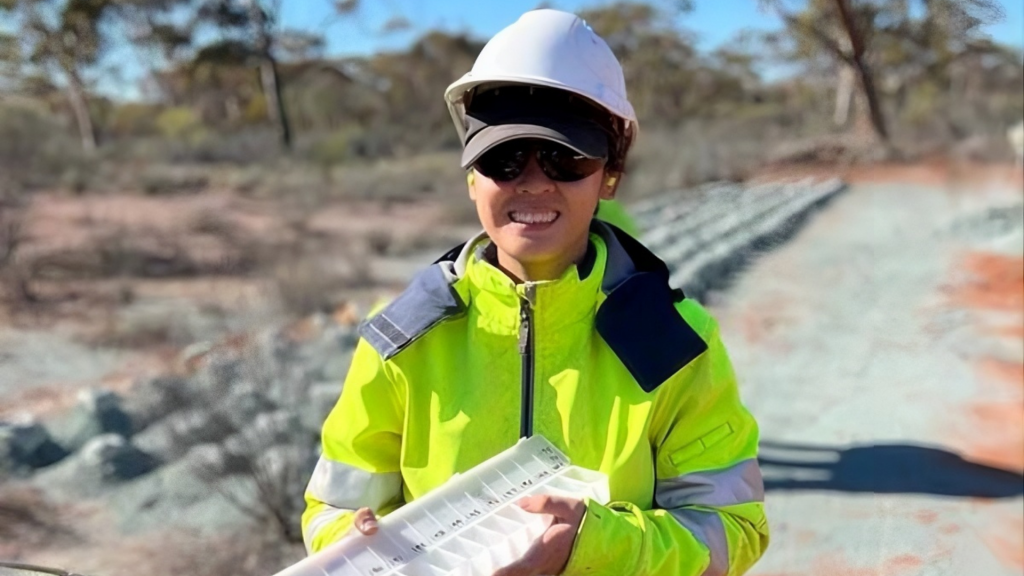
Developers: Global Lithium
For developers and explorers, the expansion of battery manufacturing offers a potential opportunity for projects seeking a place in the evolving global supply chain.
As Morocco expands its downstream manufacturing capacity, projects that can show competitive production costs, reliable supply, and a clear pathway to production could position themselves to attract potential customers and strategic partners.
Global Lithium Resources (ASX:GL1) is focused on derisking its Manna Lithium Project in Western Australia, ahead of a final investment decision expected by the end of 2026.
Manna boasts a 51.6 million tonne (Mt) mineral resource base, which is considered the third-largest in the Kalgoorlie lithium province.
An optimised Definitive Feasibility Study (DFS) for the project has been completed, confirming Manna has a long mine life and is an economically robust lithium asset.
Developers such as Global Lithium are demonstrating their projects’ economic viability, particularly as new production capacity enters the market.

Explorers: Venari Minerals
Meanwhile, for explorers, the latest investment in Morocco presents a potential longer-term demand signal rather than an immediate commercial opportunity.
Increased battery manufacturing capacity could support the investment case for new lithium discoveries. However, explorers will still need to establish commercially viable resources before they can benefit from any additional demand.
For example, Venari Minerals (ASX:VMS) is advancing its Red Mountain Lithium Project in Nevada, US, which hosts a resource of 500Mt @ 0.61% lithium carbonate equivalent.
The company recently announced it is seeking US Department of War (DoW) funding for Red Mountain. This follows its admission to the US Defense Industrial Base Consortium.
Membership provides access to DoW grant opportunities and a network of defence contractors to support domestic strategic mineral supply chains. It also enables faster collaboration between government, industry, academia, and non-traditional suppliers.
Venari has advanced metallurgical test work at the project, with Scoping Study-level leachability results showing that the lithium is highly leachable. Beneficiation test work also revealed that mineralisation has ‘excellent’ characteristics for removing gangue minerals while retaining valuable lithium-bearing clays and reducing acid consumption.
The extent to which Morocco’s expansion translates into opportunities for explorers depends on various factors. These include whether manufacturers seek to secure future supply through partnerships, project investments, or offtake agreements.
Morocco’s ambitions could create another source of demand for lithium across the supply chain.
However, the impact on individual companies will depend on the scale of additional consumption, the origin of raw materials, and how quickly Morocco’s planned battery manufacturing capacity moves into production.
Write to Aaliyah Rogan at Mining.com.au
Main image: Mining.com.au


