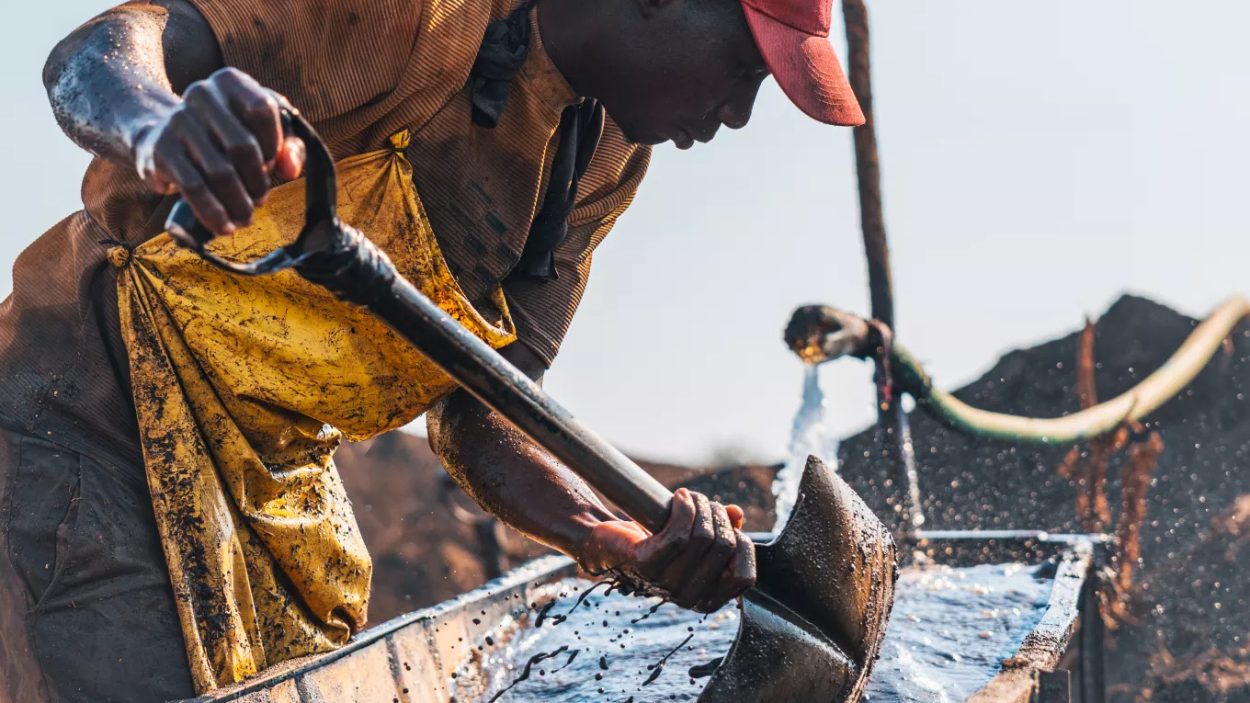
Formalising Africa’s artisanal and small-scale mining (ASM) sector will require more than issuing licences if miners are to participate in growing critical minerals supply chains, according to a new paper.
The Natural Resources Defense Council (NDRC) and The Impact Facility say legal recognition must be accompanied by access to finance, geological information, suitable technology, support services, and formal markets.
The paper estimates more than 10 million people work directly in ASM across sub-Saharan Africa, while at least a further 60 million depend indirectly on the sector. These estimates draw on World Bank and Pact research published in 2019 rather than a new workforce survey.
The organisations expect ASM to become increasingly relevant to the extraction and trade of cobalt, copper, lithium, tin, tantalum, tungsten, and other minerals used in the energy transition.
Activity varies across the continent. The Great Lakes region remains important for tin, tantalum, and tungsten, while the Central African Copperbelt is a major cobalt and copper source. Southern Africa is becoming more prominent in lithium, graphite, and chromium.
However, the paper identifies persistent risks including unsafe labour conditions, illicit trade, water contamination, deforestation, poor tailings management, and limited access to finance.
It argues that regulatory systems modelled on large-scale mining can exclude small operators when licensing and compliance requirements are too costly or complex. Formalisation should instead be adapted to local operating conditions and linked with practical economic incentives, the authors say.
NRDC is a US environmental advocacy organisation. The Impact Facility is a UK-registered social enterprise and investment vehicle focused on artisanal mining communities.
Write to France Pinzon at Mining.com.au
Main image: Natural Resources Defense Council