


Australia’s mining and METS (mining equipment, technology, and services) sector continue ‘punching above its weight’ and contribute an estimated 15% of Australia’s GDP, creating more than 1.1 million jobs, of which METS businesses employ 300,000 people directly.
As part one of the METS Insight: State of Mining Review discovers, Australia is a major centre of exploration, however it experienced a 29% reduction in drillholes to 18,196 last year, according to Hays Mining Industry Report Australia FY24-25.
Ahead of the International Mining and Resources Conference (IMARC) in Sydney on 29-31 October, Mining.com.au in part two again canvasses the whole spectrum of the market – from executives of billion-dollar listed companies to privately held startups trying to get a foothold in the industry.
In the 2022-23 financial year, the mining sector contributed $74 billion to federal, state, and territory government coffers – $9.3 billion higher than the previous year. An EY report, commissioned by the Minerals Council of Australia, reveals that in 2022-23, the sector contributed $42.5 billion in company tax and a decade-high $31.5 billion in royalties.
Over the past decade, mining has significantly bolstered Australia’s economic growth, with a cumulative $356.6 billion in company tax ($206.2 billion) and royalties ($150.4 billion).
The industry’s prowess in extracting and processing minerals gives Australia a dominant position in the global export market. Australian Bureau of Statistics (ABS) data shows mining contributed a record $455 billion in export revenue in the 2022-23 financial year.
According to the Hays Mining Industry Report Australia FY24-25, despite the headwinds facing the industry, Australia is “punching above its weight” (with some segments of the market).
Commenting on the state of the market to Mining.com.au, regional director for Hays North Queensland, Ged Welsh, says the competitive landscape remains robust, with some notable changes compared to 2023.
“In hard rock mining across the East Coast, we’re still experiencing a candidate shortage, particularly in skilled roles related to gold mining, despite some easing in the availability of mechanical maintenance trades and skilled operators,” Welsh tells this news service.
“Regional Victoria and Queensland have seen new investments and the re-opening of mines, driven by positive movements in gold and copper prices. However, the coal sector continues to face challenges in sourcing maintenance trades and technical engineering services.
“One significant shift this year is the increased competition for skilled candidates, particularly as major urban and metro projects, especially in the public sector, are offering increasingly higher wages. This has made it more challenging for mining companies to attract and retain top talent in certain areas.”

Knocking out the competition
According to Cherylyn Russell, company director a mill relining systems original equipment manufacturer Russell Mineral Equipment (RME), the company remains dedicated to maximising the performance potential of the RME Mill Relining System for every customer – past, present and future – regardless of broader market sentiment.
“Mill operators, mining companies, reline crews and EPCMs globally continue to prefer purchasing the RME Mill Relining System because our engineering and manufacturing quality deliver durable, reliable assets for this critical maintenance task,” she tells Mining.com.au.
“RME’s Mill Relining System includes solutions for every mill type and size to suit all budgets. This, combined with our global Site Services and Optimisation teams, ensures the lowest total cost of ownership for mill relining assets over the life of the mine.”
Russell says this is a very attractive proposition for customers in the current high-cost environment.
Since its beginnings in 1985, the RME Mill Relining System – a suite of products for every step on the mill relining path – has reduced customers’ relining times and created safer working environments.
At the larger end of town, global industrials technology company Imdex (ASX:IMD) has achieved record revenue with 8% growth, against a backdrop where exploration activity contracted by 29%.
“It’s less of a commodity-driven situation and more of a rising cost, access to funds situation”
Imdex CEO Paul House recently told Mining.com.au that inflation is impacting the sector which has led to a rising cost environment over the past few years and exploration spend has dropped some 5-7%.
“With Imdex revenue being up, that’s obviously a good counter to that,” House said.
“Exploration activity has been down very much in the junior sector. So, gold juniors, or western Canada or Western Australia, probably more recently some of the areas around nickel, there’s been a pullback in lithium, broadly it’s the rising cost environment.
“It’s less of a commodity-driven situation and more of a rising cost, access to funds situation.”
In its latest financial report, a highlight for Imdex was the 14% uplift in revenue from Devico technologies. The strategic alignment of Devico’s directional drilling technology and sensors within the broader Imdex technology stack has enabled the company to win market share and create new opportunities throughout our global network.

Hitting innovation targets
Speaking to Mining.com.au at Diggers & Dealers in Kalgoorlie in August, Imdex Head of Product Mark Gabbitus said the company is “always on the lookout” for potential M&A deals as part of its longstanding growth strategy, aptly called ABC – acquisitions, build, and collaboration.
Since incorporation in 1980, Imdex has been innovating and developing technology, with more than 600 years of collective geoscience expertise across the global mining-technology industry.
Imdex’s ABC growth strategy enables it to adjust quickly and expand its service offerings either organically or inorganically, such as via R&D investment.
Australia’s mining industry is widely recognised for embracing technological advancements and sustainable practices while pioneering various technologies, such as inventing the vanadium flow battery.
Maria Skyllas-Kazacos is a Professor in the School of Chemical Sciences and Engineering and is lauded for her pioneering work of the vanadium battery, which she created at the University of New South Wales in the 1980s.
Imdex’s ability to sustain our R&D investment is an advantage few smaller METS companies enjoy.
“In the diversified industrials sector, which you’d argue that Imdex is, our investment in R&D is more consistent with a diversified industrials tech business; our end customer market just so happens to be the mining and resources sector,” says House.
“So our R&D investment is consistent with diversified industrial plays. Mining services is more contract and labour driven, capital intensive whereas the Imdex model not so much.”
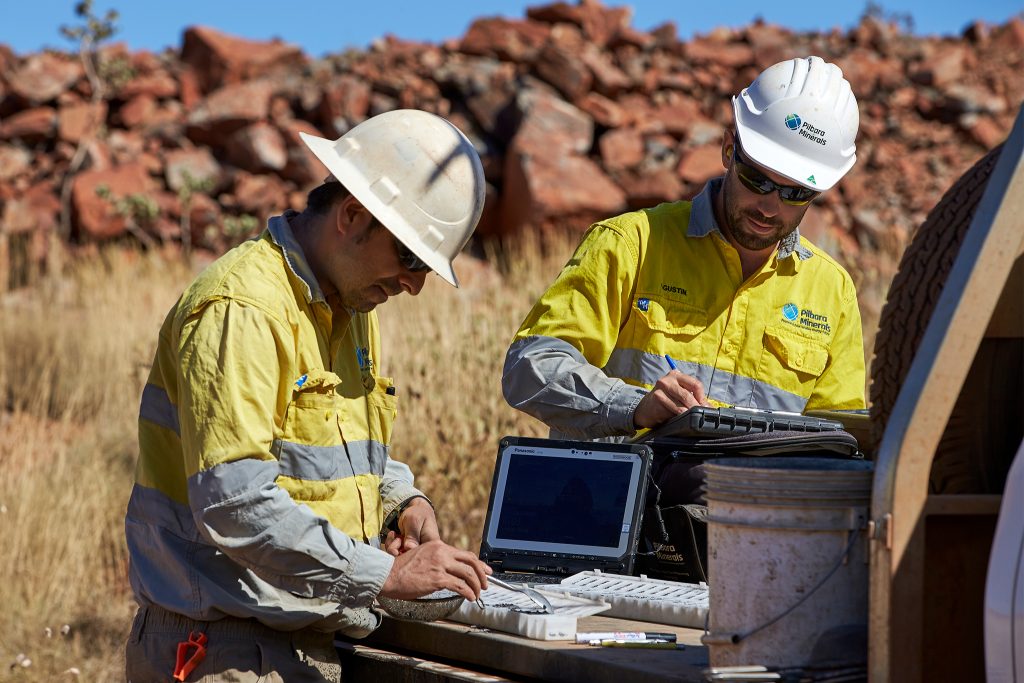
significant strides
The mining and METS industries have made significant strides in adopting a range of technologies such as automation, artificial intelligence, and data analytics, improving efficiency, safety, and environmental impacts.
Analysis by the CSIRO released December 2023 projects an annual expenditure exceeding $4 billion on mine closure and rehabilitation activities, as about 240 Australian mines approach closure by 2040.
These closures are poised to generate demand for innovative solutions and technologies capable of leading mines towards closure, while addressing the associated diverse and often complex economic and ESG challenges.
Senior manager in CSIRO Futures and lead author of the report Enabling Mine Closure and Transitions: Opportunities for Australian Industry, Dominic Banfield, explores opportunities for Australian businesses to provide solutions to the challenges posed by mine closures, such as equipment, technology, and services.
With thousands of active and inactive mines in Australia, the demand for mine closure solutions will only increase as the industry seeks to ensure “positive closures and to transition regions to successful post-mining futures”, Banfield said at the time.
Minetek seeks to shape Australia’s mining industry’s future through investment in engineering, “groundbreaking technology” and intensive R&D.
Recently, Minetek launched a new division in Minetek Power. Drawing upon its experiences providing complex power solutions to industrial and mining operations as part of its Minetek Air and Water projects, Minetek Power is now offering complete and custom solutions to mine sites globally.
The company says Minetek Power is a direct response to the industry’s need for reliable and efficient power suppliers, and the division is focused on delivering end-to-end tailored solutions quickly, often months faster than industry-standard lead times.
In tomorrow’s (23 October) edition of the METS Insight: State of Mining Review, Mining.com.au outlines how regulatory shifts and developments in operating codes are shaping the METS and mining sectors, and we lift the veil on an area some label as lacking – standards.
Write to Adam Orlando at Mining.com.au
Images: De Grey Mining, Imdex, RME & Pilbara Minerals