


This article is a sponsored feature from Mining.com.au partner Silver North Resources Ltd. It is not financial advice. Talk to a registered financial expert before making investment decisions.
A century-long mining history and rank as Canada’s second largest historic silver mining district makes Keno Hill a good place to take a punt on a new discovery.
The district, which is famous for its high-grade deposits, has historically produced over 220 million ounces of silver. It is considered one of the richest silver-lead-zinc districts ever mined.
Production statistics recorded by the Yukon Government indicate that 4.87 million tonnes were mined between 1913 and 1989 at an average grade of 1,389 grams per tonne silver, 5.62% lead and 3.14% zinc.
Jason Weber, CEO of Silver North Resources (TSX-V:SNAG), says the company was attracted to Keno Hill because it is one of the highest grade silver producing regions in North America, has a long history of mining, and the potential for new vein discoveries still exists.
“Essentially a greenfields exploration opportunity existed within a 100-year-old silver producing district,” he tells Mining.com.au.
“Essentially a greenfields exploration opportunity existed within a 100-year-old silver producing district”
Over 65 deposits and prospects have been identified in the district. The majority of Keno Hill’s deposits are hosted within a predominantly quartzite formation known as the Basal Member of the Keno Hill Quartzite.
Silver North uncovered high-grade silver during drilling at two target areas, West Fault and Main Fault, within its Haldane Project.
The Basal Member is present at Haldane, which is located about 25km west of the main Keno Hill deposit, and is the host of the vein mineralisation identified so far.
“Essentially, the geological setting at Haldane matches that of the rest of the Keno district, including the character of veins and the mineralogy of the silver-bearing zones,” Weber explains.
At West Fault, drilling returned intercepts including 8.7m @ 311g/t silver, 0.89% lead and 1.13% zinc and higher grade intersections of 1.26m averaging 3,267g/t silver 5.8% lead and 7% zinc.
Main Fault discovery extends strike potential
The recent Main Fault discovery included three veins over a 28.4m intersection, with individual vein results including 3.05m @ 460g/t silver, 4.3% lead and 1.2% zinc. A higher grade intersection comprised 1.83m averaging 1,088g/t silver, 3.9g/t gold, 1.89% lead and 0.63% zinc.
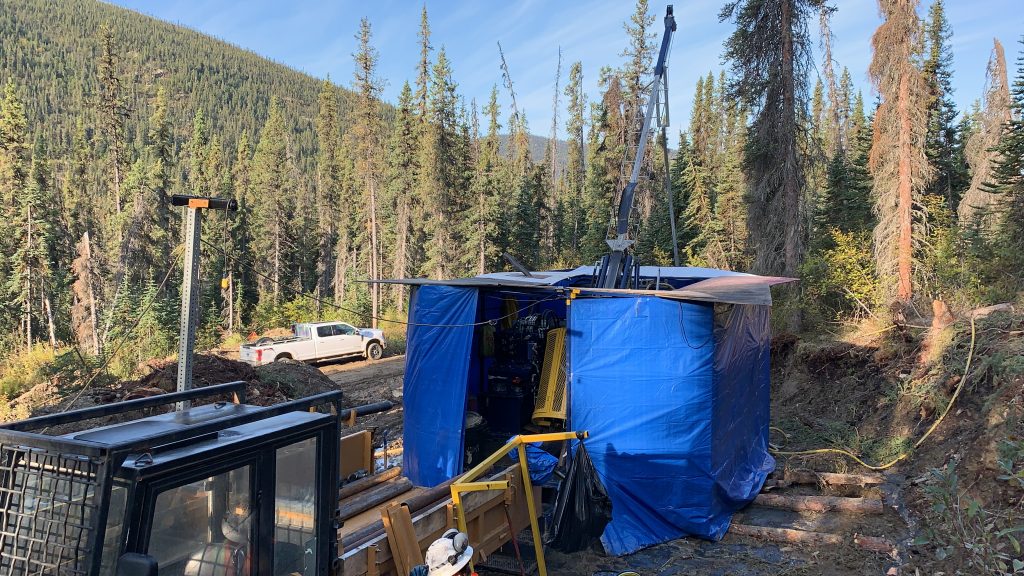
Weber says while Silver North has not yet done enough drilling on any single target to define large areas of continuity, the host structures are continuous over kilometres.
“Our West Fault discovery has been traced over 90m by 100m and our newest discovery, Main Fault, has been intersected in two holes on one section, with about 50m separating them,” he notes.
“However, on surface there are two silver-bearing showings in the Main Fault that are separated by about 300m of strike, indicating we may have at least 300m of strike potential at Main Fault.
“Cumulatively, we have over 12km of vein strike potential in the different structures we have identified, but drilling has tested less than 1km of this potential.”
Silver North believes there is potential for multiple deposits at the Haldane Project due to the small footprint and high-grade nature, as seen elsewhere in the district.
Hecla Mining Company (NYSE:HL) is the biggest player in the area. The company expects to produce between 2.7 million ounces and 3.1 million ounces of silver from its Keno Hill operations in 2025.
Hecla, which has a market capitalisation of nearly US$4 billion ($6.2 billion), is ramping up Keno Hill production in phases, aiming for 440 tons or higher per day throughput.
The operation currently hosts proved and probable reserves of 64 million ounces, measured and indicated resources of 14 million ounces and inferred resources totalling 19 million ounces.
Hecla’s work guides Silver North’s strategy
Weber says Hecla has done extensive exploration that Silver North can tap into.
“Silver North benefits from the knowledge gained over the 100-plus years of exploration within the district, but also enjoys a strong relationship with Hecla’s exploration team,” he says.
“Hecla has done some excellent research that has led to some new ideas and potential vectoring within the overall structural framework of the district and mineral zonation within the vein systems.
“Due to this work, some of the older ideas about limited depth potential of the silver mineralisation in these vein systems is now getting debunked.”
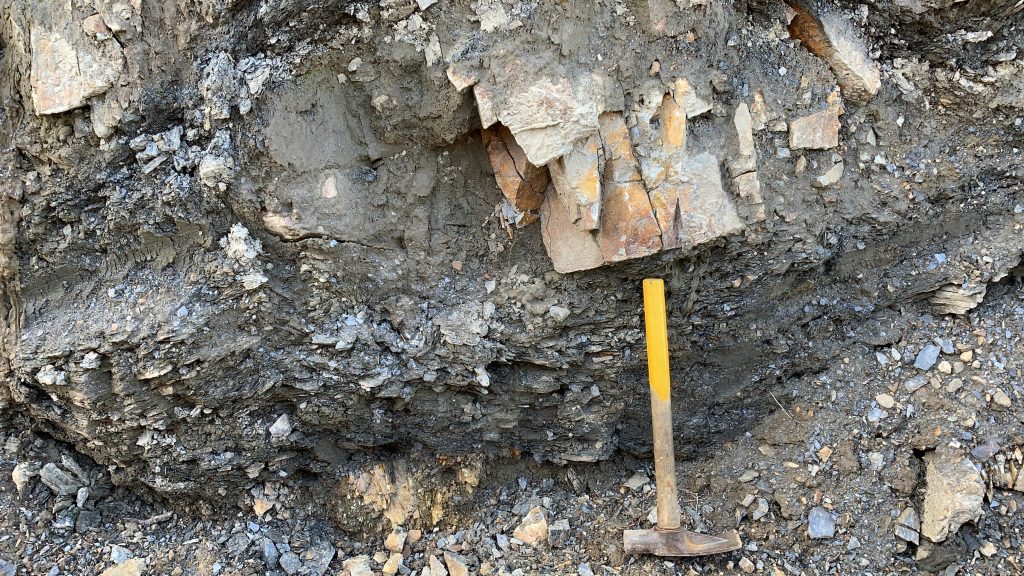
Besides access to a vast pool of exploration data, there are also future operational synergies and potential acquisition pathways that could eventuate from a major discovery at the Haldane Project.
“We believe that as Hecla upgrades the operations at Keno itself, that will reflect positively on the potential for any orebodies that may be outlined at Haldane,” Weber explains.
“Of course, a strong operation at Hecla’s Keno mines is positive for Silver North with respect to potential acquisition of any resources that Silver North may define.”
Silver North says recent work is just starting to scratch the surface of Haldane’s potential.
The Main Fault is the highest priority target, followed by West Fault and Bighorn.
Coeur invests in Tim exploration push
Silver North is also linked to another major miner, US$6.2 billion Coeur Mining (NYSE:CDE), which is funding exploration at Silver North’s Tim property in British Columbia under an earn-in agreement.
The Tim property comprises 72 mineral claims located 72km west of Watson Lake, Yukon and 19km northeast of Coeur Mining’s Silvertip deposit.
Coeur can earn up to an 80% stake in the project by spending $3.5 million on exploration over five years, making cash payments of $575,000 and completing a Feasibility Study by the eighth anniversary.
The mineralisation at the Tim property is a carbonate replacement deposit (CRD)-style resembling the mineralisation seen at Coeur’s Silvertip deposit, which hosts measured and indicated resources of 57.7 million ounces of silver and inferred resources of 16.1 million ounces.
In 2024, Coeur completed a 2,250m, six-hole drilling program that confirmed the presence of a productive CRD system with results including 3.39m @ 52.8g/t silver, 0.28g/t gold, 0.11% lead and 0.27% zinc.
The mining heavyweight is taking a district-scale approach to exploration, with recent work suggesting that both Silvertip and Tim are part of an emerging CRD district in southern Yukon and northern British Columbia.
Coeur has tripled the resource base at Silvertip since it started resource expansion efforts in 2019.
The focus for Silver North for the next six months will be the expansion of the Main Fault and Bighorn targets at the Haldane Project.
“Keno Hill continues to produce very high-grade silver results in drilling,” Weber notes.
“We feel that with the historic success to the east of us in this district, we have excellent potential to add to the district’s overall silver resource base.
“We are in the earliest stages of that – a very unique opportunity to have this scenario in a century old camp.”
Write to Angela East at Mining.com.au
Images: Mining.com.au & Silver North Resources