


This article is a sponsored feature from Mining.com.au partner Heavy Minerals. It is not financial advice. Talk to a registered financial expert before making investment decisions.
One such material garnering global attention is garnet. To many, garnet is simply a red, dazzling gem that appears in the jewellery of January-born individuals to represent their birthstone.
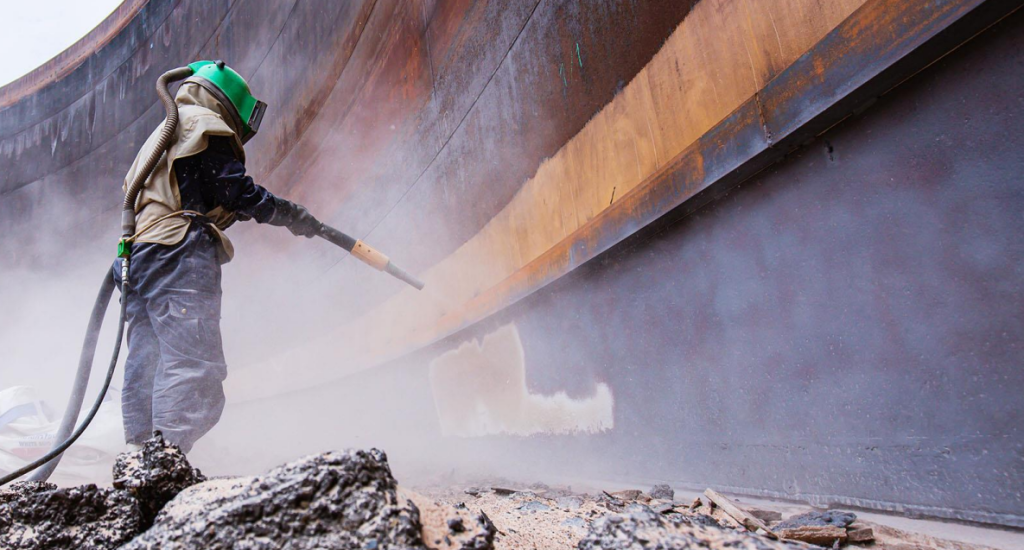
In the industrial landscape, garnet is a group of silicate minerals that is a crucial part of sectors such as environmental and manufacturing. From abrasive blasting and water-jet-assisted cutting, to sandpaper and motor vehicle manufacturing, garnet is often forgotten for its importance across society.
Business Research Insights valued the garnet market at about US$450 million ($696 million) last year, which is expected to reach US$830 million by 2033, growing at a compound annual growth rate of 7.08%.
Heavy Minerals (ASX:HVY) is one company within this niche market, focused on developing Australia’s garnet industry with its wholly owned Port Gregory and Red Hill garnet projects in Western Australia, as well as its Inhambane Mineral Sands Project located in Mozambique.

Heavy workload to achieve garnet target
Amid this backdrop, Heavy Minerals is continuing to focus on developing its Port Gregory Garnet Project to meet the growing demand for the niche commodity.
When speaking to Mining.com.au last year, CEO Andrew Taplin said following the completion of its ongoing Prefeasibility Study (PFS), the company will move towards a Bankable Feasibility Study (BFS) before advancing the mine and its cashflow for garnet production in 2027.
So how has the market reacted to Heavy’s work so far and the 2027 target?
Across the span of two days, the stock market reported an increase in the value of Heavy Minerals shares by 37.5%, as listed at $0.20 on 13 May, to $0.275 on 15 May. The company released a response to the price query on 15 May, stating that the company is unaware of any information that has not been released to the market that could impact its share price.
Instead, Heavy Minerals points the explanation towards a recent article that offers a portfolio update. The parent company of this site and associated entities own 3.805 million shares and 50,000 options in Heavy Minerals, following its investment of $50,000 to tranche one of a royalty agreement.
Heavy Minerals, which has a market capitalisation of $19.25 million, experienced a similar share price surge in June of last year that instigated a price query from ASX after a similar portfolio update, as reported by Mining.com.au.
A key point in the article that highlights the company’s prospective future is a reference to its PFS at the Port Gregory Project.
The company launched the PFS in April 2024, expected for completion at the end of last year. While there is still no update on the progress of this study, the company anticipates results, along with specific mine economics, in the near future.
Heavy is utilising its At-The-Market Subscription Agreement (ATM) with Acuity Capital to raise $100,000 via the set-off of 385,000 collateral shares that were previously issued to help progress towards its 2027 target.
The funds raised are being delegated to working capital, reducing the 3.3 million shares that Acuity Capital is required to return upon termination or maturity of the ATM.

Port Gregory no lightweight
The company’s flagship Port Gregory project is a wholly owned tenement package that spans 226km2 in the mineralogical terrain of the Hutt River Garnet area within the Mid West coastal region of Western Australia.
The project holds a JORC-compliant mineral resource estimate of 166 million tonnes @ 4% total heavy mineral concentrate with 5.9 million tonnes of contained garnet, bordering privately owned GMA Garnet Group’s Port Gregory mine and the Resource Development Group’s (ASX:RDG) Lucky Bay mine.
“The project holds a JORC-compliant mineral resource estimate of 166 million tonnes @ 4% total heavy mineral concentrate”
This zone of heavy mineral deposits are indirectly derived from crystalline igneous rocks weathered in the Archean Yilgarn Block, which were originally deposited in thick sequences of Mesozoic sediments in the Perth Basin. The Port Gregory Project lies within the northern part of the basin.
The company has identified the project to extend along the 8km Tamala Limestone belt, a belt of coastal limestone that runs inland and is composed of eolianite that was originally accumulated as coastal sand dunes.
Garnet of the almandine variety is one of the more notable presences within the sands area, along with other heavy minerals, which were expected to have been deposited in the last interglacial peak, when the sea level sat approximately 6m higher than it does today.
Green with envy at Red Hill
Heavy Minerals’ Red Hill Prospect is merely 37km south of the Port Gregory Project and is proximal to the Geraldton Port, allowing lower transport costs for future operation.
The company set an exploration target of up to 150 million tonnes of material with up to 5.4% total heavy mineral concentrate in May 2023, with cut-off grades ranging between 3% and 1% of total heavy mineral concentrate.
With dunal sands overlying the Tamala Limestone formation, Red Hill’s frontal dunes and beaches have anomalous levels of garnet and is analogous to Port Gregory. The company expects the commodity is sourced from rocks inland and has been washed down the Bowes River.
As the eastern side of the foredune zone is aeolian in nature, Heavy Minerals will continue to target this section that is analogous to mineralisation discovered at Port Gregory.
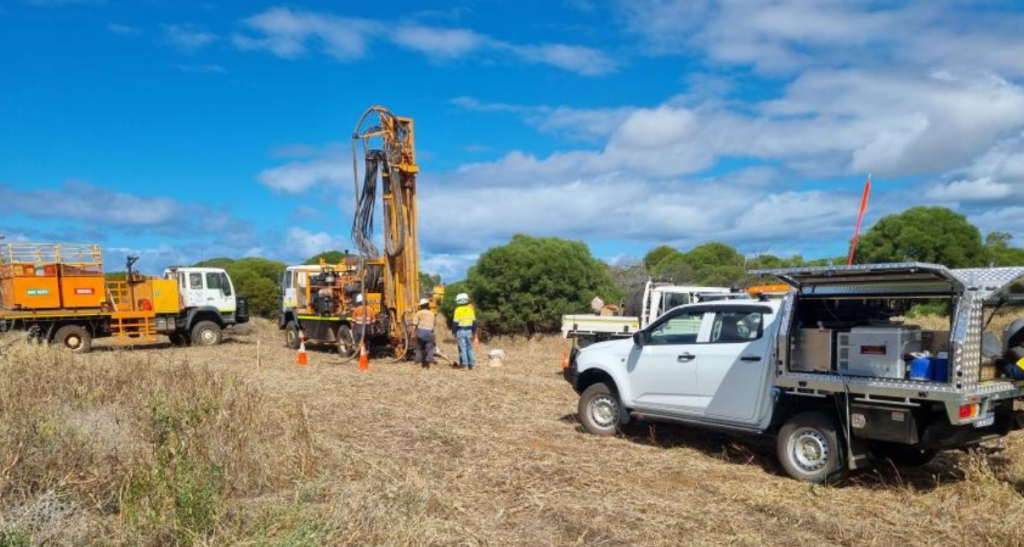
The company anticipated to begin an aircore drilling program in early 2024, with historical drilling intersections including 8.2% total heavy minerals concentrate over 20m from 21m downhole at drillhole RHAC0039 and 5.9% total heavy minerals concentrate over 15m from surface at drillhole RHAC0040.
Inhambane
Over in Mozambique, Heavy Minerals holds tenement in the southern part of the Inhambane Province, across the borders of the Inhambane and Jangamo districts. With a JORC-compliant inferred mineral resource of 90 million tonnes @ 3 total heavy mineral concentrate for a contained 2.7 million tonnes of heavy minerals, the company intends to advance its exploration for ilmenite, zircon, and rutile while still awaiting its mining licence.
This project borders the joint venture Mutamba Project by Rio Tinto (ASX:RIO) and Savannah Resources, which listed a total resource of 4.4 billion tonnes at 3.9% total heavy mineral concentrate.
Located over a seaward dune system that is trending towards landward, the tenement is separated by a drainage line. Heavy Minerals believes the most prospective aspect of the area lies where the borders adjoin Mutamba, along the eastern and southern borders.
Quaternary formations mostly produce alluvium deposits and sand dunes.
Heavy Minerals has set an exploration target of greater than 450 million tonnes, which will be drilled and assayed following the granting of a mining licence.
For now, Heavy Minerals will continue to focus on developing its Port Gregory Garnet Project to meet the growing demand for this commodity.
CEO Andrew Taplin says following the completion of its ongoing PFS, the company is targeting garnet production in 2027.
Write to Maddison Elliott at Mining.com.au
Images: Mining.com.au & Heavy Minerals