

Forrestania Resources (ASX:FRS) has spent hundreds of millions of dollars buying and refurbishing gold processing plants. Now, as bluntly noted in this week’s roasting — aka media release — from Aurenne-owned IDA Metal Investments, Forrestania faces the challenge of finding enough ore to generate a return on those considerable investments.
Mergers and acquisitions tensions run hot in the West
IDA holds an 11.04% stake in Forrestania’s current takeover target, Zenith Minerals (ASX:ZNC). In July, IDA lifted its stake from 9.43% to 11.04%, preventing the Kerry Stokes-backed Forrestania from reaching the crucial 90% threshold required to compulsorily acquire the remaining shares in ZNC.
IDA is owned by Perth-based Aurenne, a privately held group behind the well-known Mt Ida Gold Project in Western Australia’s Eastern Goldfields.
In the other corner is Forrestania, which is supported by Stokes’ Australian Capital Equity and the Roberts family of Multiplex fame.
To help ensure a reliable and economic supply of ore for its plants, Forrestania has made a bid for Zenith valued at about $79 million. This could secure another 675,000 ounces of gold for Forrestania from Zenith’s Dulcie Gold Project.
The company declared its offer unconditional in October, with the offer due to close on 12 November.
Forrestania now has a 62.04% interest in Zenith, but reaching 90% ownership would allow it to compulsorily acquire the remaining shares and take full ownership of the company. Given the tone of IDA’s release this week, that seems unlikely.
If Forrestania does fall short of 90%, it will still control the company but may have to deal with some unfriendly shareholders.
Those shareholders — namely IDA — have also raised concerns about Dulcie’s readiness to feed Forrestania’s processing plans.
“Aurenne did not consider Dulcie sufficiently advanced or compelling to combine with its developed Parker Range assets. As such it declined to submit a competing offer. That does not mean Dulcie lacks potential,” IDA’s media release says.
The question then is whether Forrestania’s appetite for acquisitions will stop with Zenith or whether it will increase its already substantial stakes in other ASX-listed explorers.
TG Metals emerges as potential takeover target
Forrestania has also been building positions in other listed explorers, with TG Metals (ASX:TG6) emerging as a particularly interesting strategic fit.
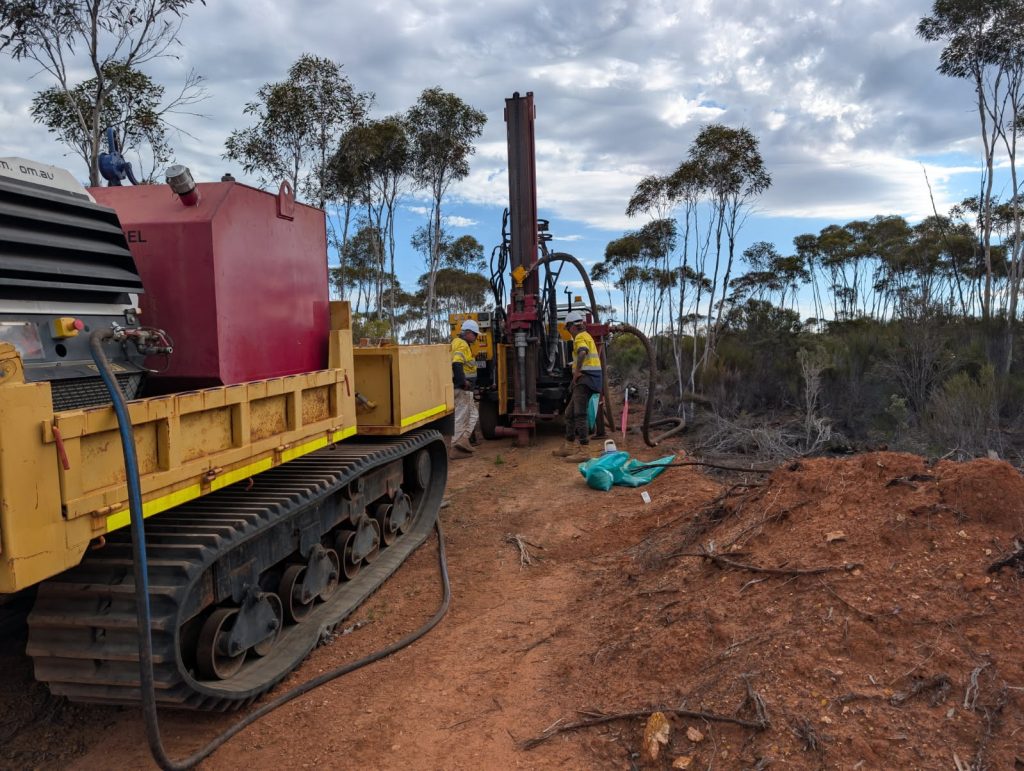
It increased its substantial holding in TG Metals to 17.55% in October, from 15.54% in August.
TG Metals’ Van Uden Gold Project could give Forrestania greater control over nearby gold resources and help build a pipeline of ore for its Lake Johnston processing plant.
Forrestania has also increased its substantial holding in Leeuwin Metals (ASX:LM1) to 13.93% following recent on-market acquisitions. Leeuwin’s flagship Marda Gold Project is in the Goldfields-Esperance region.
Earlier this year, Forrestania completed its acquisition of Kula Gold for approximately $58.9 million, after previously owning a 12.56% stake. That deal added assets that Forrestania described as ‘strategically’ located across the Forrestania, Southern Cross, and Eastern Goldfields regions into its portfolio.
The need for feed
Forrestania completed its $300 million acquisition of the Edna May Gold Project from Ramelius Resources (ASX:RMS) in September. It is targeting first ore processing at the Eastern Wheatbelt facility in December.
Edna May’s 2.9-million-tonne-per-annum (Mtpa) capacity adds to Forrestania’s Lake Johnston operation, which it agreed to acquire from Horizon Minerals (ASX:HRZ) subsidiary Poseidon Nickel for $35 million in November 2025. The acquisition was completed in February 2026.
The former nickel concentrator is being refurbished and upgraded to process up to 3.2Mtpa of gold ore.
Forrestania says Lake Johnston, about 185km southwest of Kalgoorlie, will service the Forrestania and Southern Cross regions from early 2027.
Once both facilities are fully operational, Forrestania is targeting a combined processing capacity of more than 6Mtpa.
But processing plants need a steady supply of suitable ore to generate returns on the substantial capital invested and cover ongoing costs such as labour, power, and maintenance.
Then there’s haulage. Aurenne currently evaluates haulage rates for its operations at $0.20 per tonne per kilometre. That means transporting ore 250km costs $50 per tonne, or $50 million annually for 1 million tonnes (Mt), based on Aurenne’s figures.
At A$5,000 per ounce and 90% recovery, 1 gram per tonne (g/t) ore generates approximately A$145 per tonne in recovered gold revenue. Haulage alone consumes about 35% before mining, processing, royalties and other costs. These are illustrative assumptions provided by Aurenne, not Forrestania’s disclosed costs.
Bringing in third-party supply
To help cover those costs, Forrestania is also building a network of third-party ore suppliers around its two processing hubs.
Edna May’s potential feed sources include High-Tech Metals’ (ASX:HTM) Mt Fisher Gold Project, from which Forrestania has secured preferential access to up to 400,000 tonnes of gold-bearing ore over 24 months.
Star Minerals’ (ASX:SMS) Tumblegum South Gold Project is another potential source after Forrestania signed a 24-month agreement for up to 400,000 tonnes. An initial 84,000 tonnes of ore is already stockpiled at the project.
Forrestania also has its own deposits in the pipeline, including the Tycho and Johnson Range gold projects, which are being developed to contribute to the company’s growing feedstock inventory. It has also begun hauling ore from its British Hill deposit, within the Forrestania Project, to Lake Johnston.
For Lake Johnston, third-party supply arrangements include a 24-month ore purchase agreement with MEGA Resources, as reported. This gives Forrestania the right to purchase and process up to 2Mt in individual campaigns of between 50,000 and 150,000 tonnes.
A similar agreement with First Au (ASX:FAU) provides a framework for up to another 2Mt over 24 months at the Gimlet Gold Project.
But IDA still questions the viability of this ‘hub-and-spoke’ strategy.
“Forrestania must substantiate the delivered margin for each ore source with actual results, using realistic diluted grades, recoveries, haulage rates, distances, and processing costs,” IDA says.
“A mill and scattered deposits alone do not demonstrate an economically viable operating strategy.”
Regulatory hurdles
Forrestania’s Zenith bid has also faced regulatory hurdles and was finally declared unconditional on 22 October.
Shareholders Harvest Lane Asset Management and Ida Metal Investments raised concerns in separate applications to the Takeovers Panel that disclosure gaps and the rapid sequence of corporate transactions had left minority shareholders without a clear picture of Forrestania’s asset base.
The Panel found unacceptable circumstances in August after Forrestania failed to disclose a substantial shareholding in Zenith acquired in April. It also criticised the omission of information about Forrestania’s involvement in the sale process for Ramelius’ Edna May assets, for which it later agreed to pay $300 million, from its takeover disclosures.
The regulatory setbacks have added another layer to Forrestania’s pursuit of Zenith. With the offer now unconditional, the focus shifts to whether Forrestania can secure the shares needed to take full control before the 12 November deadline — and what it will do next after its tilt at 100% ownership likely fails.
Main image: iStock
Write to Christina Wagstaff at Mining.com.au