


This article is a sponsored feature from Mining.com.au partner Firebird Metals Limited. It is not financial advice. Talk to a registered financial expert before making investment decisions.
China’s growing use of manganese in lithium manganese iron phosphate (LMFP) batteries has provided Firebird Metals (ASX:FRB) with some substantial tailwinds as it gets closer to commercial battery grade manganese sulphate production.
Manganese is used to produce the cathode active material for batteries, which has earned it a spot on the critical minerals lists of several countries including Australia and China, particularly as a global supply shortage looms.
Firebird Managing Director Peter Allen tells Mining.com.au the company is seeing “incredible interest” and development of LMFP batteries in China.
Lithium iron phosphate (LFP) accounts for about 70% of the battery market share, including electric vehicle batteries (EV) and energy storage systems.
According to projections by McKinsey & Company, LMFP could account for 44% of the global battery market by 2025, with further growth expected.
Some analysts predict that by 2030, LMFP could represent half of all phosphate-based battery production, potentially exceeding US$20 billion ($32.2 billion) in market value.
“We believe that LMFP will go through the same development cycle as LFP, and new variants will be developed further using and improving the use of manganese in these batteries,” Allen notes.
The reason for the growing interest in incorporating manganese into LFP batteries is because it provides increased energy density, further improving range and performance, while keeping costs low and maintaining safety performance.
Adding high-purity manganese sulphate to LFP batteries costs about 30% less than nickel-based batteries, enhances voltage platform and results in a 15-20% increase in energy density.
LMFP batteries also have a higher thermal runaway temperature than nickel-based batteries, making them less prone to overheating.
Firebird’s bold bet on China
Firebird plans to be a key part of the growing and critical LMFP story.
While the company’s manganese project is in Western Australia, the massive growth potential within the Chinese market led Firebird to selecting the Asian powerhouse as the prime location for a 72,500-tonne-per-annum high-purity manganese sulphate equivalent plant – the more commonly known manganese chemical used in battery cathode production.
The stage-one plant will be located in the Jinshi High-Tech Industries Development Zone in Hunan Province.
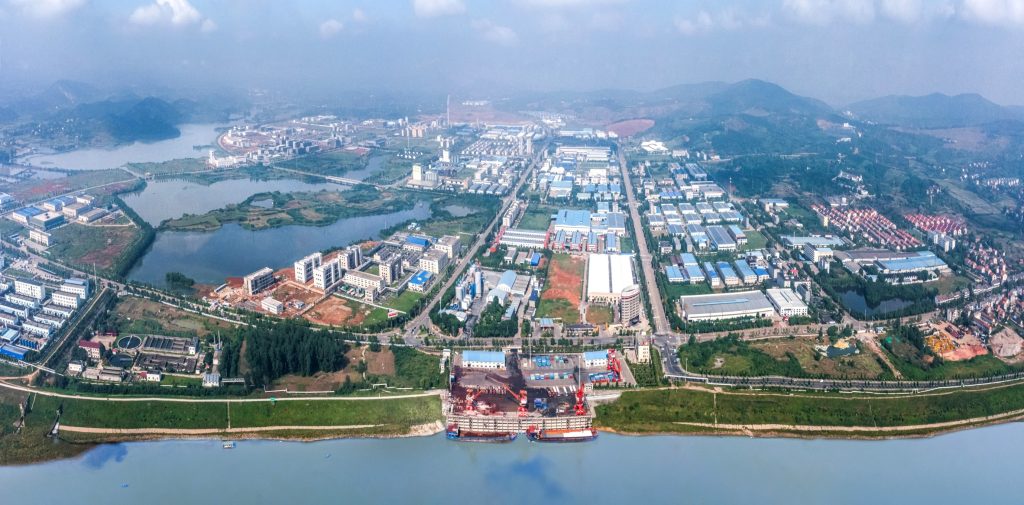
Hunan is central to the lithium-ion battery industry in the south of China. Benchmark Minerals Intelligence estimates that Hunan and the surrounding provinces accounted for 26% of worldwide gigafactory capacity in 2023, which is estimated to be 27% by the end of this decade.
Allen says choosing China as the spot to build a sulphate plant was a “no brainer”.
“China is currently the market for high-purity manganese chemicals, both in terms of demand and production. Chinese EV and battery markets are growing very strongly, and Chinese new energy vehicles now represent about 40% of all car sales,” he explains.
“We completed significant due diligence in choosing our location; it needed to be an existing and advanced chemical park, with key inputs like sulfuric acid, steam production, access to other reagents and consumers of our waste material all within close proximity.
“Due to these factors, we secured land at Jinshi, which is in the northern part of Hunan province.
“There are over 100 companies currently operating in the park and several new businesses have established pilot plants within the development area. You can’t purchase land in the park now and there is a big waitlist for access to land.”
A Feasibility Study completed in May 2024 places the operating expenditure at around US$579 per tonne to produce battery grade manganese sulphate.
Shanghai Metals Market lists the selling price of battery grade manganese sulphate at about US$737 per tonne as of 3 March 2025. With the rising demand and anticipated manganese shortage, this will likely see prices move higher.
Backed by China, built for growth
Firebird Metals has secured significant financial and industrial support for its high-purity manganese sulphate production from major Chinese entities.
China-based Canmax Technologies took a 9.9% stake in Firebird in October 2023, making it the company’s largest shareholder at the time, after providing a cornerstone $1.7 million investment as part of an oversubscribed placement.
In March 2024, Firebird inked a non-binding strategic cooperation agreement with China National Chemistry Southern Construction and Investment – a subsidiary of China National Chemical Engineering Group, which built and maintains the Jinshi High-Tech Industries Development Zone.
The deal envisages that China Chemical will provide up to 20% of the estimated US$35 million in construction and installation costs on a deferred payment basis.
Firebird also struck a deal with the Jinshi Government to receive a 62.5% rebate, totalling US$4.2 million, on the US$6.8 million purchase of the land in the Jinshi High-Tech Industries Development Zone.
Meanwhile, China Construction Bank provided a non-binding indicative offer for up to 50% of the estimated US$83.5 million in plant capex requirements plus 70% of the estimated US$10.6 million working capital requirements.
Firebird has begun producing battery-grade manganese sulphate and manganese tetra oxide samples and has received strong interest from Chinese and European customers.
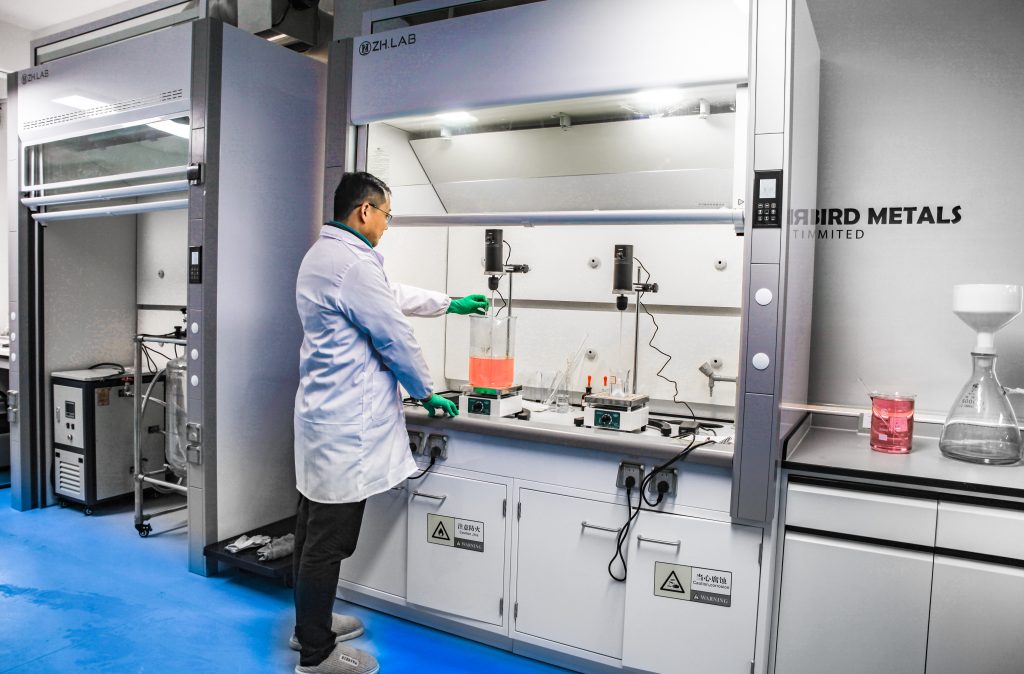
The company plans to sell 70-80% of its output in China, with the remainder distributed to other Asian and European markets.
While the long-term strategy is to use manganese concentrate from Firebird’s Oakover Project, 85km east of Newman in the Eastern Pilbara region of Western Australia, stage one will be supplied by third-party ore.
“Stage one of the manganese sulphate project requires approximately 66,000 tonnes of third-party ore,” Allen says.
The plant will initially produce 50,000 tonnes each year of battery-grade manganese sulphate and 10,000 tonnes of manganese tetra oxide.
Firebird recently inked a non-binding memorandum of understanding with major producer Eramet (PA:ERMT) for the supply of manganese ore to the plant.
Eramet operates the Moanda mines in Gabon, which is recognised as the world’s largest manganese mining operation.
“The company is very confident in securing the required tonnage,” Allen adds.
“Future stages and potential western production of manganese sulphate is expected to be fed from the company’s flagship Oakover Project.”
Stage two envisages the ramp up of battery grade manganese sulphate in China to 300,000 tonnes per annum using ore from Oakover.
During stage two, Firebird expects it will also be able to produce 100,000 tonnes each year of battery grade manganese sulphate from a western world location.
Innovating to keep costs low
Firebird’s broader vision is one of an emerging technology company that is supported by both an upstream resource and downstream sulphate production and cathode development.
One of the key focuses for the company is innovating to keep costs low.
With energy costs one of the bigger dents to profit for a producer, Firebird has developed a fifth-generation crystalliser and calcining kiln that captures the energy and reuses it to drive down energy consumption and costs.
The technology reduces energy usage by as much as 80%.
In June last year, Zhongji Sunward Technology committed to an investment in the energy saving calcining technology.
Sunward agreed to cover 50% of the estimated US$200,000 cost of a pilot plant and oversee the detailed engineering design and manufacturing of the plant, as well as pay Firebird a 5% royalty on future sales revenue.
Firebird is further investigating ways to reduce costs via a collaboration with the Central Southern University (CSU) in Changsha to develop a processing method to produce LMFP cathode active material from the company’s manganese sulphate in solution.
“We are extremely focussed on quality and costs, and our innovations like the crystalliser and the kiln will ensure that Firebird is a low-cost producer. We truly have a world class technical team and we are very excited to be looking at the next stage of innovation and development through our collaboration with CSU that if successful, will further reduce costs by skipping the crystallisation stage of sulphate production,” Allen explains.
Firebird’s goal is to become a near-term producer of manganese chemicals within the next 12 months.
The company has received all the necessary energy, environmental and safety permits which enable it to operate, and has also completed and had preliminary designs approved.
Once Firebird has made a financial investment decision, it will take about 12-15 months to build the plant.
Write to Angela East at Mining.com.au
Images: Mining.com.au & Firebird Metals