

Western mining circles are no stranger to the elusiveness of easy financing as a topic of debate. Certain heavy market forces have lately conspired to make funding of all sorts a challenge.
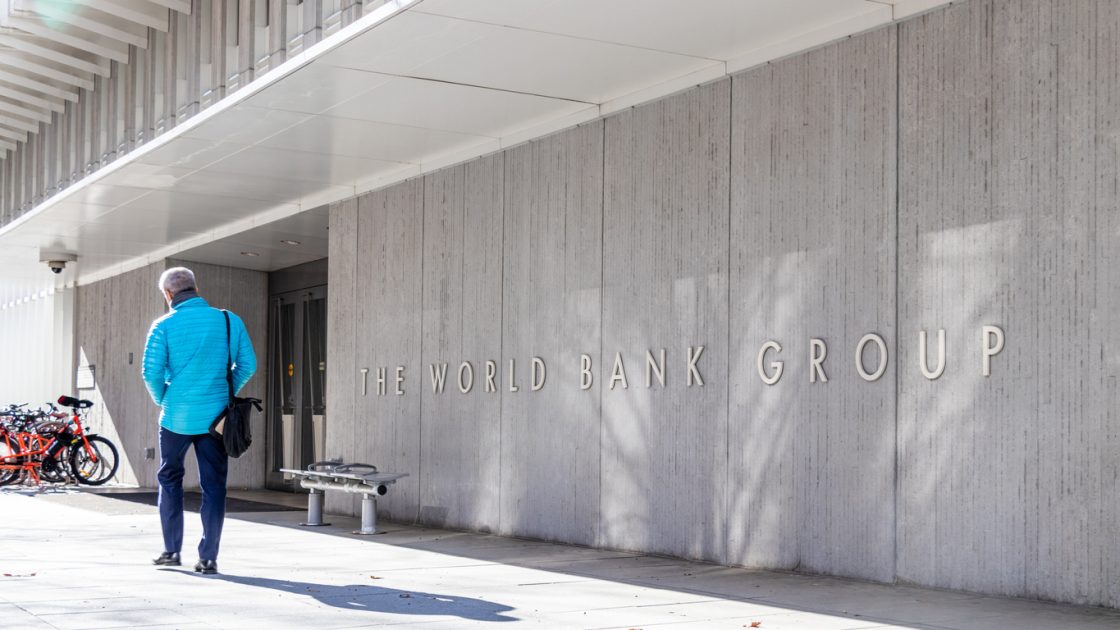
But a new report by the World Bank shows just how far-reaching the problem is, the effect it has on the world’s poorest countries, and — importantly — what can be done to turn things around.
The need for investment
Published on Sunday, the analysis shows the world’s 26 poorest nations — home to around 40% of all people who live on less than US$2.15 ($3.19) a day — are deeper in debt than at any point since 2006. Not only that, but they’re increasingly vulnerable to natural disasters and other shocks, even as international aid as a share of GDP fell to a 21-year low of 7% in 2022.
On average, government debt across the 26 economies is at 72% of GDP — an 18-year high. Almost half of the countries — double the number in 2015 — are either in debt distress or at high risk of it, while none are considered low-risk.
The COVID pandemic carries a lot of blame. It sharply increased spending needs in low-income economies, which caused primary deficits to triple to 3.4% of GDP in 2020. And while wealthier countries have largely recovered from the impact of COVID, low-income countries have struggled to unwind the deficits, which stood at 2.4% of GDP in 2023 — almost three times that of other developing nations.
It perhaps comes as little surprise that government spending has therefore shifted away from long-term priorities, such as health and education, and instead towards more immediate concerns, such as wages for government workers, interest payments on debt, and subsidies.
It might also come as little surprise that the World Bank’s International Development Association (IDA), which provides grants and near-zero interest loans to 77 of the world’s most vulnerable economies, is an increasingly important lifeline.
The IDA is funded largely by contributions from the governments of its member countries, which meet every three years to replenish the fund and review its policy framework. The most recent replenishment was finalised in December 2021, with US$93 billion committed for 2022 through to 2025.
For the year ending 30 June 2024, the IDA had committed a total of US$31.2 billion.
“At a time when much of the world simply backed away from the poorest countries, IDA has been their main lifeline,” Indermit Gill, the World Bank’s Chief Economist and Senior Vice President for Development Economics, says.
“Over the past five years, it has poured most of its financial resources into the 26 low-income economies, keeping them afloat through the historic setbacks they suffered. . . . But if they are to rise out of a state of chronic emergency and meet key development goals, low-income economies will need to accelerate investment to a pace without precedent.”
Mining: The great contributor
Thankfully for us here in Australia, we have no such concerns.
Between royalties and taxes, mining companies generated an estimated $74 billion for the Australian economy in 2022-23, according to a report commissioned and published by the Minerals Council of Australia (MCA). Notably, that figure represents an increase of 94.7% since 2019-20 due to an average 64% rise in commodity prices over that period, as well as higher royalty rates and increasing production.
While company taxes increased only 4.2% to $42.5 billion in 2022-23, royalties soared 31.7% to a decade high of $31.5 billion, thanks largely to revised coal royalty rates in Queensland.
But our era of record highs may not last, according to Australia’s Department of Industry, Science and Resources. The department says overall resources and export earnings are expected to decline from $466 billion in 2022-23 to $417 billion in 2023-24, generally as the result of supply outpacing demand in commodities markets that’s subsequently taken a toll on pricing.
“With these challenges confronting Australia head on, it is critically important that governments pursue productivity-enhancing policies that attract investment in mining, create more jobs, and increase the nation’s economic resilience to withstand future economic downturns,” MCA Chief Tania Constable said in September.

Turning things around
As dire as the World Bank report appears to be, there is a silver lining.
“The 26 low-income economies today enjoy significant potential to boost growth at home and contribute to broader prosperity and peace as well: their natural resources are ample, and their working-age populations are growing,” it said.
“Yet they also face a cluster of challenges that are more severe than anywhere else.”
Two-thirds of the 25 countries are either in conflict or have difficulty maintaining order because of institutional and social ‘fragility’. On top of that, nearly all are commodity-exporting countries, making them particularly exposed to the boom-bust cycles markets are often subjected to.
Ultimately, the consensus is that low-income economies need to ramp up investment at a “history-making pace” and deliver dramatically higher performance on every level of economic management if they’re to meet their development goals.
“There is much that low-income economies can — and must — do for themselves,” Ayhan Kose, World Bank Deputy Chief Economist, says.
“They can broaden their tax base by simplifying taxpayer registration and tax collection and administration. They also have plenty of room to improve the efficiency of public spending.
“But these economies also need stronger help from abroad — both in the form of greater international cooperation on trade and investment and in the form of much larger support for IDA, which can work with the private sector to mobilise additional resources and help facilitate structural reforms.”
For example, Mali — which was included in the World Bank’s list of 26 low-income economies — adopted a new Mining Code this year that allows the government to take a 10% interest in all new mining projects, as well as an additional 20% stake that can be purchased within the first two years of commercial production. Another 5% can be relinquished to locals should they be immediately affected by mining-related activities.
“This development not only reaffirms Mali’s commitment to its mining sector but underpins, in our view, a desire to restore confidence among investors and stakeholders,” Phil Russo, CEO of Toubani Resources (ASX:TRE), which owns the Kobada Gold Project in the country’s south-west, said in July.
“With anticipated resumption in the administration of the mining sector as well as recent resolution of other, company-specific issues, we are optimistic about Mali’s return to prominence as one of West Africa’s top gold producers.”
In the end, regardless of your personal opinions, mining’s potential as an economic contributor cannot be ignored. It may take a long time for these contributions to filter through for the countries that need it most, but both they and the wider world can only be better off.
Write to Oliver Gray at Mining.com.au
Images: iStock, Our World In Data