

At the end of August this year, New York-based investment bank Citi came out with a pearler.
“For us here at Citi, copper is the energy transition bull trade,” said Max Layton, the bank’s managing director of commodities research.
“The world is cyclically weak right now, and that means the trade is on pause. But copper’s eventual bull run is likely to make oil’s famous 2008 rally look like child’s play.”
Back then, just prior to the economic hubbub of the Global Financial Crisis, oil had risen from $50 per barrel in mid-2006 to $140 per barrel by the end of 2007 — a run compelled largely by growing demand from emerging markets and its subsequent clash with poor production.
Given copper’s use in everything from cabling to iPhones and electric vehicle batteries, it’s not difficult to imagine Layton’s scenario playing out. In fact, the commodity has become so tied to manufacturing and construction cycles, so built-in to the ups and downs of economic activity, it’s earned the moniker ‘Dr. Copper’.
Layton’s soothsaying is perhaps music to the ears of the folks at Castillo Copper (ASX:CCZ), the Perth-based explorer which is itself betting on copper’s bright future.
“I think there’s going to be a significant shortage of copper,” Managing Director Dennis Jensen says.
“All the projections I’ve seen are that there’s going to be a significant shortfall of copper. We’ve spoken to large companies that are looking at long-term contracts with producers to try and shore up their supply, because they’re very concerned that a few years down the track there’s going to be inadequate supply and they won’t be able to get it.”
“All the projections I’ve seen are that there’s going to be a significant shortfall of copper”
The doctor is in
Listed in December 2010, Castillo owns the NWQ Copper Project in northern Queensland, the Broken Hill Project and Cangai Copper Mine in New South Wales, and 4 copper-gold exploration projects — Mkushi, Luanshya, North and South Lumwana, and Mwansa — in Zambia.
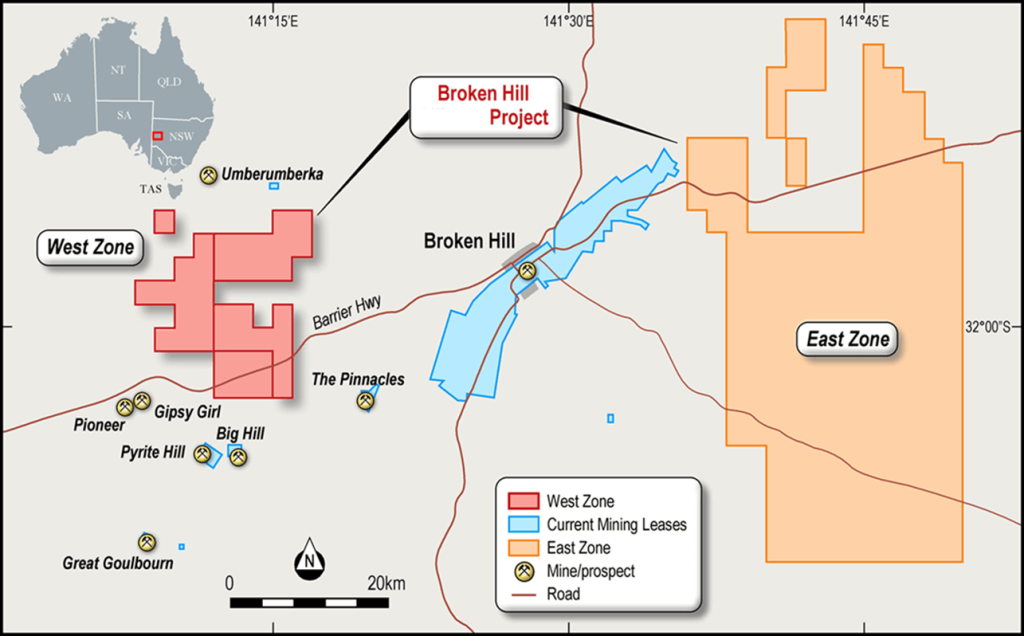
Broken Hill was the subject of a cobalt discovery made by Castillo last year on the eastern portion of the project. Although follow-up drilling found the grade to be uneconomic, the company also identified shallow rare earths in clay. Alas, that clay was not of the ionic kind, but Castillo is nevertheless trying to determine whether there exists an economic method of extracting the rare earths.
“At the moment, the answer is no,” Jensen says.
“But we are still going through a final process with ANSTO” — the Australian Nuclear Science and Technology Organisation — “and we’re probably going to ask CSIRO” — the Commonwealth Scientific and Industrial Research Organisation — “to have a look as well.”
The western portion of the project, however, remains largely unexplored — “but it’s likely to be cobalt”.
At the NWQ Copper Project, on the other hand, a $28 million net present value (NPV) was announced in mid-July for the Big One deposit. Two weeks later, however, it was retracted, since the pit shell study was completed according to an inferred resource category, rather than the indicated category the ASX requires for such disclosures.
“It was a technicality, really. But a pain in the ass nonetheless,” Jensen says.
“It had nothing to do with the ASX saying: This is bullshit. It’s just that the ASX said that it had to be at least an indicated resource to be quoting an NPV.”
Which, by the way, isn’t to say the Big One deposit doesn’t have an NPV of $28 million, only that it doesn’t in the eyes of the ASX. Even so, Castillo also has its eye on other prospects further south at NWQ.
“Our geologist is up there looking at some of those prospects in the southern area, getting rock samples and getting a detailed look at the geology,” Jensen adds.
“So we’ll do some assaying with those rock chip samples and then probably the next step would be geophysics or geochemistry, which is more affordable.”

The Cangai Copper Mine, meanwhile, “is not currently in play in terms of exploration for a variety of factors.”
Interestingly, Castillo is looking for partners at all these projects — a strategy perhaps testament to the challenges junior explorers face, even in a sector as hyped as copper.
“We’re looking for JV partners — Broken Hill, NWQ, and obviously Cangai,” Jensen says.
“I mean, we’d be looking hopefully for a partner for Zambia, possibly more to sell rather than to partner. It’s a bit problematic being on another continent for a company our size. You’ve got a whole lot of other issues you’ve got to deal with.
You’ve got to have specialists in that area, and in all sorts of areas. A company secretary there, you’ve got to have a lawyer there, people that are familiar with the systems there, geologists and so on. And it’s expensive for a small company. It’s not to say that the resource isn’t worth it. From all that I’ve heard from various geologists, it’s very prospective. It’s just an issue that it’s hard to do the work there.”
The road ahead
Asked if Castillo harbours any production-related desires, Jensen was reluctant to make any promises.
“Well, that’s a long, long way in the future,” Jensen says.
“That would be beyond my time, because these things take a lot of time. You go through various scoping studies, a pre-feasibility study, then you’ve got to put in an application for a mining licence. The wheels on this stuff, particularly in a regulatory sense, turn very slowly.
We don’t — in-house — have the expertise to go mining. We do use consultants to give us advice and give us reality checks on various aspects of it. We engaged a large multinational consultant — they consult on geology, mining and all the steps in between — and they certainly taught us a bit in terms of the timelines, which were longer than I anticipated.
I knew it wasn’t a case of putting in a mining licence application and getting your response in a couple of weeks. I realised that, but I hadn’t realised just how convoluted and lengthy the process was.”
The problem, of course, is that the world cannot afford slow-turning wheels. We need copper — a lot of it — and we need it as a matter of urgency.
“Take a wind farm, for instance,” Jensen adds.
“Wind farms are not going to be in the same location as gas or coal-fired power plants are at the moment. So you’ve got a whole lot of wiring that you’ve got to do from there to a substation. You’ve got to do power conditioning, because you don’t want your voltage going wild as the wind goes up and down. That all requires copper.”
“That all requires copper”
Indeed, the Australian Energy Market Operator — responsible for the management of electricity and gas systems and markets across the country — is planning a 10,000km transmission line extension, designed to connect major renewable energy precincts with cities. And though the Federal Government has committed $20 billion to ‘re-wiring the nation’, the copper conundrum remains.
It’s a problem likely to linger for a while. But then again, those involved in the provision of a solution — as Castillo Copper would presumably like to be — will do very, very well.
Write to Oliver Gray at Mining.com.au
Images: Castillo Copper and Pexels