


Missed production targets are becoming a much bigger problem for miners, with new research suggesting a massive US$67 billion ($100.5 billion) in revenue over a five-year period has been wiped off the balance sheets of 12 of the top mining companies.
This underperformance not only impacts profits, but also jeopardises the industry’s role in the global net-zero transition.
Research by professional services company Accenture shows the median annual underperformance versus guidance on a mine-by-mine basis was -2.6% between 2019 and 2023.
The proportion of times a mine reported results at or below the lower half of the guidance range in this period was 61%.
In total the research covers 89 operations – comprising iron ore, copper, gold, coal, zinc, and nickel – and 373 data points of guidance forecasts versus production actuals.
Guidance and production data was removed if mid-year acquisitions and divestments significantly impacted production results.
Accenture says every leading mining company included in the research missed their production target at some point in the five-year period to 2023.
In total, the missed production volumes amounted to 254 million tonnes in the past five years, with iron ore accounting for 142.43 million tonnes, and coal losing 108.95 million tonnes.

Iron ore and coal production witnessed the “large-scale ups and downs”, Eric Croeser, Managing Director and Natural Resources Lead for ANZ at Accenture, tells Mining.com.au.
“Their variance is fairly consistent, but they do have either big ups or big downs,” he says.
Coal production, in particular, was impacted by a downsizing in operations by some miners.
On the flipside, copper, gold and zinc miners — although there is a lot more variability in the process — appear to deviate less from their targeted production on average over the five-year period.
“It felt like they had a little bit more control over what their budget versus actual was, and how they move through it,” Croeser notes.
In terms of location, operations in developed countries missed their production targets more than developing countries.
The US, Canada, and Australia performed more poorly than the growth market or developing market regions of Latin America, Southeast Asia and Africa.
So why are miners consistently missing their production targets?
The research identified two aspects as the root cause: flawed target setting and operational shortcomings.
One of the key issues highlighted was miners not allowing for variability in their production plans.
Croeser says production plans were pretty much fixed and miners were a little bit more bullish on some of the areas where price change would have a big effect, and lead to variances like cut-off grades becoming uneconomic.

“They’ve got a 12-month forecast, with quarterly updates running throughout and not necessarily changing the market guidance as they go along, and then probably a little bit of a balance between overconfidence and target setting and potentially not enough data being fed through from the resource and reserve side to connect those dots,” he explains.
According to Accenture, these production misses can be mitigated by integrating advanced predictive analytics and leveraging cutting-edge technologies such as artificial intelligence (AI), machine learning, and automation.
‘Boots to boardroom’
However, for these technologies to work, Croeser says companies need to get a “hell of a lot more granular around the data, how the data feeds in, and start looking at it more holistically”.
“I think from a mining perspective, because we are a very discrete process – we drill it, we blast it, we load it, we haul it – we tend to fall into the trap of also thinking in discrete ways,” he tells this news service.
“I think we need to start getting better at the holistic thinking of that. It needs to be a core focus of the organisation direction and how the organisation is going to go about it.”
Companies need to ensure the right governance models, structures, and security are in place.
“Especially if we start talking this ‘boots to boardroom’, or the entire stack integration. Boards get really, really nervous if you start thinking operational technology into information technology,” Croeser says.
Boards get really, really nervous if you start thinking operational technology into information technology.
“So you need to obviously get the governance standards. But also ensuring that the architecture, the security, the processes are all in place.
“We can AI as much as we want, if we don’t bring the people along for the journey, it will fail.”
The key, according to Croeser, is changing the narrative from “AI is replacing” to “AI is augmenting”.
A holistic approach will enable miners to realise the ‘return on digital investment’, which can be significant.
Yet Croeser says very few companies realise the return on digital investment, which can be between two times and 10 times the initial capital outlay.
“It wasn’t because the tech wasn’t ready. It was because we digitised to the absolute nth degree into these organisations, but we never got the people along,” he explains.
“We have to bring the organisation around, because if you don’t have the three components to it – sponsorship, governance structure framework, and people – it’s just another thing that’s going to get cleaned out in the wash.”
Ageing workforce
An ageing workforce is also having a significant impact on miners missing their production targets.
The gap between the skilled and unskilled workforce is widening, and it is getting harder to attract the next generations into the field.
“The labour shortfall is definitely attributed to a lot of that narrative that we’re seeing in the industry, and the stats are showing it,” Croeser says.
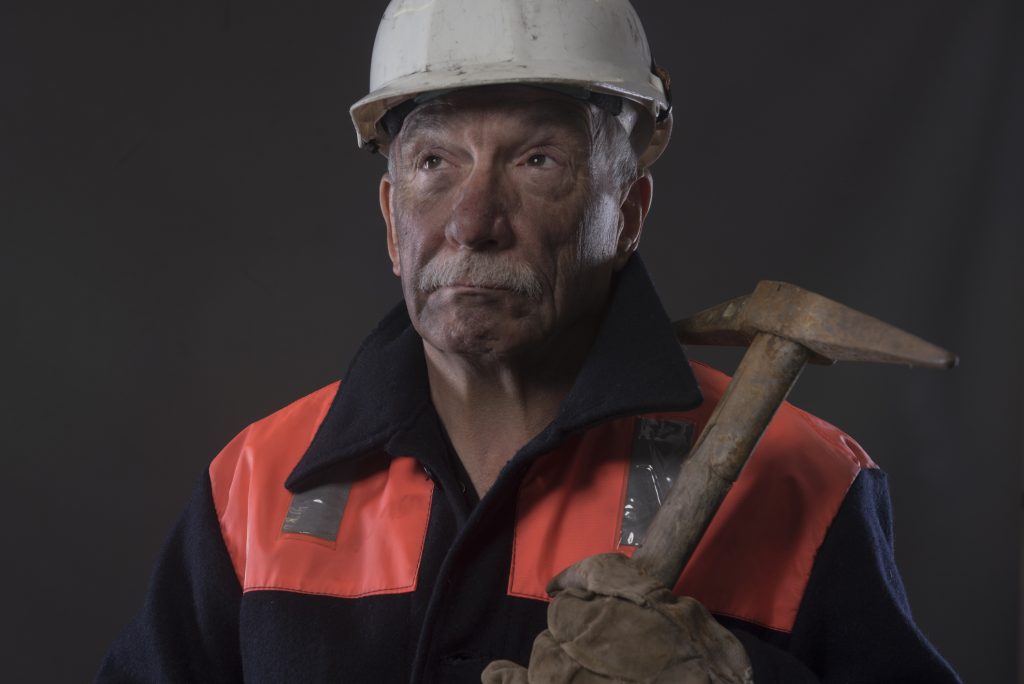
“If you have a look at the aged workforce exiting the industry, you look at the average intake across places like universities, TAFE, colleges. You add all of the critical mineral investments that we need to do, how much more copper we need to take out, getting into cobalt, lithium, et cetera, we’re going to have – and we’re already seeing it – a massive shortfall in the labour workforce.
“And mining is not the sexiest industry to go into.”
Croeser believes the answer lies in the “cool tech stuff” to bolster the incoming workforce.
“We don’t have the comfort of another two, three, four years of just getting them ready. They need to be ready right now,” he says.
“So how do we bridge that gap? We’ve got a couple of ideas that we are sharing with some of our clients across it and starting to see some take-up of things like the effective use of data and AI.
“Hopefully, with a little bit of the cool tech stuff that is happening with mining it will actually attract a hell of a lot more workforce into that area.”
The Accenture team will be attending next week’s International Mining and Resources Conference in Sydney from 29-31 October.
Accenture is also a lead sponsor of the Global Resources Innovation Expo which is being held in Brisbane on 20-22 May 2025 and is a joint initiative of Austmine and AusIMM.
Mining.com.au is this week exploring some of the important trends from 2024 that are shaping the mining equipment, technology, and services (METS) industry heading into 2025 in its four-part METS Insight: State of Mining Review series.
The final instalment published earlier today (24 October) delves deeper into talent acquisition and the skills labour shortage.
Write to Angela East at Mining.com.au
Images: Accenture, Resolute Mining & iStock