



This article is a sponsored feature from Mining.com.au partner Magnis Energy Technologies Limited. It is not financial advice. Talk to a registered financial expert before making investment decisions.
Magnis Energy Technologies (ASX:MNS) is poised to supercharge the burgeoning lithium-ion battery value chain, as it positions itself as a vertically integrated company with strategic investments and partnerships across the electrification logistics network.
The Sydney-based company is emerging as a major player, through manufacturing green-credentialed lithium-ion battery cells, strategic partnership with a leading-edge battery technology firm in New York, and plans to produce high-quality, high-performance anode materials utilising graphite feedstock from their Nachu mining project.
Magnis has strategic investments in a large-scale lithium-ion battery cell manufacturing plant – Imperium3 NY (iM3NY) in Endicott, New York in the US that recently commenced production, and a greenfield project – Imperium3 Townsville (iM3TSV) in Townsville, Queensland in Australia.
As Chief Executive Officer (CEO) David Taylor explains, despite global issues such as supply chain constraints and labour shortages due to COVID-19, Magnis has been a first mover in the industry and powered on to bring the iM3NY plant into commercial production.

Insatiable demand for lithium-ion batteries
“iM3NY’s gigafactory is a US independent gigafactory that will provide and meet the insatiable demand for a non-China supply of lithium-ion battery cells.
iM3NY is the first independent gigafactory in the US that is in production today. Whilst there are several competitive projects in the pipeline, this first-mover advantage in a highly sought-after market, puts the gigafactory well ahead of the competition.
“iM3NY is the first independent gigafactory in the US that is in production today”
Magnis, along with its lithium-ion technology partner C4V (Charge CCCV) are the major shareholders in iM3NY and are excited to bring this gigafactory to the market and provide high-quality, safe, and sustainable products to its customers.”
Taylor added that the development of a local battery manufacturing gigafactory in Townsville at this stage remains an option for Magnis, which is working with all key stakeholders to identify a way forward. The company continues to engage with other government and industry stakeholders in relation to the future development of policies focused on the development of the battery metals and battery manufacturing sector throughout Australia.
While iM3TSV in Townsville is not currently active, as the most advanced lithium battery manufacturer in the country, Magnis’s vision is to be an Australian first mover to accelerate the green energy transition and global move to decarbonisation.
The CEO adds: “Magnis‘s vision is to accelerate the adoption of electric mobility and renewable energy storage critical for the green energy transition. To fulfil this vision, Magnis is proud to state that its lithium-ion gigafactory in New York is powered by 95% clean energy. Furthermore, the company has been engaged in corporate social responsibility and impact over the last several years through the development of several social infrastructure projects in Tanzania. These include school amenities and construction of a resettlement village with access to power.”
Charging ahead
Taylor notes that amid the backdrop of the current challenging global conditions, realising the company’s vision is coming to fruition and bringing the iM3NY gigafactory in New York online is a remarkable achievement. While many companies have been forced to place growth strategies on hold, Magnis is powering ahead.
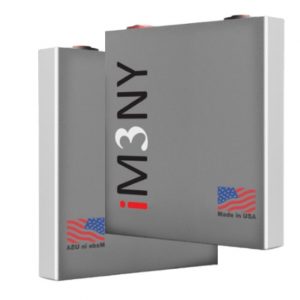
Over the coming months, the company expects to have iM3NY P Series cells delivered to customers, with iM3NY poised to generate revenue in line with increased production. The CEO says production levels will be increased to 1GWh by the end of calendar year 2023, and with significant investment required to meet the planned increase in capacity to 38GWh by 2030, a number of funding partners, including potential government financing, is expected to occur.
“Discussions with the US Department of Energy in relation to applications for funding to support this growth have been positive throughout FY2022, and we are confident that we are well-positioned to secure funding in FY2023.
Our partnership with Charge CCCV is an important element of our growth plans. Key achievements for FY2022 include the advancements made in fast-charging technology, as well as continued development of sustainable processing technology for anode active materials. Progress was also made by the C4V team on the development of new battery technologies that aim to improve the safety, performance, and cost of future battery products.”
Without gigafactories such as iM3NY and companies like Magnis and its technology partner Charge CCCV (C4V), the green energy transition would not be possible. C4V has technology that extends the life of batteries, makes them safer, lowers the cost, and boosts charge performance.
It’s important technology in the growing global lithium-ion batteries market, which is projected to be worth more than $240 billion by 2026.
The lithium-ion battery value chain consists of 4 main input costs – the extraction and production of raw materials (aluminium, copper, cobalt, graphite, iron, lithium, and nickel), cell component (electrodes) manufacturing, cell assembly, and recycling, which affects the cost structure.
Inflation Reduction Act
The CEO says that while demand and the value chain continue to grow, it’s important to note that the achievements of Magnis over the past year cannot be understated given the current global macroeconomic environment.
Despite this, a number of tailwinds are underpinning the future growth and success of the company.
These include a continued and growing shift in demand preferences for electric vehicles (EVs) and mobility across both consumer and commercial segments, a focus on the deployment of renewable energy technologies to reduce carbon emissions, and policy and regulatory changes.
Taylor says one important change is the recent signing of The Inflation Reduction Act of 2022 (IRA) in the US and the Climate Change Bill in Australia that support the development and deployment of clean energy technologies.
The Inflation Reduction Act is a landmark US federal law that aims to curb inflation by reducing the deficit, lowering prescription drug prices, and investing into domestic energy production while promoting clean energy.
“Many have described the Inflation Reduction Act as the single biggest climate investment in US history”
“Many have described the Inflation Reduction Act as the single biggest climate investment in US history. The Inflation Reduction Act Bill includes an estimated US$369 billion in expenditures related to ‘climate change and energy security’, including tax and other incentives to promote US production of electric vehicles, renewable energy technologies, and critical minerals.
Production tax credits to accelerate US manufacturing of solar panels, wind turbines, batteries, and critical minerals processing, estimated to invest US$30 billion. Both batteries and critical minerals processing are especially beneficial to Magnis given its New York based Gigafactory and plans to establish a US Anode Active Materials processing facility in the US.”
The CEO adds that Magnis is extremely well-placed to take advantage of these aforementioned tailwinds, particularly in the next decade when the major shifts and investments are required to make a significant impact on climate change outcomes.
Another link in the value chain
However, for Magnis Energy Technologies to power the future across the lithium-ion battery value chain, it is important that it has exposure to graphite within its portfolio.
Graphite is the dominant anode material currently used in lithium-ion batteries. Both synthetic graphite and natural graphite – in the form of the intermediate product spherical graphite – are used in the anodes of lithium-ion batteries. Typically, there is more than 10 times graphite by weight in a lithium-ion battery than lithium. Graphite, which is a crystalline form of the element carbon, has proven to be safe, reliable, and is found to possess exceptionally high energy density. Together, this makes it an ideal material for energy storage applications.
Graphite is the dominant anode material currently used in lithium-ion batteries
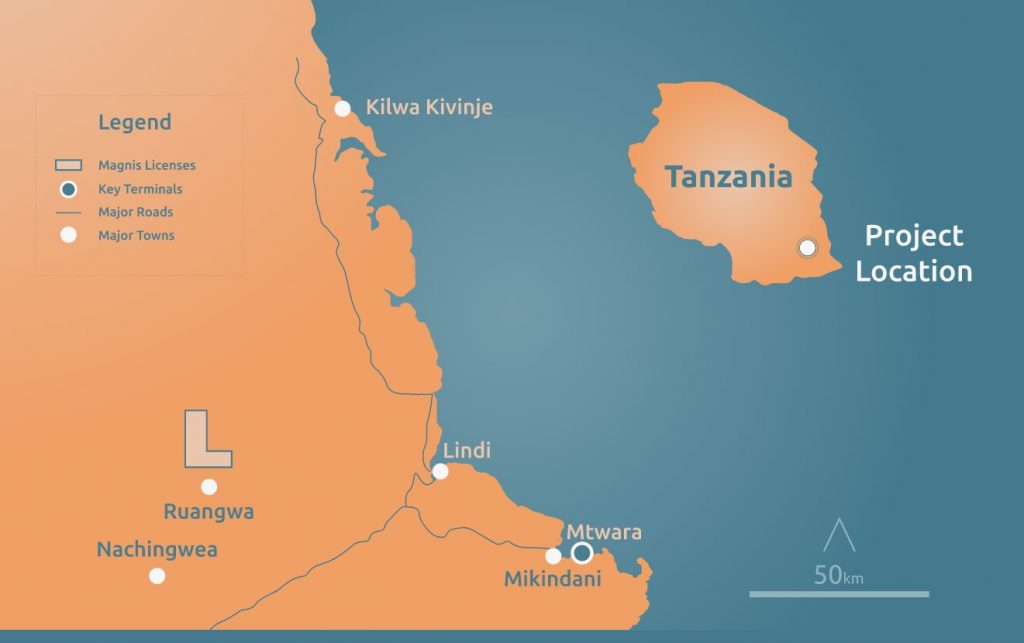
Magnis, through its Tanzanian subsidiaries, owns a 100% interest in the Nachu Graphite Project located near Ruangwa, in the south-east of Tanzania. The project is about 220km away from the Tanzanian port of Mtwara. The project demonstrates significant potential due to its large size, an orebody with very low variation in lithology, and mineralisation and low-cost operational model.
Magnis has recently completed an update to their 2016 Bankable Feasibility Study (BFS) at Nachu with the study confirming a robust project.
Taylor explains: “The BFS update for the Nachu Graphite Project confirmed both strong technical and financial viability with a post-tax life of mine project NPV of US$1.2bn (A$1.8bn) and project IRR of 51% with a payback period of 19 months.
The project is a key differentiator in the global graphite market with very high average purity concentrate of 99% along with a large portion of premium coarse size graphite flakes. Nachu is also the only graphite project to be awarded a Special Economic Zone licence in Tanzania to produce advanced graphite products, including very high-purity Jumbo and Super Jumbo Flakes as well as downstream products for Lithium-ion batteries.
The wider graphite market is also likely to benefit from the Nachu project as it will provide an alternate, more sustainable supply to China in what is expected to be a graphite deficit market in 2025.”
The Export Processing Zones Authority (EPZA) in 2017 granted Magnis a licence to operate within a Special Export Zone (SEZ) in Tanzania with a 10-year license. Key benefits of the SEZ license include allowing Magnis to apply the advanced technologies to produce value enhanced graphite products, and the exemption from paying corporate and some other taxes for up to 10 years. This licence was recently renewed in May-2021.
There are several options being explored to fund pre-production capital for the Nachu Graphite Project. A combination of debt and equity financing options are being considered, as well as other alternative funding options such as seeking joint venture partner(s) and/or strategic investors.
The CEO adds: “The ultimate financing strategy and funding structure for the project will have the overall objective of delivering an optimal outcome for our shareholders. Given the strong demand for graphite as part of the lithium-ion battery supply chain, along with the premium quality of Nachu’s graphite, the level of engagement with potential offtakers has been strong with sample testing underway.
An attractive offtake partner for Magnis is one who will qualify and validate Nachu product and be willing to contract into binding ‘bankable’ agreements that satisfy project lenders / ECAs. A priority will also be given to strong credit rated off-takers prepared to invest equity in the Nachu project or make prepayments.”
Graphite deficit as demand soars
Demand is soaring for graphite in the coming years and for battery anode materials. Magnis’s strategy to be a major player to help meet demand will centre on natural flake graphite processed into Anode Active Material (AAM) for lithium-ion battery anodes.
Benchmark Minerals Intelligence has forecasted a significant deficit in the demand supply balance and estimated 95 new mining projects need to come online to meet demand. Magnis’s vertically integrated anode supply chain strategy is to produce high-purity natural flake concentrate from Nachu and process this into AAM as per its recently announced plans. Magnis’ AAM process does not use harsh chemicals or very high temperature thermal purification to produce AAM, which is a critical differentiator to others in the marketplace.

This proposed downstream AAM production facility will deliver a secured supply of one of the most sustainable, cost-competitive, high-quality, and high-performance Coated Spherical Graphite (CSPG) anode products in the marketplace for the ever-growing US and European lithium-ion battery market. The AAM processing facility will strengthen Magnis’ vision of vertically integrating its strategic assets across the lithium-ion battery value chain, as well as meeting the growing supply deficit of critical materials for the broader battery market.
Magnis is in advanced discussions with several potential offtake partners to produce and supply AAM via a phased production strategy, starting with the operations of a demonstration plant, followed by setting up a large-scale CSPG AAM production facility in the US in the next 3 to 5 years. The demonstration plant aims to supply the AAM for the qualification process with the OEMs and lithium battery cell manufacturers.
As Taylor explains, the year ahead will be significant for the company.
“Our primary focus for FY2023 will be on the safe, sustainable, and disciplined execution of production ramp up at the iM3NY facility and achieving financial close on the Nachu Graphite project. We will also seek to identify growth opportunities that meet our strategy and investment criteria, and continue to build the internal resources, systems, and processes that will underpin the long-term growth of the company.”
Write to Adam Orlando at Mining.com.au
Images: Magnis Energy Technologies Ltd & iStock


