


The Attorney General of Canada and the Government of Yukon have asked the Supreme Court of Yukon to dismiss a lawsuit brought by the First Nation of Na-Cho Nyäk Dun (FNND) over alleged failures in mining oversight on its traditional territory.
The territorial and federal governments have both filed statements of defence, denying all wrongdoing.
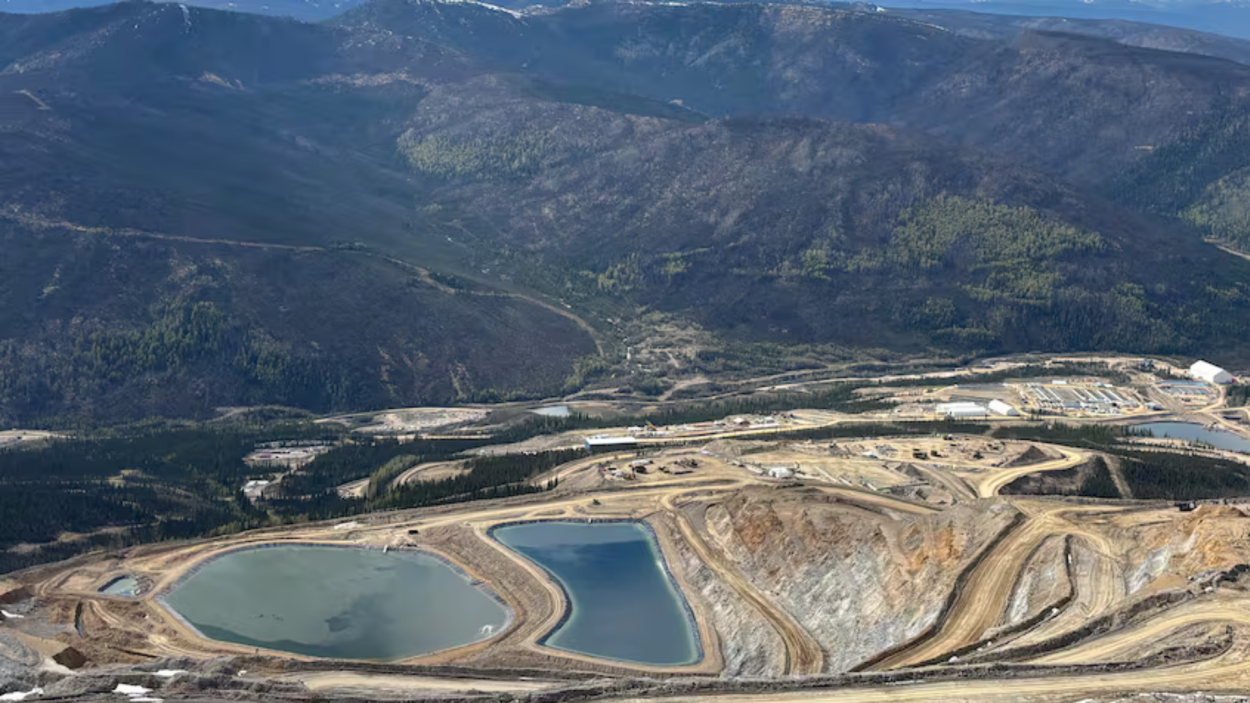
FNNND launched its lawsuit in December 2025, following the 2024 heap leach failure at Victoria Gold’s Eagle Mine. The failure released 300,000 cubic metres of cyanide-contaminated water and millions of tonnes of ore into Haggart Creek and the South McQuesten watershed.
The lawsuit describes the incident as a prime example of the consequences of allowing unsustainable development, which it attributes to the federal and territorial governments.
An independent report, released in July 2025, outlined the technical factors that led to the incident. It found that multiple factors were at play, but that a layer of ore within the heap was not draining properly, and the layer above it became saturated and failed.
The FNNND is accusing the Yukon government of breaching its agreement by failing to develop a regional land use plan and by not adequately consulting with the First Nation on mining projects.
The suit also accuses the federal government of failing to monitor and protect the territory’s fish and waterways from mining impacts, and of failing to act with diligence in fulfilling its treaty obligations to the First Nation.
Canada’s statement of defence says that the Crown denies all allegations and that it has always acted, and continues to act, in accordance with the treaty.
The federal and Yukon governments say they have properly consulted with the First Nation as required, though both argue consultation is not mandatory in every case.
The First Nation is seeking a permanent ban on federal and territorial authorisations of development on its traditional territory that it considers unsustainable. This goes alongside a request to halt the staking of areas on traditional territory until a land use plan is in place, as well as C$150 million ($151 million) in damages.
The Eagle Gold Mine has just come under an acquisition agreement, wherein Singapore-based Boroo Pte has agreed to acquire the mine for C$140 million from its receiver, PricewaterhouseCoopers (PwC).
Boroo has stated plans to spend C$1.5 billion on the project.
This follows a statement by PwC in 2025 in which it noted that it was spending a minimum of C$11 million a month on site remediation. That work has been partially paid for through a C$220 million loan from the Government of Yukon.
PwC has also been offsetting costs by selling some of Victoria Gold’s assets.
While ownership of the Eagle Mine is set to change, the legal and environmental consequences of the 2024 failure remain unresolved. This means that the incident will continue to influence debates around mining oversight, remediation, and Indigenous consultation in the Yukon.
Write to Amy Rotman at Mining.com.au
Main image: Government of Yukon


