


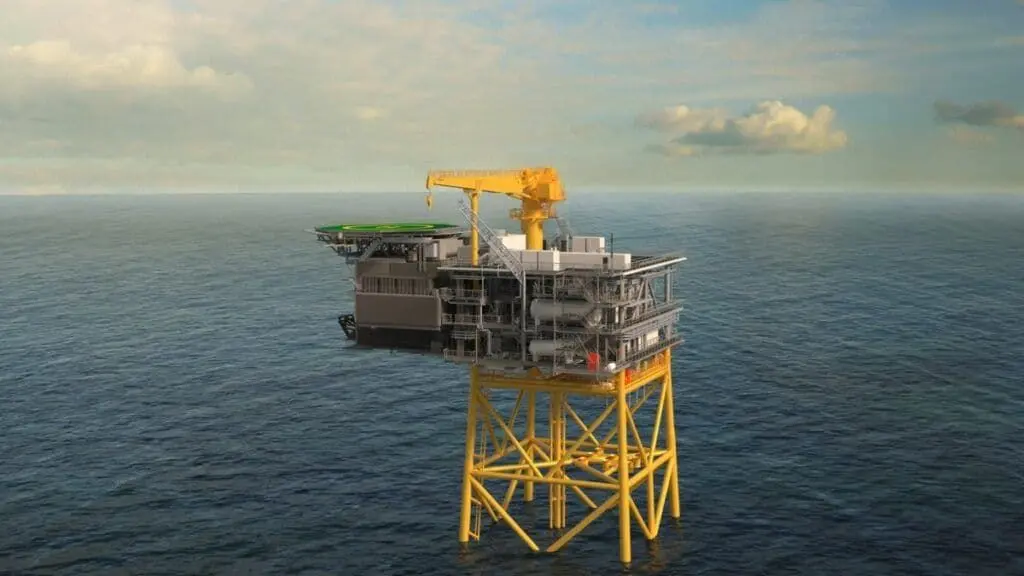
The UK Government’s approval of the Jackdaw gas field has rekindled a debate over the role of domestic resource production in strengthening energy security while transitioning away from fossil fuels.
Jackdaw, located in the central North Sea off Scotland, is expected to increase UK domestic gas production by 6% at its peak. Over its lifetime, the field is projected to produce gas equivalent to around 40 million barrels of oil. The UK Government estimates it could contribute £2.9 billion ($5.5 billion) to the nation’s economy over a lifespan of up to 11 years.
The government approval comes amid renewed volatility in global energy markets.
Geopolitical tensions are rising in the Middle East, which is exposing risks associated with dependence on international fuel supplies.
The approval is also raising concerns about the environmental costs of continued fossil fuel development and questions over whether new production can improve energy security as the UK seeks to transition towards lower-carbon energy.
A balancing act
For the UK, where North Sea production has declined from its peak, Jackdaw represents an opportunity to draw on existing domestic resources.
The project could begin supplying gas to British homes and businesses by the end of this month.
The decision follows the Supreme Court’s 2024 ruling in the Finch case. The case established that North Sea operators are required to consider the impact of burning extracted oil and gas in environmental impact assessments.
This required the Energy Secretary to consider the revised environmental framework alongside all relevant factors, including responses to the public consultation.
Energy Secretary Miatta Fahnbulleh agreed that the regulator can grant consent for gas to be produced at Jackdaw.
“The decision is compatible with our legally binding climate commitments, and we remain resolute in ending new licences for oil and gas and achieving net zero by 2050,” Fahnbulleh says.
However, concerns remain over Jackdaw’s environmental implications.
Professor of International Energy and Climate Change at University College London Michael Grubb says that Jackdaw could contribute to energy security in some circumstances.
“But this decision won’t significantly affect energy bills, since its output will be sold on international markets,” Grubb says.
Other industry professionals have raised concerns about the project’s economic rationale and climate implications, arguing that its emissions benefits depend on which imported supplies it replaces.
Richard Sulley, senior research fellow in sustainability policy at the University of Sheffield’s Grantham Centre for Sustainable Futures, says emissions would increase if the project displaces Norwegian gas.
“Why approve the Jackdaw gas field? It makes no sense economically, it will create only 27 jobs, and some modest tax receipts for the exchequer,” Sulley says.
“It will do nothing for the cost of living, the volume extracted will be too small to have a material impact on the global markets.
“There’s no energy security benefit, it in fact keeps UK industries and consumers exposed to the international markets that set prices and the wills of foreign governments who can control the flow of resources.”
Can revenues finance the transition?
Alongside the approval, the UK Government announced an initial £2 billion investment in a new Energy Wealth Fund. The fund is designed to direct North Sea oil and gas tax revenues towards renewable and low-carbon energy industries.
The initiative reflects an attempt to use revenues from existing resources to develop the infrastructure and industries needed for a lower-carbon economy.
UK Government revenues from North Sea oil and gas production are projected at £3.9–4.1 billion for FY2025–26. These figures are down from £4.45–4.5 billion during the previous financial year.
For the wider resources sector, the question is whether this approach can deliver lasting economic benefits as conventional production declines.
Britain currently consumes more gas than it produces, importing roughly 68–69% of its total natural gas supply.
Norway is the primary supplier, supplying roughly 69% of all UK gas imports, followed by the US (23%).
Jackdaw’s production could help reduce the UK’s reliance on imported gas, although it may not eliminate the country’s dependence on international energy markets.
The UK Government has also highlighted recent investment in renewable energy infrastructure. This includes a £350 million cable factory at the Port of Nigg in Scotland and new offshore wind supply chain contracts.
This is the UK’s first high-voltage direct current (HVDC) subsea cable manufacturing factory, built and operated by Sumitomo Electric Industries.
Such projects demonstrate the potential for industrial capabilities developed around established energy sources to support emerging markets.
What does this mean for the wider industry?
The Jackdaw decision also comes as geopolitical instability continues to expose vulnerabilities across global resource supply chains.
Disruptions to energy markets can affect mining operations through higher diesel costs, reduced availability of sulphuric acid and other industrial inputs, and increased shipping and insurance expenses, as reported.
Robert Bradshaw, a partner at the law firm LALIVE, who often advises on energy and mining disputes, previously told this news service that while consumers are “feeling the pinch at the pump”, the impact of the crisis extends beyond energy.
“The Strait of Hormuz is also a chokepoint for petrochemicals, sulphur, and other industrial materials that are critical to mining,” Bradshaw explained.
“That may be diesel in order to power heavy machinery and vehicles, sulphuric acid used in leaching minerals such as battery metals and uranium, and ammonia used to create explosives for blasting.”
For the UK, these pressures reinforce the importance of resource security beyond oil and gas alone.
The transition towards electrification and renewable power will require reliable supplies of copper, lithium, nickel, and other materials. It also requires the infrastructure needed to process and distribute energy.
Domestic gas production does not resolve these mineral supply challenges.
Nevertheless, Jackdaw highlights the competing priorities facing governments.
Governments are seeking to maintain industrial capacity and secure essential resources while reducing emissions.
For miners, developers, and explorers, the broader implications lie in how the UK allocates investment between existing resource industries and the infrastructure required for its future energy system.
Jackdaw represents a short-term addition to domestic gas supply, rather than a long-term solution to the UK’s energy challenges. Its importance may depend on whether the economic benefits help support a transition towards a more resilient, diversified, and lower-carbon resources sector.
Write to Aaliyah Rogan at Mining.com.au
Main image: Aker Solutions


