


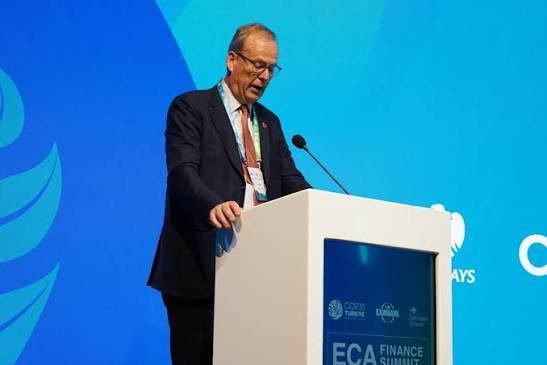
A 2026 progress report by the Net-Zero Export Credit Agencies Alliance (NZECA) shows US$376 billion ($552.54 billion) in export finance is covered by net-zero commitments, highlighting a 58% increase in a year.
The Net-Zero Export Credit Agencies Alliance is chaired by UK Export Finance (UKEF), the UK’s export credit agency.
These net-zero commitments, which increased from US$238 billion to US$376 billion, aim to reduce the emissions linked to this finance over time. According to NZECA’s annual progress report, total climate-committed exposure now stands at US$380 billion.
Collective attributed portfolio emissions also declined to 92.15 million tonnes carbon dioxide-equivalent (CO2e), even as aggregate portfolio size increased.
Eric Usher, head of finance initiative at UN’s Environment Programme (UNEP), says the 58% increase in net-zero committed portfolios sends a signal that export credit agencies are “turning climate commitments into action”.
“As climate risks intensify and economies are actively reconsidering industries, infrastructure, and supply chains of the future, the opportunities are significant and societal mandates to call for immediate action,” Usher says.
UK bringing forward sustainable investment
Alongside NZECA, UKEF is building new partnerships to help bring forward sustainable investment.
The export credit agency and the Oman Net Zero Centre (ONZC) signed a memorandum of understanding (MoU) to work together to support clean growth projects. These include opportunities in renewable energy, green hydrogen, carbon capture, and industrial decarbonisation.
Under the MoU, there will be an increase in information sharing, while identifying project pipelines and encouraging investment.
UKEF has set a target to provide £10 billion ($19.47 billion) of clean growth finance by 2029, supporting the government’s mission to make Britain a clean energy superpower and achieve at least 95% clean power by 2030.
As part of a wider £655 million infrastructure financing package for Angola, the agency is also providing £211 million for the Uíge Electrification Project.
The financing includes the Huambo transmission line, creating 5,000 domestic electricity connections and providing public lighting. It will also reduce reliance on diesel generation, using hydropower electricity to replace fossil fuel-based generation.
UKEF is also supporting projects that support the energy transition at home.
Earlier this year, the agency broadened the eligibility criteria for its export development guarantee. This allows it to consider a wide range of financing options for UK-based projects that produce sustainable aviation fuel.
Write to Aaliyah Rogan at Mining.com.au
Main image: UK Government


