
If you thought citrine had that bright, summery feel for the November-born, wait until you see topaz: the birthstone associated with the Sun God.
Ancient Egyptians believed the colouring of yellow topaz was gifted by the Sun God, Ra — although, given the broad terminology used back then, we can’t be sure if it was truly topaz.
Until about 200 years ago, gem traders did not know that yellow stones were different minerals, referring to any yellow gemstones as topaz.
Gem traders then recognised that quartz, beryl, corundum, and olivine also had yellow variants, and that topaz came in colours beyond yellow.
Topaz comes in a range of varieties, including precious topaz, which is yellow or orange; pycnite, a columnar or yellow-white variety; imperial topaz, which can be yellow, brown, red, pink, or pink-orange; and mystic topaz, which is colourless with an artificial coating that creates a rainbow effect.
It is a silicate mineral composed of aluminium, silicon, oxygen, fluorine, and hydrogen.
Digging for daylight
Topaz is mined in countries all over the world, although Brazil stands out for being the largest global producer of topaz.
In Brazil, the gemstone is mined using both surface methods, primarily open-pit mining, and underground methods.
According to Geoscience Australia, bulldozers, drag scrapers, or water cannons are frequently used to remove unwanted materials from the deposit before ore is transported to hydraulic washing stations.
Hydraulic washing stations allow for fine materials such as clays to be removed from the topaz crystals, while also recovering other minerals using sorting belts.
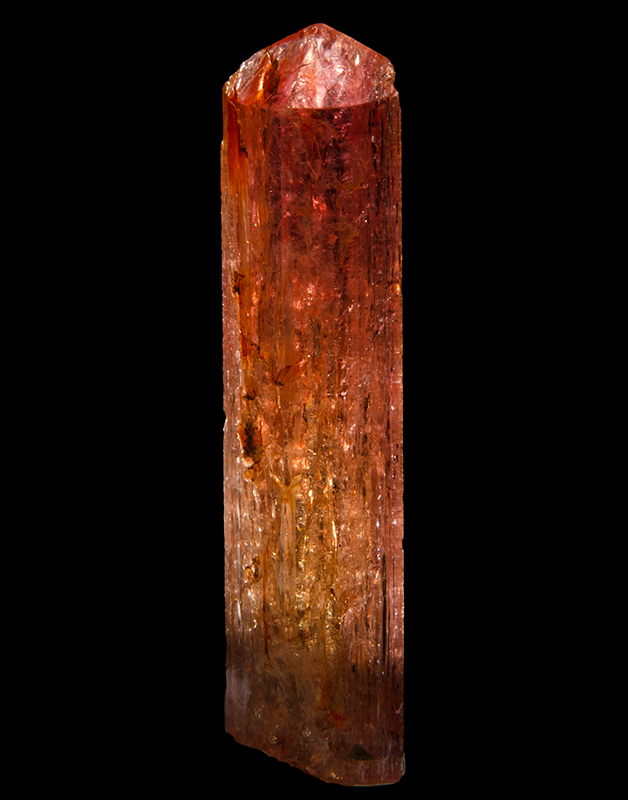
But the gemstone isn’t immediately ready for commercial sale.
Topaz is sometimes treated, polished with diamond or aluminium oxide, or even cut.
The gemstone is frequently treated to enhance its colours with heat, radiation, or metallic coatings.
Natural radiation can create small gaps in topaz’s crystal structure, altering the way light moves through the crystal and producing a rare colour variation … but that’s a story for next month.
Other leading countries for topaz mining include Pakistan, Russia, the US, and Australia.
In Australia, most topaz deposits are associated with alluvial gravels and small-scale mining operations or prospecting, Geoscience Australia reports.
The most common method used in Australia is dry sieving, which allows topaz prospectors to separate gems from other gravels.
Gem-quality topaz is found in several Australian states, with New South Wales and Queensland being the main contributors.
A new dawn
Topaz was named after Topazios, the former name of a small island in the Red Sea, which is now named Zabargad (St Johns).
This island may ring a bell for gemstone fanatics, as Topazios is where peridot was first mined — which makes sense considering peridot was often confused with topaz before modern mineralogy was developed.
Beyond this, topaz is expected to hold themes of strength and longevity.
The Gemological Institute of America reports that the ancient Greeks believed topaz provided strength, while people in Europe during the Renaissance thought it could break magic spells and dispel anger.
Meanwhile, for centuries, many people in India have believed that wearing topaz above the heart assures a long life, beauty, and intelligence.
Topaz rounds out the November two-parter for the ‘A Taste of Birthstones’ series. Join us next month to hear even more about December’s choice of topaz, along with the three other birthstones.
Write to Maddison Elliott at Mining.com.au
Main image: Mining.com.au