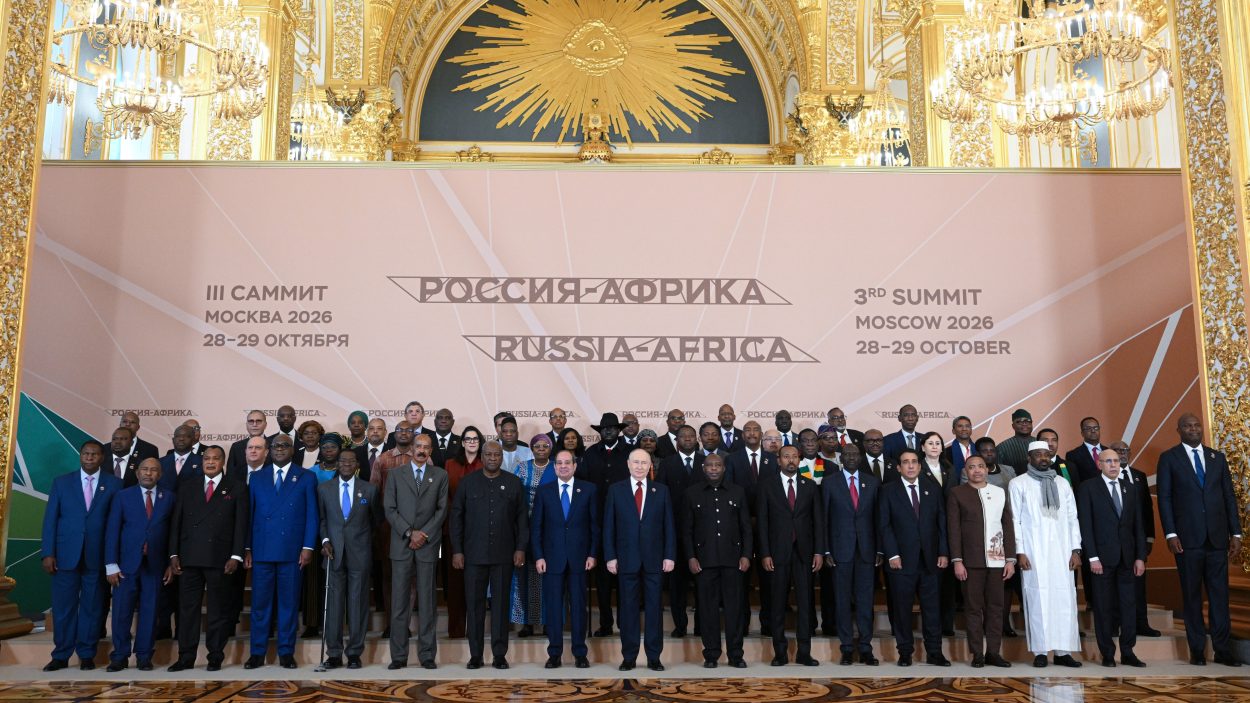
Russia has placed geological exploration and mineral development among its priorities at the third Russia-Africa Summit in Moscow as it seeks to deepen economic ties with the continent.
The two-day summit, which began on 28 October, is attended by delegations from 48 African countries, including 22 heads of state or government.
Its official business program includes talks on geological surveys, mineral exploration, mine development, domestic processing, investment, and regulatory cooperation.
Russian Natural Resources Minister Alexander Kozlov says the country has signed 21 agreements with 14 African nations, including 15 covering geology.
The summit has already produced agreements between Russian state-owned geological company Rosgeologiya and Mali to map prospective areas covering more than half of the country.
The parties will also develop a system for managing geological data, mineral licences, and regulatory oversight, as reported by Mining.com.au. Mali is a major African gold producer and is seeking to develop its lithium resources.
Despite its growing political engagement, Russia remains a comparatively small economic partner for Africa. Russia-Africa trade totalled about US$27 billion ($38.4 billion) in 2025, compared with more than US$348 billion between Africa and China, according to figures cited by DW.
Beyond the Mali agreements, the summit had not announced financing or development commitments for a specific mine at the time of publication.
Rosatom advances African nuclear talks
Separately, Russian state nuclear corporation Rosatom says it is in advanced discussions with Egypt, Togo, Namibia, and Tanzania over potential floating nuclear power projects.
Rosatom is offering 100-megawatt units under a power purchase agreement model, with servicing and refuelling undertaken in Russia. No binding supply agreements or development timelines have been announced.
Write to France Pinzon at Mining.com.au
Main image: Russia-Africa Summit