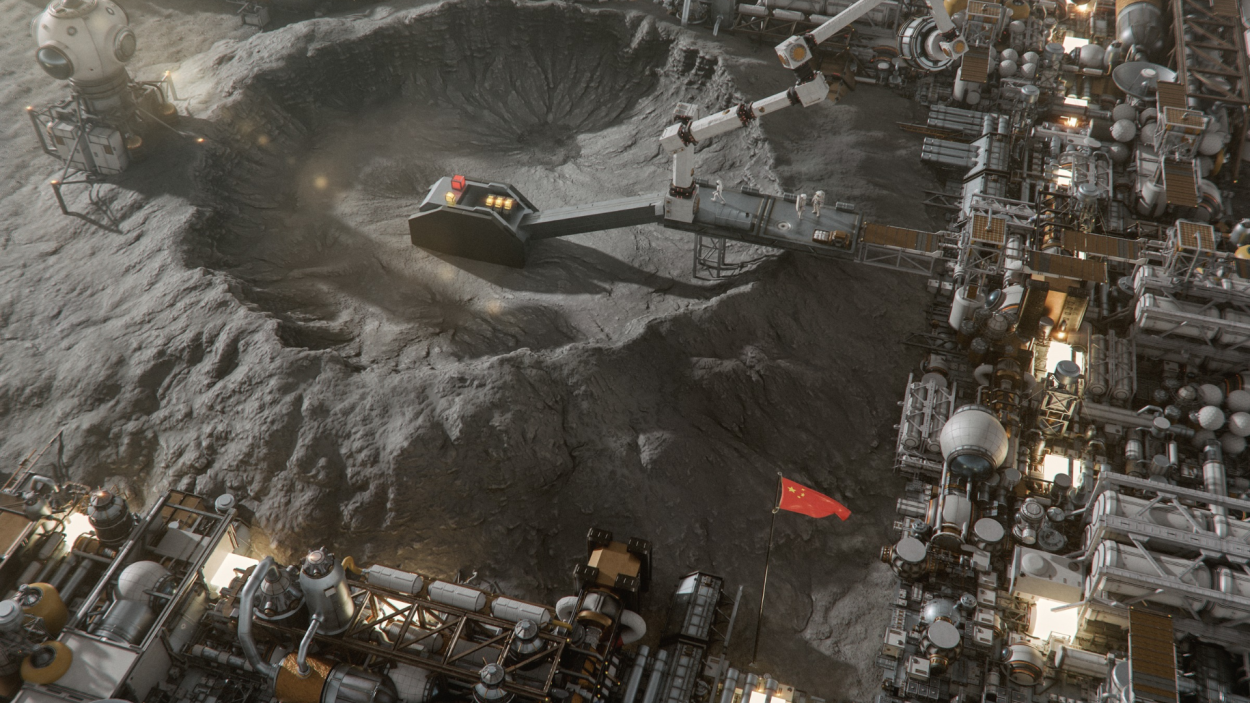
As the mining industry potentially expands into off-Earth operations, University of New South Wales Professor Serkan Saydam says there are a lot of behind-the-scenes details that need to be organised.
Outer space-based resources are considered potentially vital to strengthening future human activity in space, with the Moon and Mars considered suitable for potential colonies and containing valuable deposits of minerals such as silicon, titanium, and rare earth elements.
Helium-3 is also a rare isotope implanted in the lunar regolith by solar wind. The isotope is considered a potential non-radioactive fuel for future nuclear fusion energy.
Before anyone from Earth can even consider searching for these resources, Professor Saydam says the world will need to consider who reaps the benefits.
“Most of the mining activities are currently done in the low-income countries on Earth, except Australia and Canada, so they have significant economic benefits of doing mining,” Saydam says.
“If we move to mining the Moon, or Mars, or asteroids in the future, let’s say within 50 or 100 years, what’s going to happen to those nations?
“That’s called space gap. Because space-faring nations are high-income countries.”
Saydam says it is likely to be a small number of wealthy countries and companies that will have both the ability to reach and extract these resources from outer space, creating a potential new economic divide between nations on Earth.
As reported by Mining.com.au, the Outer Space Treaty of 1967 is an international agreement that governs how nations act in space. It establishes that celestial bodies cannot be claimed as national territory and that space exploration should be carried out for the benefit of all countries.
The treaty was developed amid concerns about the use of nuclear weapons in outer space, long before mining was on the horizon.
Sustainable mining in space
There are many other concerns to consider before introducing mining to outer space, including engineering issues and sustainability.
Saydam says several engineering challenges will need to be overcome for mining on the Moon, Mars, and asteroids to be feasible.
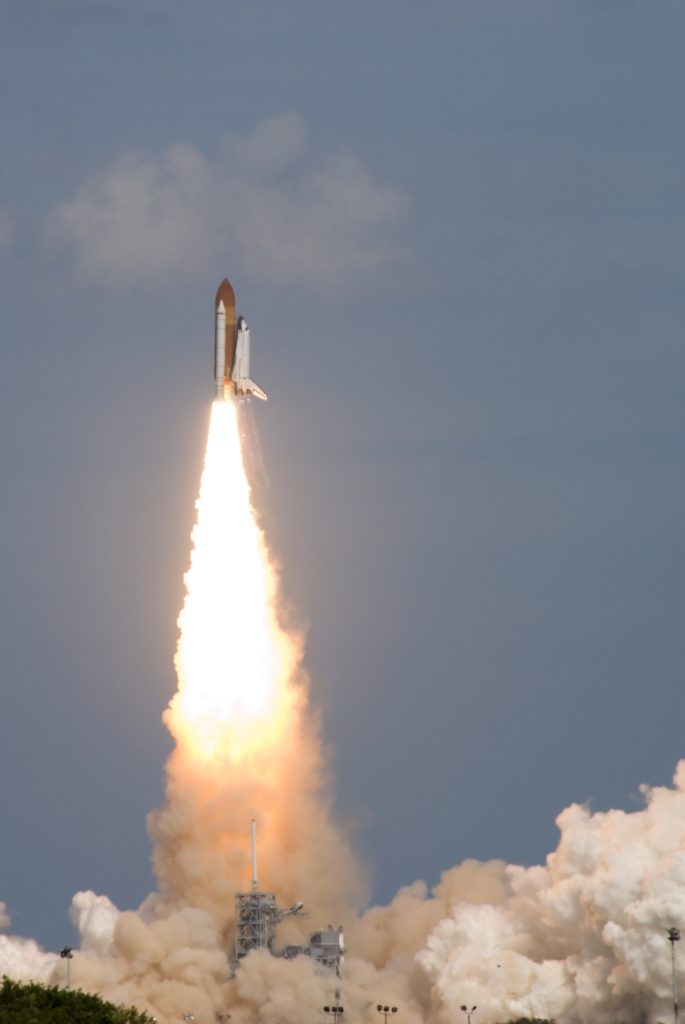
“At the moment, we don’t know how to do it. We’ve got ideas how to do it, but there are lots of challenges. What equipment will we use? And it is also a very extreme environment we are dealing with,” Saydam adds.
“On the Moon there is no atmosphere, so you get a lot of meteoroids that land on the surface. As well as that, there is radiation exposure and the dust on the Moon and Mars is very difficult to deal with because it is extremely fine and very abrasive.
“But to me the distance is the biggest challenge because it’s an extremely high cost to go and get these materials. And we don’t have the financial power to do it right now, specifically for Mars.”
Saydam says in order to conduct off-Earth mining operations, cultural and environmental impacts need to be considered, along with the emissions impact.
Mining in space is not yet a concern for the resources industry. However, as technology advances and new discoveries are made, space could play a key role in the mining industry.
Write to Maddison Elliott at Mining.com.au
Main image: iStock