
MDF Global MDF Global
Finland’s nuclear waste repository puts Australia in focus•Junior explorers on road to unlocking Africa’s mineral wealth•A royal-blue legacy older than the pyramids: Lapis lazuli•Western Australia’s gold pipeline keeps growing•Sahel gold miners step up security amid jihadist threats•Lake Vermont’s $1.3 billion coal extension to support 860 jobs•Codelco reports $2.11 billion nine-month loss after asset write-downs•Copper price sweeps higher as China offers stock market support•Codelco leadership shake-up continues as commercial chief departs for Trafigura•Gold price climbs 3% as tech stocks rebound•Kazakh banks raise $2.26 billion to fund private takeover of gold miner•Australia and Mozambique discuss mining investment•Liberia signs $8.6 billion Bea Mountain infrastructure deal•China Shenhua raises $1.29 billion in Hong Kong share sale•Ivanhoe Mines backs AI for Angola copper exploration•Rio Tinto JV ships first Simandou iron ore to Europe•Genesis Minerals completes Vault gold takeover•1911 Gold raises ceiling on $14.8 million private placement•Copper Road paves way to Ben Nevis drilling•BlueScope opens Western Sydney coating line Finland’s nuclear waste repository puts Australia in focus•Junior explorers on road to unlocking Africa’s mineral wealth•A royal-blue legacy older than the pyramids: Lapis lazuli•Western Australia’s gold pipeline keeps growing•Sahel gold miners step up security amid jihadist threats•Lake Vermont’s $1.3 billion coal extension to support 860 jobs•Codelco reports $2.11 billion nine-month loss after asset write-downs•Copper price sweeps higher as China offers stock market support•Codelco leadership shake-up continues as commercial chief departs for Trafigura•Gold price climbs 3% as tech stocks rebound•Kazakh banks raise $2.26 billion to fund private takeover of gold miner•Australia and Mozambique discuss mining investment•Liberia signs $8.6 billion Bea Mountain infrastructure deal•China Shenhua raises $1.29 billion in Hong Kong share sale•Ivanhoe Mines backs AI for Angola copper exploration•Rio Tinto JV ships first Simandou iron ore to Europe•Genesis Minerals completes Vault gold takeover•1911 Gold raises ceiling on $14.8 million private placement•Copper Road paves way to Ben Nevis drilling•BlueScope opens Western Sydney coating line

Guinea overtakes South Africa and Canada in iron ore exports

Guinea is fast becoming a global iron ore powerhouse, surpassing both South Africa and Canada on the back of strong exports to China, the world’s largest importer.

Guinea exported over 5 million tonnes (Mt) of iron ore in October, accounting for 3% of global seaborne shipments. That put it behind only Australia and Brazil, while its total shipments for the year had already exceeded 22Mt — higher than the 20Mt previously expected for the whole of 2026.

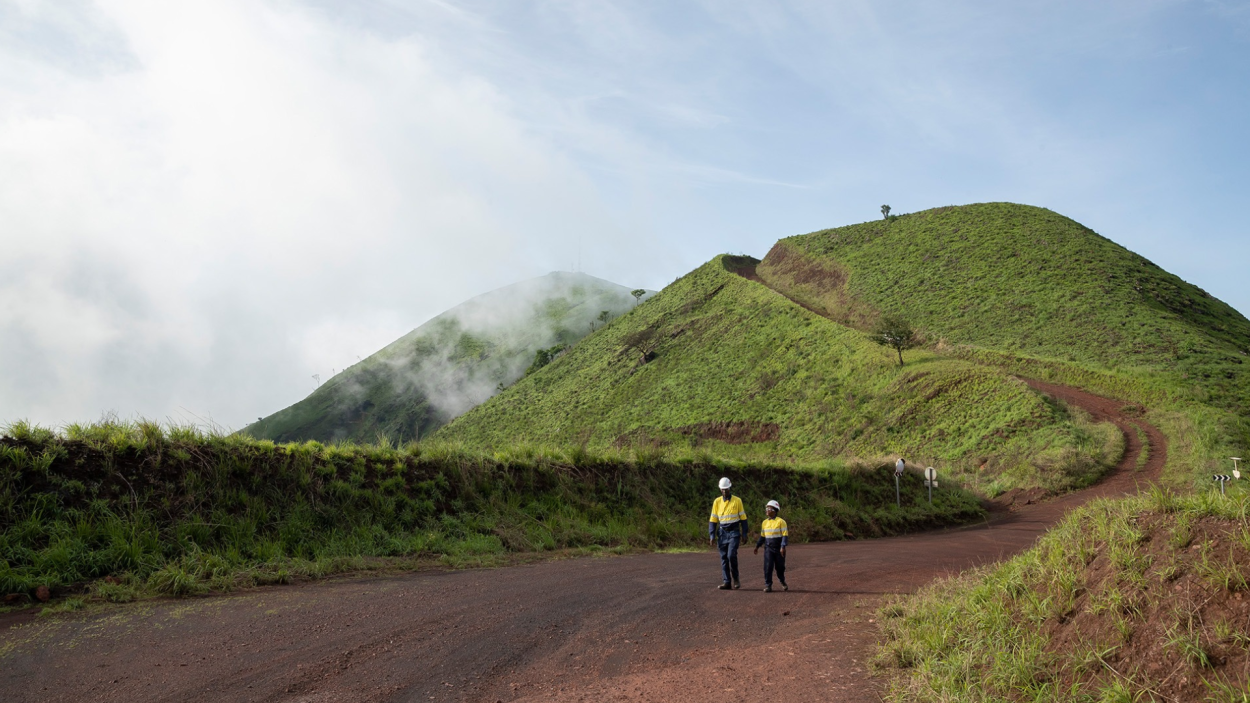
The shift is largely due to the start of operations at Rio Tinto’s (ASX:RIO) Simandou Project in November 2025, with first exports following in December that year.

At the time of launch, Rio Tinto said the project was expected to export up to 120Mt of iron ore per year.

The project is divided between two joint ventures (JVs). Winning Consortium Simandou (WCS), together with the Government of Guinea, is responsible for blocks one and two. SimFer covers blocks three and four.

Compagnie du Trans Guinéen (CTG) is responsible for the rail and port infrastructure, with WCS, the Government of Guinea, and SimFer sharing ownership.

WCS is a consortium comprising Winning International, Weiqiao Aluminium (part of China Hongqiao), and Baowu Resources.

The SimFer JV is owned by the Government of Guinea and Simfer Jersey. The latter is itself a JV between Rio Tinto and Chalco Iron Ore, which is owned by Chinalco, Baowu, China Rail Construction, and China Harbour Engineering.

Over 600km of rail has been developed across Guinea to transport the iron ore to the shipping port. The distance involved means that shipments from Guinea travel around 88% farther than typical seaborne shipments. As a result, Guinea accounted for 6% of global iron ore tonne-mile demand in October 2026.

Australia remains the world’s largest seaborne iron ore exporter, followed by Brazil. Both countries ship significant volumes to China for use in its steel industry.

While Guinea’s iron ore industry is running from strength to strength, export restrictions and crackdowns on artisanal and small-scale mining have caused major disruptions to the country’s gold industry, as previously reported.

With Simandou ramping up towards full capacity and broader opportunities attracting global investment, Guinea has the chance to cement its long-term economic growth. However, this will depend on the country maintaining relative political and regulatory stability across its mining sector.

Write to Amy Rotman at Mining.com.au

Main image: Rio Tinto

Add to Watch List:
Author Image
Written By Amy Rotman
Amy Rotman is a mining-focused editor and content strategist with extensive experience across industry media and investor engagement. She curates expert interviews, corporate news updates, and market insights that highlight global mining trends and investment opportunities.