



Copper’s supply pipeline is continuing to take shape, with projects across the sector moving from exploration and development through to construction and production.
Recent milestones at Sinomine Resources Group’s (SHE:002738) Kitumba Copper Project in Zambia and Meridian Mining’s (TSX:MNO) Cabaçal Copper-Gold-Silver Project in Brazil highlight the different stages involved in bringing new copper supply to market.
Kitumba has begun full-line trial production, marking the transition of the project’s mining and beneficiation facilities from construction into the production ramp-up stage.
The project is being developed as an integrated mining, beneficiation, and smelting project in the Mumbwa area of Zambia’s Central Province.
With a 15-year mine life, Kitumba has a designed raw ore processing capacity of 3.5 million tonnes (Mt) per year and cathode copper capacity of 35,000 tonnes, alongside copper concentrate capacity of 55,000 tonnes.
Construction of the smelting facilities is underway, with production preparation or trial production to be completed in Q4 2026. Formal production is scheduled to begin in Q1 2027.
Turning resources into development: Meridian
Meanwhile, Meridian Mining has completed a Definitive Feasibility Study (DFS) for the Cabaçal Project, outlining total production of 180,634 tonnes, as the company advances towards a final investment decision.
The DFS highlights a 13.9-year mine life based on a conventional open pit operation. Processing throughput is expected to reach 2.5Mt annually, before expanding to 4.5Mt after four years.
Initial capital expenditure is estimated at US$322 million ($458 million), including a 10% contingency, tax credits, and pre-investment associated with the planned processing expansion.
A further US$56 million of expansion capital is included in the project economics. The DFS also estimated a post-tax net present value of US$2.09 billion, with an internal rate of return of 108%.
Together, these developments underscore the long pipeline required to meet future copper demand, alongside the growing importance of developers continuing to identify, define, and advance projects.
As established projects progress towards production, the next wave of copper supply will depend on the projects being explored and developed across the global resources sector.
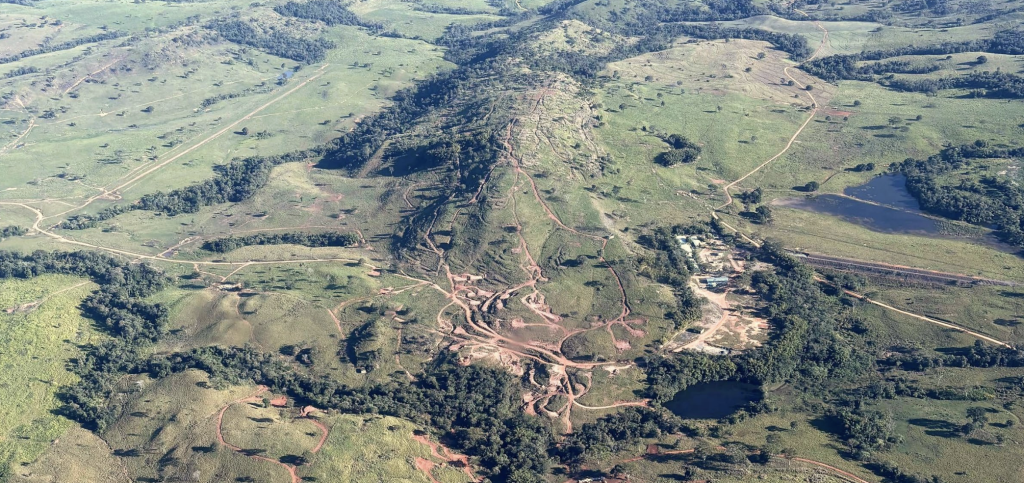
The world has not run out of copper
Earlier this year, Mining.com.au reported that the rate of finding new copper deposits had halved. This is largely due to a 60% fall in funding for grassroots exploration, according to MinEx Consulting Managing Director Richard Schodde.
As such, there are concerns about a looming copper shortage, with the International Copper Study Group forecasting a 150,000-tonne deficit for 2026.
JP Morgan’s model has pushed the anticipated shortfall even further, projecting a 330,000-tonne deficit.
However, Schodde believes that the industry’s challenge is not a lack of copper in the ground. Between 2010 and 2024, existing mines and projects in prefeasibility and feasibility stages delivered four times more copper than greenfield discoveries.
After accounting for 296Mt of mined production, total global copper resources still increased by 946Mt.
To date, roughly 700Mt of copper has been produced globally, according to the US Geological Survey. Identified deposits contain an estimated 2.1 billion tonnes (Bt) of additional copper, bringing the total amount of discovered copper to 2.8Bt.
While projects such as Sinomine’s and Meridian’s demonstrate copper assets advancing through the later stages of the mining lifecycle, the supply challenge also raises a broader question: where will the projects after them come from?
Hunting for systems: Legacy Minerals
The growing disconnect between copper demand and future supply highlights the critical role of exploration and development in the global mining sector.
For companies such as Legacy Minerals (ASX:LGM), which is focused on exploring for new mineral deposits, this supply-side pressure underscores the importance of advancing projects that could contribute to the next generation of copper resources.
Earlier this month, the company defined three untested chargeability targets at the Rockley Project in New South Wales.
Priority targets returned responses of up to 45 millivolts per volt (mV/V) over an 800m strike length. The induced polarisation (IP) survey at the Crystal Hill prospect identified three discrete zones exceeding 35mV/V, none of which have been drill tested.
Rock-chip samples at Crystal Hill returned up to 9.3% copper (Cu), 3.9 grams per tonne gold, and 415g/t silver. None of the three IP targets have been tested by historical drilling.
Managing Director Christopher Byrne says it’s hard to ask for better drill targets than these three clear, untested copper targets.
“The most compelling target sits directly beneath the copper, gold, and silver anomaly we mapped during previous campaigns,” Byrne says.
“Our strategy at Rockley has always been to determine whether the high-grade copper and gold we see at the surface reflects a larger system at depth.”
Legacy Minerals is integrating the inversion models with geological mapping, structural interpretation, and geochemistry to prioritise the three targets. Drill testing remains subject to planning, landholder access, approvals, and funding.
Building the next link: LinQ Minerals
Rockley is one example of the exploration work underway across Australia as companies seek to build the next generation of copper resources. That same push is evident across other projects, including LinQ Minerals’ (ASX:LNQ) NSW operation, where exploration is focused on unlocking further copper potential.
While the projects and stages of development differ, the underlying objective is similar — to convert geological potential into defined resources that can ultimately feed the broader copper supply chain.
LinQ Minerals’ Gilmore Copper Gold Project in NSW’s Macquarie Arc is considered an advanced, ‘large-scale’ asset with a defined resource totalling 516Mt containing 1.2Mt of Cu.
In mid-September, the company received results from a maiden drilling program, returning 113m @ 0.71% copper equivalent (CuEq) from 33m, including 72m @ 0.95% CuEq from 45m and 4m @ 5.3% CuEq from 62m; and 193m @ 0.45% CuEq from 49m.
Executive Chairman Clive Donner says drilling has continued to intersect shallow, thick, near-surface copper mineralisation.
“The prospect remains open in all directions, including a 1km strike between Monza (prospect) and Estoril (Gilmore resource),” Donner says.
“We are highly encouraged by our maiden drill campaign at Monza and planning is currently underway to follow up with additional drilling to test the size of the system.”
Following these results, LinQ Minerals began a 30,000m drilling program, targeting resource growth and new discoveries across 40km of strike within the Macquarie Arc. Drilling is focusing on multiple areas of strong copper and gold anomalism.
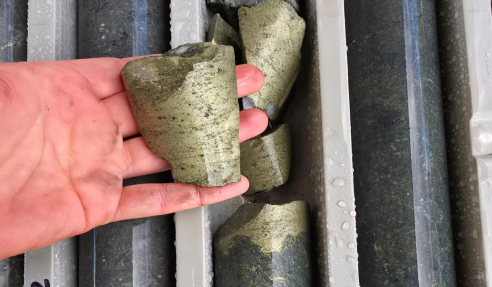
Expanding exploration frontier: Middle Island
This exploration pipeline also extends to companies such as Middle Island Resources (ASX:MDI) and Alma Metals (ASX:ALM), which are both advancing their respective copper opportunities as the sector faces increasing pressure to identify new sources of supply.
Middle Island specifically has assembled a substantial portfolio of copper exploration projects in the Republic of Serbia.
The company’s Priboj Project is located along a regional geological boundary that separates predominantly oceanic crustal rocks to the northeast from continentally derived sedimentary rocks to the southwest.
‘Large-scale’ copper targets at Priboj have been defined, with infill soil sampling confirming broad anomalies at the Jelaca and Oglavak prospects, as previously reported.
Across the two prospects, 192 soil samples were collected, defining core anomalies above 200 parts per million copper at both locations.
“These latest assay results from the Priboj Project area provide further support for the [volcanogenic massive sulphide] VMS-style copper exploration model being tested and reinforce the potential of the broader licence area,” Executive Chairman Daniel Raihani says.
Deep in Australia’s potential: Alma Metals
Meanwhile, Alma Metals has received drill results from its Briggs Copper Project in Queensland, confirming what the company is increasingly seeing across the northern rim of the system.
Managing Director Frazer Tabeart describes it as a well-developed higher-grade zone of copper mineralisation that follows the contact between the intrusive core and the surrounding volcanics in a consistent and predictable pattern.
Drill hole 26BRD0042 returned 383.8m @ 0.25% Cu from 10.2m. It also delivered 76.7m @ 0.34% Cu within the broader intercept, occurring at the contact between the porphyritic felsic intrusive core and surrounding volcanic sediments.
Briggs, which covers 245km2, contains an inferred resource of 415Mt @ 0.25% Cu and 31ppm molybdenum. The project is located close to key infrastructure, including sealed roads, rail, grid power, gas pipelines, and a deep-water port at Gladstone.
The contrast between all of these companies and the likes of Sinomine and Meridian illustrates the length of the copper supply pipeline. A project entering production today can be the product of years of exploration, resource definition, feasibility work, financing, and development.
With the rate of new copper discoveries slowing and exploration funding under pressure, maintaining that pipeline will require continued investment at every stage of the mining lifecycle.
For the copper market, the significance of exploration activity goes deeper than individual drill targets. The discoveries and projects being advanced now are the potential building blocks for the mines that could be needed to close tomorrow’s supply gap.
Write to Aaliyah Rogan at Mining.com.au
Main image: iStock


