



Is the circular economy thriving, or is the world merely going around in circles?
Ever rising consumption and excessive waste is driving profound and intensifying disparities in the distribution of wealth, materials, and opportunities around the world.
Despite collective efforts to find ‘circularity’ solutions, the modern economy is underpinned by linear practices that fuel an insatiable appetite to consume and drive exponential growth in pollution and waste generation.
The circular economy, or circularity, refers to practices that optimise resource use and minimise waste across the entire production and consumption cycle, emphasising sustainability and economic efficiency.
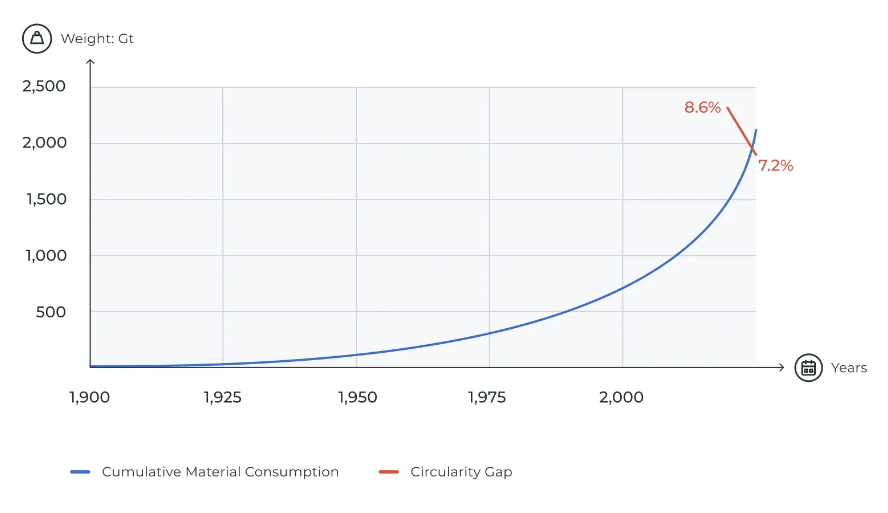
Since the Circularity Gap Report 2024 began measuring the total amount of materials consumed worldwide, recognition of the importance of a circular economy has been rising yet the rate of circularity has actually been falling.
The vast majority of extracted materials entering the global economy are virgin – the share of secondary materials has been declining steadily from 9.1% in 2018 to 7.2% just five years later in 2023, according to the Circle Economy Foundation.
Between 2016 and 2021 alone, the global economy consumed 582 billion tonnes of materials – almost as much as the 740 billion consumed in the entire 20th century.
Yet research shows that every year, US$2.6 trillion ($3.865 trillion) worth of material in fast-moving consumer goods is either thrown away or discarded and never recovered.
To put that in perspective, in 2023 Australia’s GDP was US$1.72 trillion. The value of what the world wastes or discards each year is worth 51% more than the total monetary or market value of all finished goods and services produced within the country’s borders last year.
Circularity presents an alternative to the linear model. In a circular economy, resources can be used time and again, often for the same or similar purposes.
Circling past the linear model
Australia-based e-waste recycling processor Sircel has launched its report called Plugging Australia’s E-waste Gap, which highlights the gap in the country’s e-waste education and recycling efforts.
The report surveyed 1,000 Australians on their knowledge and expectations of e-waste and features an in-depth analysis of the most up-to-date sustainability reports published by ASX200 companies.
According to the report, only 43% of the ASX200 companies mention supporting and working towards a circular economy in their sustainability reports. Within that, only 12% actually discuss the relationship between e-waste disposal and enriching the circular economy.
These figures will be concerning for some considering resources industry has one of the most important roles to play across the entire circular economy. In mining, this is throughout every stage of the life cycle, from sourcing metals and minerals, to production, their use and also recovery.
However, the Sircel report does note the vast majority of the aforementioned ASX companies mentioned recycling in their sustainability reports (88%). This indicates that companies acknowledge that recycling is part of the answer in tackling climate change and promoting sustainability. Yet only 15% of those that mentioned recycling included e-waste in their definition of recycling, highlighting the need to encourage corporates to expand their definition.
The mining sector will be given the opportunity to better understand its role within the circular value supply stream at the inaugural Mining, Metals and the Circular Economy conference at the ICC Sydney on 29 to 30 October 2024.
Organised by Beacon Events, the event is co-located with the International Mining and Resources Conference (IMARC).
Beacon Events Event Director Sherene Asnasyous says as a powerful tool to reduce waste and pollution, circularity needs to be a priority for mining producers and their supply chains.
“It is also crucial for meeting the growing demand for minerals needed for new technologies, construction, and other industries, as it extends the lifespan of metals beyond their initial use,” Asnasyous says.
The world needs metals and minerals for everyday living – appliances, cars, computers, concrete roads, electronic devices, electrical transmission lines, fertilisers, houses, tractors, and jewellery, are just a few examples. Without mining mineral resources, global industry would collapse and living standards would plummet worldwide.
As International Council on Mining and Metals (ICMM) Director of Innovation Bryony Clear Hill notes, metals are durable materials that can be recycled almost indefinitely under the right conditions.
“For materials to be truly circular, both the way they are produced and consumed must be circular,” Hill says.
“ICMM is focused on creating a collaborative space to ensure that the right conditions are in place to allow different types of circular strategies to be successful, including regulation, technology and low carbon energy availability and financing.
“Increasing the circularity of mining and metals value chains will help to sustainably and responsibly meet the growing demand for metals as the world transitions to net zero.”

Coming full circle
Mining companies addressing their roles is a crucial step towards securing the building blocks of a circular future, ensuring sustainable resource efficiency, as well as advancing the transition to cleaner energy technologies.
However, all stakeholders across the resources value chain must contribute. Australia-based global mining services firm Russell Mineral Equipment (RME) is one such company and “absolutely celebrates” the notion of a circular economy.
Speaking to Mining.com.au, RME company director Cherylyn Russell says the 40-year-old company’s core values and long-term vision align with circularity.
“We not only promote it, our products and services are purposefully designed to deliver the environmental and financial benefits of the circular economy,” Russell tells this news service.
For example, as highlighted in its 2024 ESG principles statement, RME “takes pride in manufacturing high-quality, durable grinding mill relining equipment” that has a longer service life (up to 20 plus years) significantly exceeding other OEMs’ liner exchange technologies.
“We not only promote it, our products and services are purposefully designed to deliver the environmental and financial benefits of the circular economy”
“By producing longer-lasting equipment and offering highly-informed services for maintaining asset integrity, RME reduces the frequency of equipment replacements, thereby decreasing the resources and energy required for manufacturing new machines,” Russell explains.
“Further, RME is dedicated to safety and sustainability leadership through our rigorous programs for both major servicing and certified rebuilds. By ensuring that mill relining equipment is well-maintained, RME’s Customers optimise and extend their RME assets’ performance and lifespans.
“By refurbishing components at the end of their initial service life to like-new condition, RME contributes to waste reduction, minimising the demand for raw materials and energy inputs associated with the production and transportation of new machines.”
RME offers a customised asset disposal service which prioritises the use of sustainable disposal methods, including recycling, repurposing or responsible waste management, to reduce environmental impacts.
Moreover, it also offers alternative sharing economy models including rental and product-as-a-service models which embed and promote sustainability into how business can be conducted, Russell says.

Powerful mandates
Circular Australia CEO Lisa McLean declares the circular economy is here “and we need to get ready”.
“Businesses and governments are leading the way with big changes that will make our planet more sustainable and resilient. Companies and researchers are designing out waste by making products that last and can be repaired,” McLean says.
“Next-generation infrastructure and services are allowing people to generate energy and water locally, reducing costs and creating an abundance of sustainable resources that can be shared. People are also sharing mobility, saving money and carbon.”
Various governments across Australia are indeed leading the way with big change. Importantly, governments are also leading with financial commitments, pouring millions of dollars into initiatives to drive better sustainability practices.
In November 2023, the Australian Government announced the $15 billion National Reconstruction Fund (NRF), which has a powerful mandate on sustainability and circular economy.
The NRF will help scale onshore manufacturing and recycling of solar panels, batteries, e-waste, masonry, textiles, plastics and healthcare waste for example – which make up most of the 20 million tonnes of waste currently going to landfill every year.
The NRF can help scale onshore manufacturing and recycling of solar panels, batteries, e-waste, masonry, textiles, plastics and healthcare waste for example – which make up most of the 20 million tonnes of waste currently going to landfill each year.
At the time of the NRF announcement, Circular Australia’s McLean highlighted that a “thriving economy and the creation of good jobs are not at odds with action towards sustainability – they are supported by it”.
Circular Australia is on a mission to remove barriers to the circular economy future by partnering with business, government, researchers, and people. It’s an independent, national peak not-for-profit body working to transition Australians, governments, and businesses to a circular economy by 2030.
In April 2024, the Queensland Government announced a $5 million funding program to help companies extract critical minerals and reprocessing opportunities in mine waste.
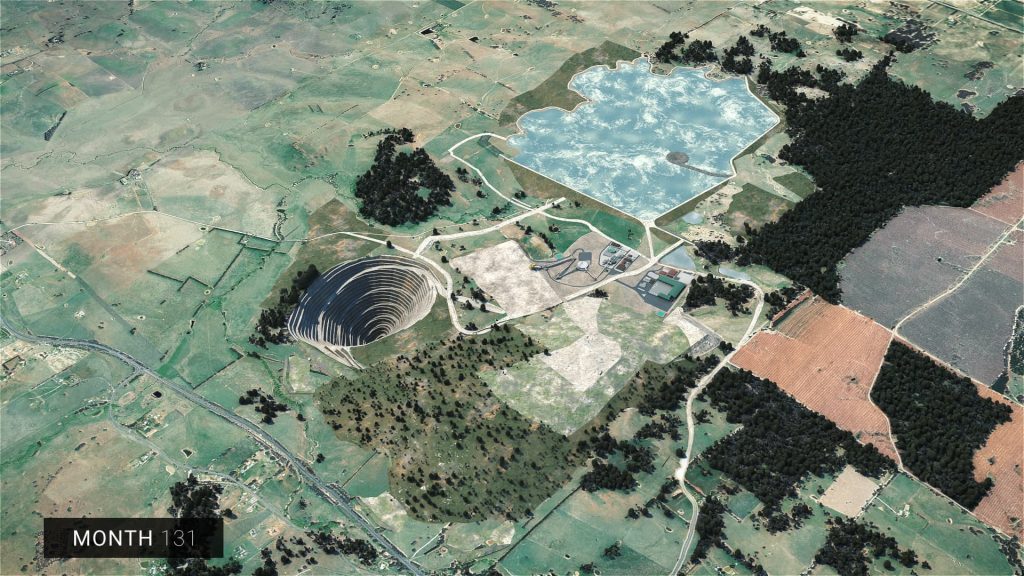
As reported by Mining.com.au, the new Collaborative Development Program — part of Queensland’s $245 million Critical Minerals Strategy — provides funding for companies seeking to assess and find ways to extract value from residual materials left behind after primary phases of mining and mineral processing.
The Collaborative Development Program remains open until the end of June 2027, or until funds are exhausted.
Queensland’s Critical Minerals Strategy seeks to transform the state, national, and global economy through the responsible use of critical minerals.
Meanwhile, the Victorian Government has committed to a long-term target of net zero greenhouse gas emissions by 2045 and an emissions reduction target of 75 to 80% by 2035.
Victoria is projected to add 4.7 million people from 2018 to 2056, reaching a population of 11.2 million. This represents annual average growth of 125,000 people, at a rate of 1.5% per annum. Greater Melbourne is forecasted to grow by about 4 million people, increasing from 5 million in 2018 to 9 million in 2056. Over the same period, Victoria’s regions are expected to grow by just over 700,000 from 1.5 million to 2.2 million.
The state’s Recycling Victoria initiative started in July 2022 to support the transition to a circular economy. Its strategic priorities through to 2026 include providing strategic market information for greater market transparency, and confidence to enable stronger circular economy opportunities.
Victoria generated 15.8 million tonnes of material in the 2020–21 financial year, with 11 million tonnes recovered for reprocessing. This resulted in a state-wide recovery rate of 70%, according to a government report.
‘Game-changing solutions’
More recently, the Commonwealth Scientific and Industrial Research Organisation (CSIRO) in partnership with the U.S. National Science Foundation (NSF) is investing $30 million into an initiative centred on the circular economy.
The partnership seeks to find solutions to accelerate the transition of materials development, manufacturing, and use to a circular economy, “positively impacting multiple industries such as semiconductors and plastics”.
Head of the NSF Convergence Accelerator program, Douglas Maughan, says the initiative is bringing together a wide range of expertise to develop critical, “game-changing solutions”.
These solutions will help transition toward a regenerative growth model that reduces pressure on natural resources, creates sustainable growth and jobs, drastically reduces waste and ultimately has a positive impact on our environment and society, he says.
“Progress toward a circular economy is vital for our planet’s health, but it is a complex challenge to tackle,” Maughan adds.
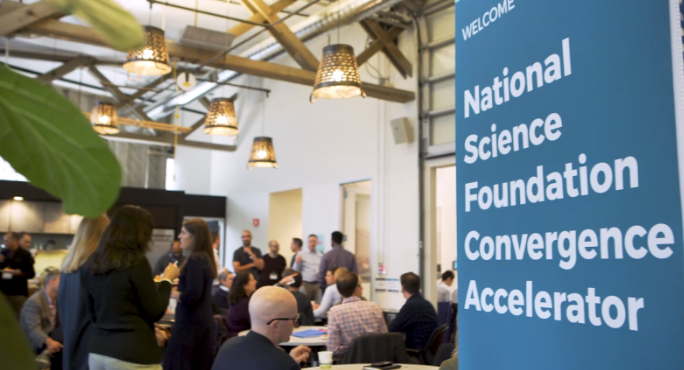
The CSIRO has already sponsored Australian participation in the NSF Convergence Accelerator for Track I: Sustainable Materials for Global Challenges.
Track I aims to converge advances in fundamental materials science with materials design and manufacturing methods in an effort to couple end-use and full lifecycle considerations for environmentally and economically sustainable materials and products.
Six research teams from the NSF Track I have been selected to advance to phase two. The CSIRO is funding the Australian researchers on one of the US-led teams – ReCreateIt. Each phase two team will receive up to $5 million over three years.
These solutions will help transition toward a regenerative growth model that reduces pressure on natural resources, creates sustainable growth and jobs, drastically reduces waste and ultimately has a positive impact on our environment and society, says Maughan adds.
NSF assistant director for technology, innovation, and partnerships, Erwin Gianchandani, says the partnership with the CSIRO will help “catalyse the shift to a circular economy for advanced materials”.
“This investment directly aligns with the goals of the ‘CHIPS and Science Act of 2022’, which authorises NSF to accelerate key technologies like advanced materials while addressing national, societal, and geostrategic challenges like sustainability and resilience,” Gianchandani says.
“These projects, in which we are investing today, will contribute to the nation’s long-term competitiveness and security.”
The CHIPS act was signed into law by President Joe Biden in August 2022 and authorises roughly US$280 billion in new funding to boost domestic research and manufacturing of semiconductors in the US, for which it appropriates US$52.7 billion.
For miners and mining services firms seeking to participate in the circular economy, industry body International Council on Mining and Metals (ICMM) has released new tools aimed at helping mining companies improve their ‘circularity’.
ICMM’s ‘Tools for Circularity’ provides business cases for expanding circularity in the industry and shares good practice and detailed case studies from different operating contexts to help set approaches from a corporate-level through to implementation at mining and metals operations.
The tools highlight opportunities to boost material efficiency and minimise waste while creating new financial, social, and environmental value based around the re-mining of tailings, utilising by-products or recovering and reprocessing e-waste and zero emission vehicle batteries.
ICMM says by strengthening approaches to reducing emissions, tailings and other waste; optimising water usage; regenerating closed mine sites; valorising and recycling other waste such as tyres; and focussing on efficiency, the sustainability of materials entering value chains can be improved.
Mining.com.au will be attending IMARC and the inaugural Mining, Metals and the Circular Economy conference at the ICC Sydney on 29 to 30 October 2024.
Write to Adam Orlando at Mining.com.au
Images: Circle Economy Foundation, Circular Australia, Regis, ANSTO, & Russell Mineral Equipment


