

Mount Ridley Mines (ASX:MRD) has reported recovery of 96% vanadium (V), 49% titanium (Ti), and 78% iron (Fe) from the second third-party feed test of its wholly owned, patent-pending SelectroTM process.
The feed test was completed on a titanomagnetite sample and designed to determine whether SelectroTM could recover both vanadium and titanium together from a single feed.
This is compared to a conventional processing route that would typically see vanadium recovered in isolation.
The test was completed in two stages, with stage one seeing vanadium and iron taken into solution preferentially over titanium. This left a titanium-rich residue with a grade 21.5% titanium dioxide (TiO2), up from 14.2% in the head sample.
Mount Ridley notes that solution loading is the key constraint in the recovery of titanium for stage one, with the solution becoming loaded with iron and vanadium.
In this instance, the titanium-rich residue was given a second SelectroTM leach stage. This stage used a fresh solution in which the titanium leached preferentially over iron, lifting the overall recovery of titanium more than five times — from 9% to 48% — while also recovering additional vanadium and iron.
According to Mount Ridley, these results indicate there is scope to further increase titanium recovery in second stage conditions.
Overall, the titanomagnetite sample returned 1.30% vanadium pentoxide, 14.2% TiO2, and 52.3% iron, with combined recoveries from both stages at 95.5% V, 48.6% Ti, and 77.6% Fe.
Managing Director and CEO Allister Caird says that the results indicate that SelectroTM processing can extend beyond the company’s own Grass Patch Project.
“Titanomagnetite is the world’s primary source of vanadium, but it has historically been processed for vanadium alone,” Caird says.
“Recovering 96% of the vanadium from the sample while also bringing titanium and iron into solution shows SelectroTM has the potential to unlock more value from this feed, which could improve the economics of titanomagnetite projects.”
Scaling SelectroTM
Beyond the recovery figures, Mount Ridley says the results show that the two SelectroTM stages can be used together to produce a solution enriched with different metals. The processing uses the same chemistry and techniques in both stages, eliminating the need for a high temperature salt roast that is typically used to liberate vanadium prior to leaching.
That said, Mount Ridley has added titanomagnetite as the third feed type to be processed by SelectroTM, joining Grass Patch and bauxite.
“Titanium […] gives us another link back to our own project, with titanium-scandium alloys among the premium next-generation materials being assessed in our CSIRO program,” Caird points out.
Mount Ridley’s strategy is to apply SelectroTM at Grass Patch, while also licensing the technology to third-party users.
The company is currently speaking with engineering groups regarding a potential demonstration plant to showcase the performance of SelectroTM on third-party feeds in addition to Grass Patch material.
Next steps include the completion of a larger-scale SelectroTM bauxite test to demonstrate separation and purification, as Mount Ridley aims to prove the full mine-to-metal pathway for bauxite feed.
Mount Ridley Mines is a critical minerals explorer focused on the discovery and development of rare earth elements, gallium, and scandium at its Grass Patch and Weld Range projects in Western Australia.
Write to Amy Rotman at Mining.com.au
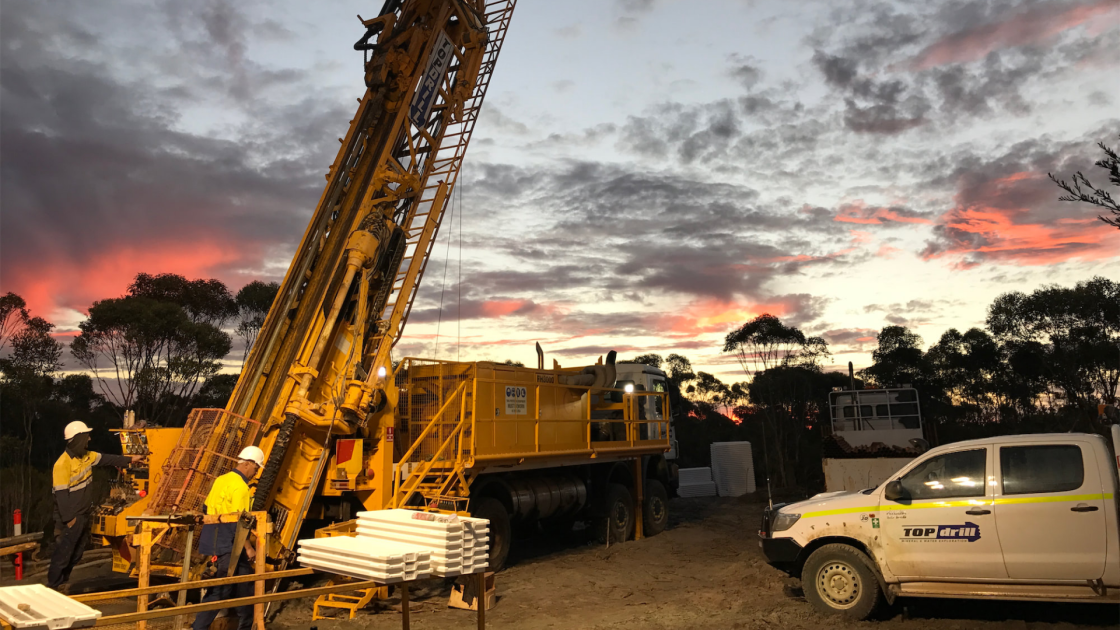
Main image: Mount Ridley Mines