


Black Canyon (ASX:BCA) will begin a phase two reverse circulation drilling program at the Wandanya Project in Western Australia in late May or early June 2025.
The Wandanya discovery represents an exploration model on the eastern margin of the Oakover Basin comprising hydrothermal, stratabound manganese and iron. To date, only 240m of strike has been drill tested out of the 3km-long target.
Black Canyon plans to test 900m of strike and between 200m and 300m across strike, following up on previously reported management results, via the upcoming 2,000m to 3,000m drilling program.
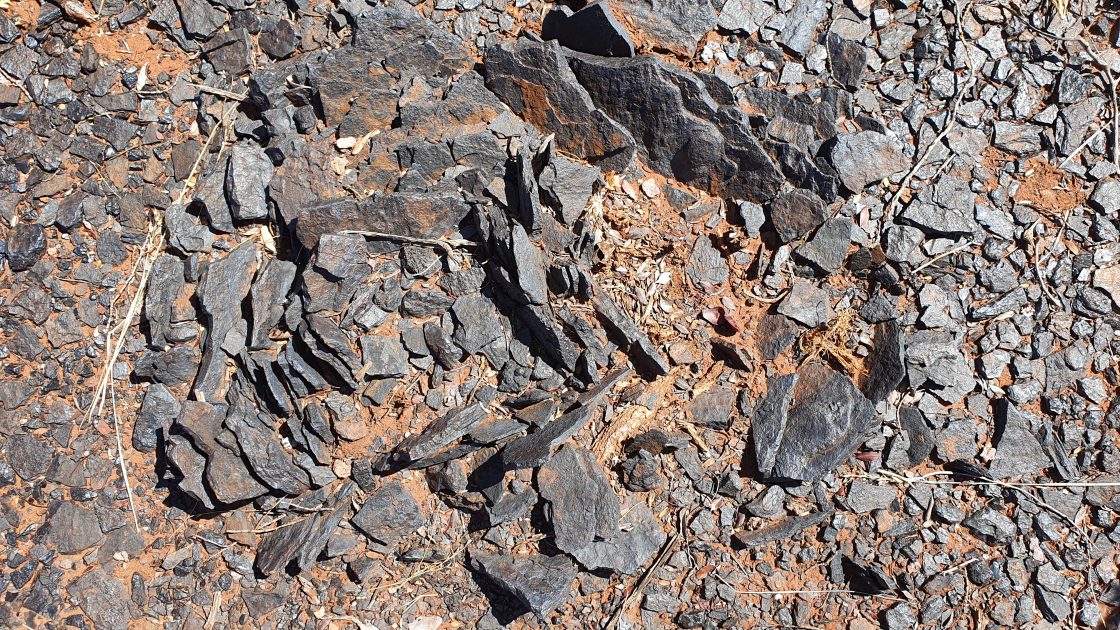
The program will also test outcropping iron formations that returned assays up to 64.3% iron.
Further drilling will be planned to test the fill 3km strike potential of the outcropping manganese and iron targets, as well as the cross width between 600m and 900m.
The company notes the timing of the phase three program will be dependent on the results from the upcoming program.
Managing Director Brendan Cummins says during 2024, the company discovered consistent, well mineralised, and continuous horizons of “high-grade” manganese in drilling.
“This was followed up with further mapping and rock chip sampling with the results defining a very large mineralised system at Wandanya for both manganese and iron,” Cummins says.
“The iron horizon has never been drill tested so we plan to drill about 800m of strike along the ridge and then across strike some 200-300m. Based on mapping, the manganese and iron targets remain open to the north for a further 800m with a combined cross strike width of between 400 and 600m, which we plan to drill in the phase three reverse circulation program.”
Black Canyon says due to Traditional Owners cultural responsibilities, the heritage survey scheduled for late March has been re-scheduled for late this month.
The Wandanya Project is located on the eastern boundary of the Oakover Basin, about 80km south of the Woodie Woodie Manganese Mine.
Traditionally, manganese has been used in steel manufacturing with manganese alloys added to prevent corrosion, resist abrasion, and increase hardenability. This consumes 90% of the manganese produced globally. The balance is used in a range of applications, such as high-purity manganese sulphate monohydrate (HPMSM).
HPMSM is a critical raw material in the production of lithium-ion batteries, which is used in electric vehicles. HPMSM’s applications and demand are increasing rapidly, particularly in Europe, China, and the US.
Write to Aaliyah Rogan at Mining.com.au
Images: Black Canyon


