



This article is a sponsored feature from Mining.com.au partner Orezone Gold. It is not financial advice. Talk to a registered financial expert before making investment decisions.
Orezone Gold (TSX:ORE) is on a journey of deliberate transformation and growth. Since taking the helm in 2017, CEO Patrick Downey has steered the company from study-stage concepts into a diversified, emerging mid-tier producer with multiple operations spanning Canada and Burkina Faso in West Africa.
The company’s seasoned team takes projects from design and construction through to operations, an approach Downey is proud of. Drawing on his success in developing, building, and operating mines around the world, Orezone’s team is focused on delivering each stage in-house rather than relying on third-party consultants or construction teams.
This approach not only ensures consistency and accountability but also reflects a culture of confidence built over decades of working together. It’s a model that allows Orezone to move quickly, maintain control, and establish mines that reflect the company’s standards of safety, efficiency, and performance.
That growth story is also about momentum, driven by the company’s production, exploration upside, and acquisitions. With multiple workstreams underway across the Bomboré Project in Burkina Faso and the Casa Berardi and Heva-Hosco projects in Québec, Canada, Orezone Gold is building towards its mid-tier ambitions, supported by cash flow, jurisdictional diversity, and a clear path to long-term value.
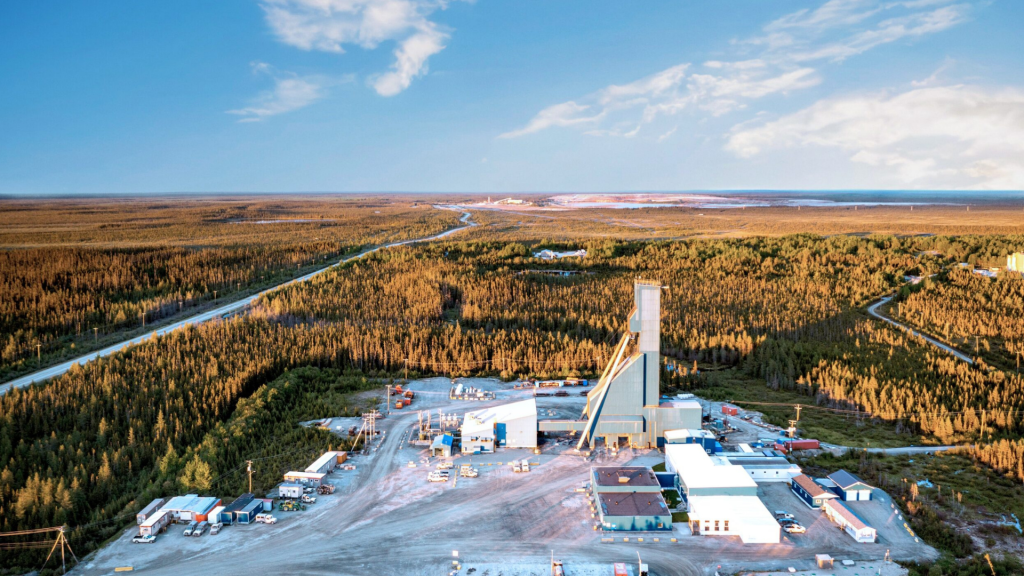
Casa Berardi: Cornerstone growth in Québec
Orezone acquired Casa Berardi at the end of March 2026 and has since achieved 21,729 ounces of gold production through Q2.
Downey notes that Q3 production is expected to be lower due to a planned waste-stripping program, but this will be followed by a very strong Q4.
Casa Berardi’s production guidance is at 62,000–67,000 ounces of gold at an all-in sustaining cost (AISC) of C$2,600–2,800 ($2,817) per ounce.
With 2027 set to be the company’s first full year of production at Casa Berardi, Orezone is now outlining its plans for the project over the coming years. The company recently released its life-of-mine (LOM) plan, which maps out a 14-year future with targeted production of 1.63 million ounces (Moz) of gold. The LOM also estimates average annual production of 116,000 ounces between 2027 and 2040, at an AISC of US$1,877 per ounce.
Downey describes the acquisition of Casa Berardi as ‘incredibly opportune’ for Orezone.
“It’s extremely rare to be able to acquire a producing asset in a tier one jurisdiction like Québec, particularly one with this amount of exploration and production upside as exists at Casa Berardi,” Downey says.
“We see Casa Berardi as a cornerstone of our growth strategy, providing our shareholders with both asset and jurisdictional diversification with added production upside.”
Casa Berardi has the advantage of being a producing asset, with historical production of around 3.2Moz over 30 years of operation and an average of around 105,000 ounces per year over the last five years.
The project covers a land package of more than 19,500 hectares, extending along 37km of strike on the Casa Berardi Break.
Throughout its history, Casa Berardi has predominantly been an underground mine, shifting to open-pit mining from 2017.
Downey notes that the project has remained a ‘high-grade’ deposit throughout its production life.
From 2006 to 2016, Casa Berardi was a fully underground operation, mined at a head grade of 7 grams per tonne, which Downey describes as relatively ‘high-grade’ for the region.
Under the previous owner, Casa Berardi saw little to no exploration over the past three to five years. It remains a shallow deposit and is open in all directions, giving Orezone plenty of opportunities to step up its growth efforts.
“Even if we didn’t drill another metre, we would have a long mine life here, but we’re focused on getting more cash flow so that we can further develop the mine, focusing on both grade and production volumes,” Downey says.
“Our aim is to increase the underground mine grade back to what it was historically, and to increase the annual throughput to over 2,000–3,000 tonnes per day from the underground operations.
“Really, our key goal for this operation is to bring it back to 150,000 ounces a year, growing to 200,000 ounces over the next three to five years.”
Orezone is beginning to release its first drill results from a program at Casa Berardi, demonstrating the project’s growth and upgrade opportunities, as well as new exploration targets.
“There’s a lot of upside here, but also a great base to grow from on a very underexplored project,” Downey says.
Heva-Hosco: Unlocking potential in the Cadillac Break
Beyond Casa Berardi, Orezone Gold has also acquired the near-term development asset Heva-Hosco, located in Québec’s prolific Cadillac-Larder Lake Break and extending along an 8km-long strike. The project is surrounded by assets operated by major mining companies, including IAMGOLD (TSX:IAG), Agnico Eagle (TSX:AEM), Eldorado Gold (TSX:ELD), and Gold Fields (NYSE:GFI).
Heva-Hosco had a Definitive Feasibility Study (DFS) completed in 2013, showing production of 104,000 ounces per year over a 14-year mine life. Upon acquisition, the project also came with over 400km of historical drilling data.
The 2012 Feasibility Study outlined mineral resources of 1.66Moz @ 1.26g/t, within 2.34Moz of measured and indicated resources and 0.27Moz inferred.
The company is now focused on updating the metallurgical work and capital and operating costs so that a preliminary economic assessment (PEA) can be released in late Q3 or early Q4 this year, alongside a revised LOM plan.
Downey notes that Heva-Hosco is also relatively underexplored. As the resource is pit-constrained, Orezone sees significant potential to expand it, while also considering its underground potential.
“Every operation in that Cadillac-Larder Lake Break goes underground, but to date there’s been very little underground work or deeper drilling done here at this project,” Downey says.
“Orezone’s plan is to not only focus on development and bringing this project through feasibility and into permitting, but we’ll also focus on the exploration potential and the depth potential for that resource.”
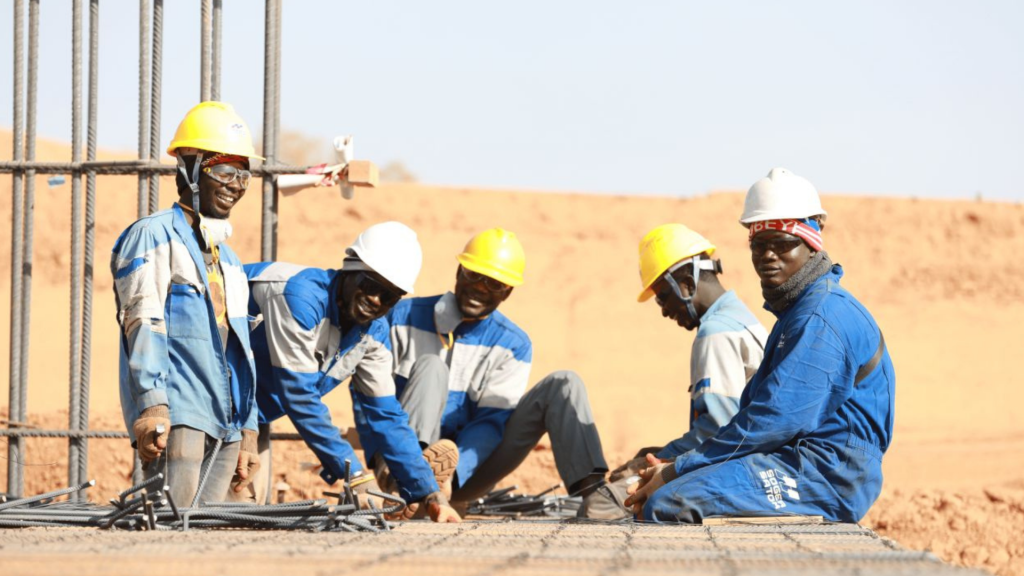
Bomboré: Foundation asset driving cash flow
Bomboré is the foundation of Orezone’s growth story, stretching over 14km and making it one of Africa’s largest defined gold footprints.
From the outset, the company’s priority at Bomboré was simple: get the project into production, generate cash flow, and prove its potential.
The oxide stage is already delivering steady output and is set to run for the next 12–14 years. Orezone is now building out the hard rock stage, which will add another 20 years of mine life to the project.
For Downey, what makes Bomboré so compelling is that exploration has barely scratched the surface. Beneath the shallow, pit-constrained resource of over 5Moz lies potential for higher-grade zones and underground mining, which could lift production beyond 200,000 ounces annually without any major capital expenditure.
“Our drilling and our structural geological interpretation have really started to improve over the past 12 months, and we’ve been able to clearly identify areas of significant higher grade that we now believe have the potential to become underground mining areas,” Downey says.
Drilling continues to focus on the identified areas, with Orezone expecting to release results soon. The company plans to increase the overall pit resource while continuing to test these well-defined, ‘high-grade’ targets.
Bomboré is Orezone’s more mature asset and generates strong cash flows. Downey says the project also has minimal capital expenditure ahead. With Bomboré already in steady-state production, its contribution is complemented by the development and exploration at Casa Berardi and Heva-Hosco.
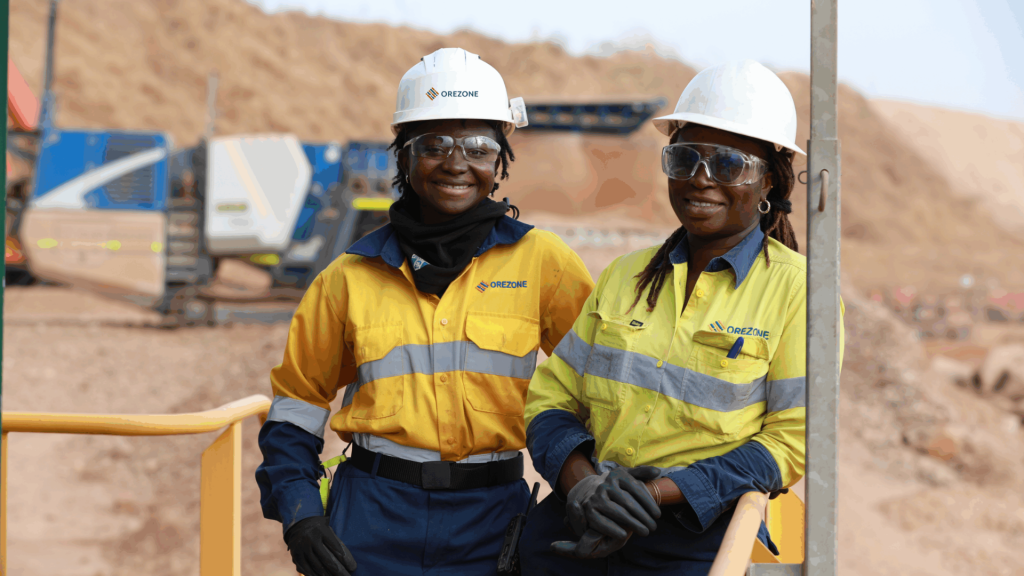
Leadership in action
With projects spanning Québec and Burkina Faso, Orezone’s strength lies not only in its assets, but in the people who run them. The company has built an executive team that thrives on independence, managing operations without heavy oversight thanks to decades of shared experience. Most of the leadership team have worked together for several years, building and operating mines around the world and developing a clear, proven approach.
As Bomboré is a more mature operation, Orezone has established a strong local management team with close ties to local communities and government.
“Management at Bomboré is steady — they know what they’re doing and the main capital spend is already basically behind it,” Downey says.
Casa Berardi, however, is a very different situation. The project’s previous owners were ready to shutter the whole operation, so Orezone has taken on a new team who previously faced an uncertain future.
“Our focus here is on getting together with that team, assuring them that they should be thinking about growth and capital investment as opposed to shutdown.
“We will continue to carefully manage that growth and provide the necessary leadership and direction to guide the team on how Orezone does things and ensure that they have the capital they need to succeed.”
Orezone has hired a new COO and a vice president of exploration for the Casa Berardi team, both of whom are French-speaking and bring strong track records in the industry in Québec. The plan is for these executives to provide a clear focus for the team. This includes clarifying what the company wants to achieve with the project, how it will do so, how success is defined, and how Orezone will support the team.
“We love these assets and want to ensure that we put everything behind them to make them work,” Downey says.
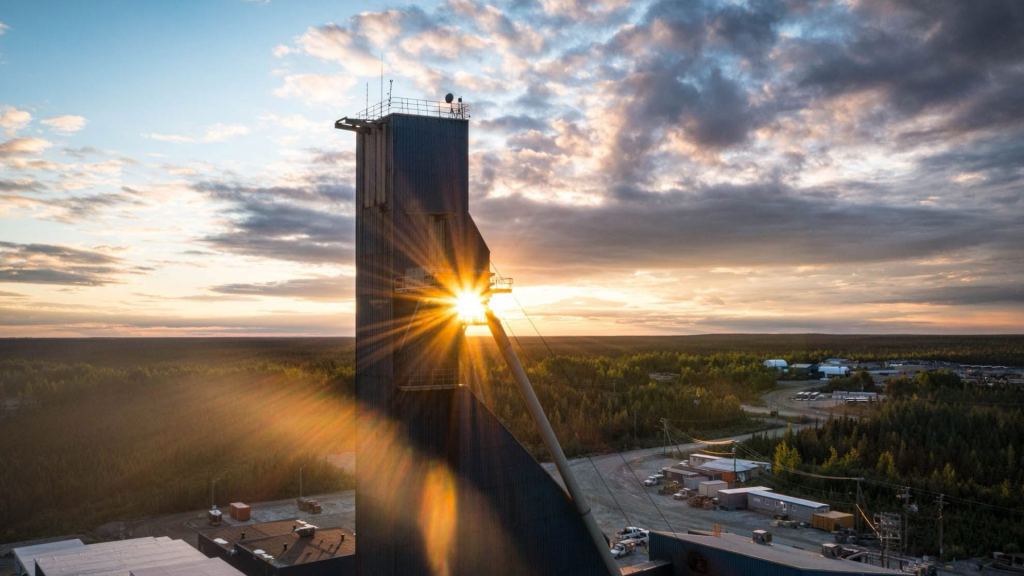
Jurisdictional advantage
Although Orezone’s operations are in vastly different jurisdictions, Downey says both areas offer a level of opportunity and stability that is not always found in the industry.
At Bomboré, the company took over the project in 2020 following the completion of a DFS the year prior. It financed and built its stage one oxide plant in 2021 and achieved commercial production in December 2022.
Downey says these types of timelines are uncommon in most jurisdictions, with the speed of development and permitting demonstrating the strength of the team, the project, and the country — factors that are essential for a junior looking to get a project moving.
Québec is a strong jurisdiction in which to build and operate mines, with a highly skilled and motivated workforce, underground operating experience, government support, and engaged Indigenous communities.
Catalysts ahead
Orezone Gold is entering a catalyst-rich period, supported by both operational achievements and upcoming studies. The LOM plan for Casa Berardi has just been released, outlining the planned mine life and updated estimates of its net present value and internal rate of return.
The Heva-Hosco PEA is expected in early Q4 2026, providing further value not currently reflected in the company’s share price.
At Bomboré, the Stage 2A optimisation of the hard rock plant is due to be completed in October 2026, on time and on budget. Meanwhile, ongoing exploration at Casa Berardi and Bomboré continues to target extensions to mine life and unlock new zones.
Downey says the company is currently trading at a discount but expects its work programs to help narrow that gap.
“I think we’ve got one of the most exciting exploration development pipelines in the mid-tier space compared to our peers, with a highly motivated management team that have done this before,” Downey says.
“This is really going to drive the value proposition for our shareholders moving forward.”
Orezone Gold’s trajectory reflects a strategy focused on growth, diversification, and disciplined execution. With Bomboré delivering strong cash flows, Casa Berardi emerging as a cornerstone asset in Québec, and Heva-Hosco advancing towards development, the company is steadily building its mid-tier profile.
Backed by a seasoned management team, a robust exploration pipeline, and minimal debt, Orezone is positioned to unlock significant shareholder value. As upcoming catalysts come to market, Orezone’s story is one of momentum, resilience, and a clear path toward long-term value creation.
Write to Amy Rotman at Mining.com.au
Images: Mining.com.au, Orezone Gold


