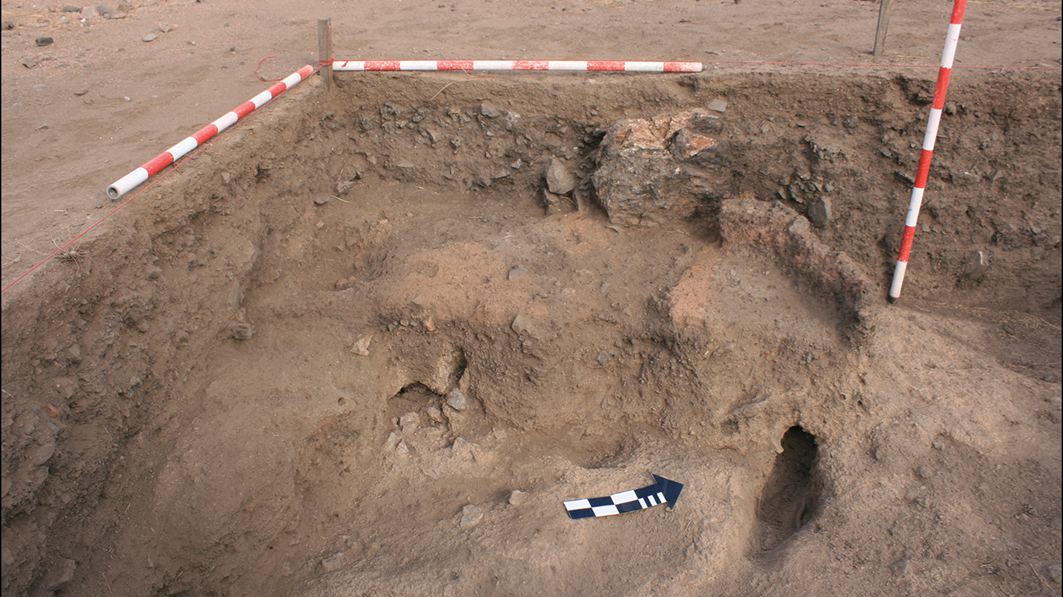
New research dates mining activity at the Las Minillas copper mine in southwestern Spain from about 1300 BCE until as late as 700 BCE, strengthening the case that southern Iberia was a Bronze Age copper-producing hub.
The study, published by Cambridge University Press in Antiquity on 26 October, identifies Las Minillas as the largest securely dated Late Bronze Age copper mine excavated in Iberia.
Although the site was already recognised as prehistoric, its chronology and scale were uncertain. Field campaigns in 2020, 2021, and 2023 produced 17 radiocarbon dates supporting Late Bronze Age activity.
Las Minillas follows a 300m-long copper-bearing outcrop near Granja de Torrehermosa in Badajoz province. Trenches measure 2–4m wide, while charcoal recovered from 8.2m below the surface indicates the depth of the workings.
Other charcoal suggests miners may have used fire-setting, which involved heating rock before breaking it apart. Archaeologists documented 892 stone tools, including 735 grooved hammers.
Researchers estimate the mine may have produced between 49 and 738 tonnes of copper, with 197 tonnes considered a more cautious figure.
Chemical and lead-isotope analysis identified 11 Scandinavian bronze objects with signatures consistent with Las Minillas samples. Seven date from around 900–700 BCE, overlapping with the mine’s later operating period.
The findings suggest southern Iberian copper may have travelled through maritime trade networks to northern Europe. However, more dating and analysis are required to establish the scale and routes of this trade.
Las Minillas is among more than 100 prehistoric mining sites identified across southern Iberia, although only six have been securely dated to the Late Bronze Age.
Suspected smelting remains date from the Roman and Islamic periods and have not been attributed to the Bronze Age operation.
Write to France Pinzon at Mining.com.au
Main image: Cambridge University Press