



This article is a sponsored feature from Mining.com.au partner Maverick Gold & Silver. It is not financial advice. Talk to a registered financial expert before making investment decisions.
Maverick Gold and Silver (CSE:MAV) is pursuing a straightforward exploration strategy: three properties, three shots at discovery.
The Vancouver-based explorer is advancing the Silver Vista Property in British Columbia, Canada, alongside the Gator Property and Jericho Property in Nevada, US. Each offers a different geological target, but the goal is the same: move towards drilling that can test the potential beneath the surface.
In an interview with Mining.com.au, CEO Glen Watson summed up the rationale as “three projects, three opportunities for drilling”.
Silver Vista has delivered the first completed drilling campaign in that sequence. Gator and Jericho are progressing through target refinement and preparations for potential drill programs, giving Maverick several avenues to pursue rather than relying on a single property.
Silver Vista sets the pace
Located about 55km northeast of Smithers, Silver Vista covers 6,444.5 hectares across 17 mineral claims.
Recently, Maverick announced it had completed five drill holes totalling 1,316m at the MR showing, ahead of schedule. Samples from the first two holes had been sent for laboratory analysis, with the remaining samples to follow.
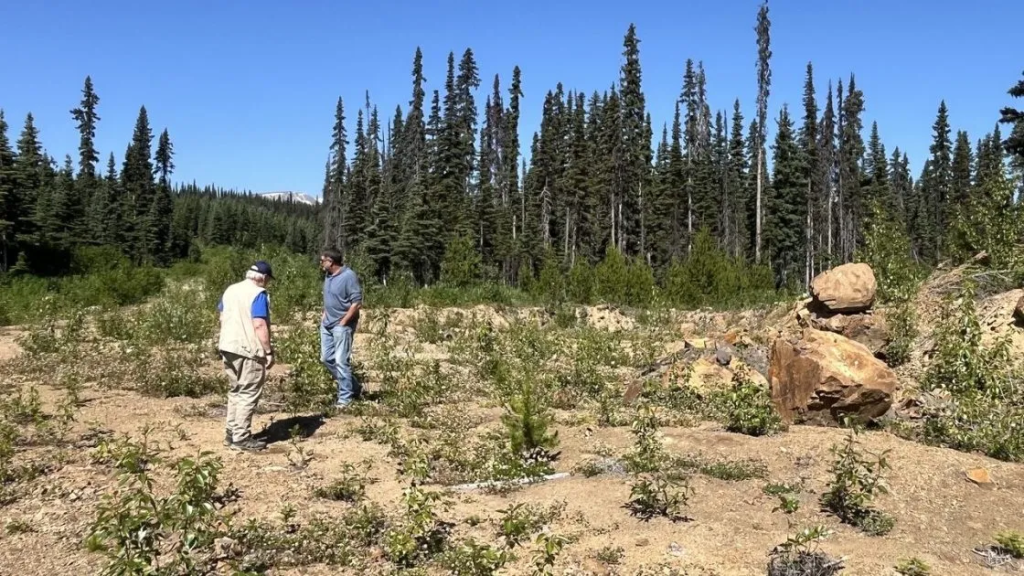
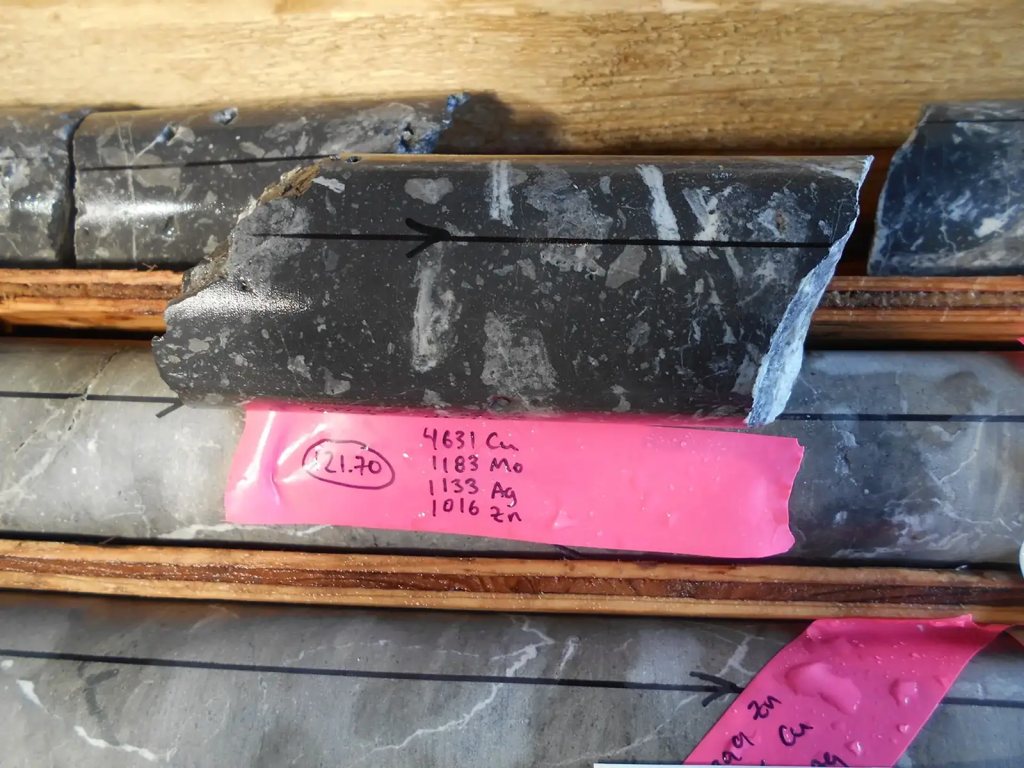
The program followed historical drilling that included 46m @ 48 grams per tonne silver (Ag) and 0.62% copper (Cu) from 106m in hole SV21-07. Within that interval, previous operators reported 17m @ 94g/t Ag and 1.34% Cu.
The geological target is sediment-hosted copper-silver mineralisation, including stacked mineralised layers within Jurassic-aged sedimentary rocks. Maverick is investigating whether these horizons form part of a larger system extending beyond the areas already tested.
Explaining the program to Mining.com.au as drilling began, Vice President of Exploration Ian Foreman said the team was “designing each hole to answer a specific geological question”.
That approach combines follow-up drilling near the strongest historical intersection with tests of other geological targets. Foreman said the results would guide planning for a potentially larger campaign, alongside exploration of newly added ground to the west.
The company estimates a laboratory turnaround of six to eight weeks, pointing to possible results in mid-to-late November 2026. Foreman also identified work over winter to prepare for a larger program, should the first campaign provide sufficient encouragement.
Silver Vista’s exploration approval extends to 31 March 2031, providing a framework for follow-up work if results justify it. The immediate task is to assess the new assays and determine where further drilling would be most useful.
Gator looks beneath cover
While Silver Vista tests mineralised layers, the Gator Gold-Silver Project presents a different challenge: investigating targets beneath surface alteration and volcanic cover.
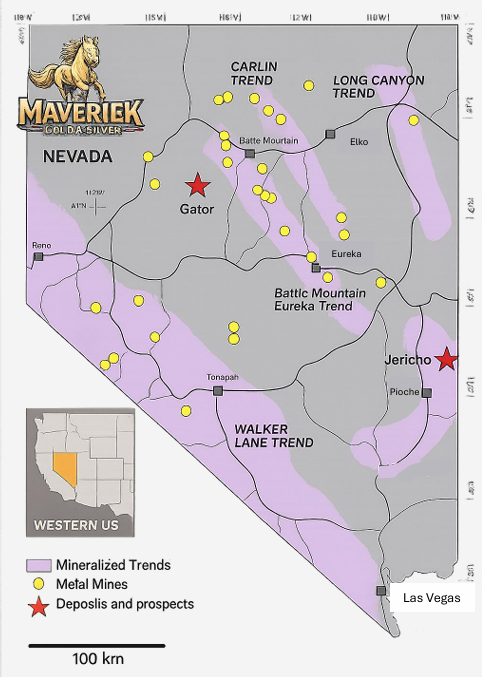
Gator lies about 55km south-southwest of Battle Mountain, Nevada, and covers 13.4km² across 160 mining claims.
The region is home to major operating mines, including the Phoenix and Cortez complexes operated by Nevada Gold Mines — a joint venture between Barrick Mining (NYSE:B) and Newmont (NYSE:NEM).
Maverick’s work centres on a fault corridor extending for about 7km, with two principal targets: Gator South and GSX.
At Gator South, the company has identified overlapping structural, magnetic, and electrical-resistivity features. Its interpretation points to a possible intrusive centre beneath volcanic rocks that may have supplied heat to a mineralising system.
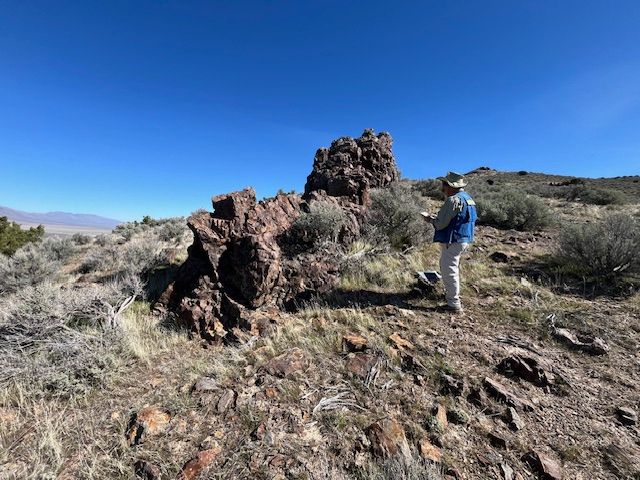
GSX offers another line of investigation. Mapping has identified altered sandstone across an area measuring approximately 1,200m by 700m, while sampling has detected gold and associated elements including arsenic, antimony, and mercury.
The working model is that these surface features may mark the upper part of a system with a deeper exploration target. Historical drilling at Gator North encountered anomalous mineralisation, but the Gator South and GSX targets remain untested.
Maverick is targeting a distal disseminated gold-silver system, with mineralisation potentially spread through favourable host rocks.
“A little more groundwork has to be done on Gator, a little more sampling,” CEO Glen Watson told Mining.com.au.
He then outlined additional fieldwork and amendments to an earlier permit ahead of possible drilling in 2027. Funding, permitting, and seasonal ground conditions will influence the schedule.
For now, the emphasis is on bringing the geological evidence together before committing to drill locations.
Jericho follows the veins
Jericho provides Maverick’s third discovery opportunity, about 40km northeast of Pioche in Lincoln County. The company holds an option to acquire a 100% interest in the property.
Here, the exploration model is a low-sulphidation epithermal gold-silver system. Quartz veins, breccias, and networks of smaller veins occur along two roughly parallel structural corridors: the West Trend, traced for more than 4km, and the East Trend, traced for 2km.
The distinction matters. Jericho is not simply a single vein target, but a collection of mineralised zones that Maverick is assessing along those corridors.
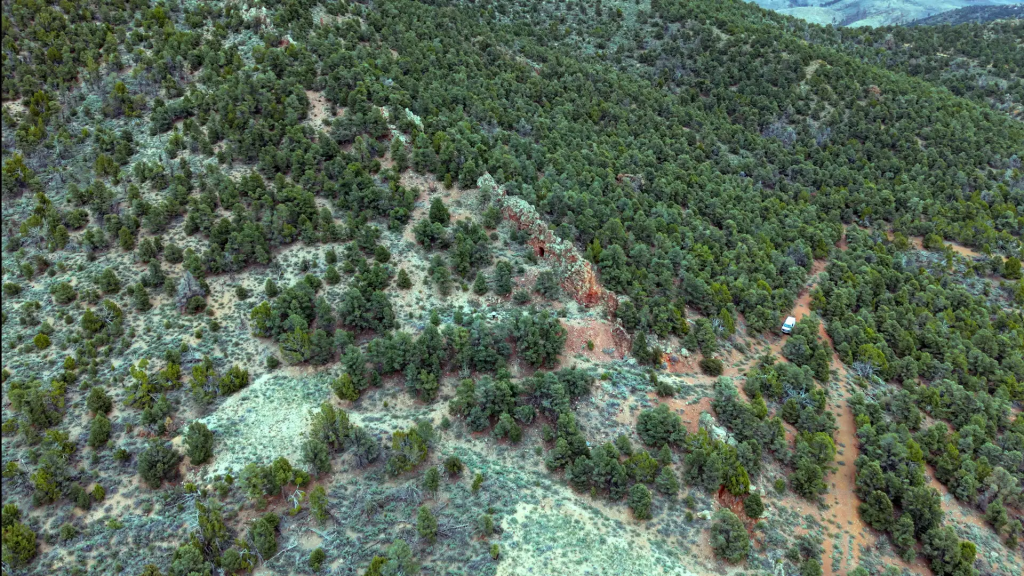
According to Maverick, the property contains 13 historical workings, including shafts, adits, and excavations, but has yet to undergo modern drilling.
The Tempa Zone has been traced at surface for about 900m. Maverick describes a quartz vein extending for more than 800m, accompanied by a broader stockwork zone. This, the company says, creates scope to test both the principal vein and mineralisation in adjoining rock.
Surface sampling has given the company targets to follow. At the Tempa Zone, chip-channel sampling returned 4.5m @ 323.33g/t Ag and 1.37g/t gold (Au). At the President’s Zone, another chip-channel interval returned 5.25m @ 3.16g/t Au and 54g/t Ag.
Extending the northern search
Jericho’s exploration footprint also extends beyond its better-known southern zones. In September, Maverick reported results from 18 samples across Fluorite Flat, Upper Flats, and the NE Extension Zone in the northern portion of the West Trend.
Chip-channel results included 1.5m @ 2.56g/t Au at Upper Flats and 1.4m @ 1.37g/t Au at Fluorite Flat. The two targets are approximately 500m apart and sit along the broader trend containing the Helen and Tempa zones.
According to the company, altered volcanic rocks and elevated gold values are possible evidence of fluid pathways above more significant mineralisation at depth.
Operating on familiar ground
Maverick’s selection of Nevada and British Columbia (BC) is deliberate, as both are established mining jurisdictions where the company’s team has extensive operating experience.
Watson has managed companies in both jurisdictions, while the wider team brings experience in their geology and operating environments.
In British Columbia, he highlights Silver Vista’s existing exploration permit and the team’s relationships with Indigenous communities.
Silver Vista lies within the traditional territory of the Lake Babine Nation and benefits from year-round road access.
The region has also seen renewed mining activity, with Blue Lagoon Resources (CSE: BLLG) reopening its Dome Mountain gold mine near Smithers in July 2025. Blue Lagoon subsequently achieved commercial production in May 2026.
“We’re pleased with the permitting and our relationship with Indigenous communities. BC has become a very good place to work,” Watson said.
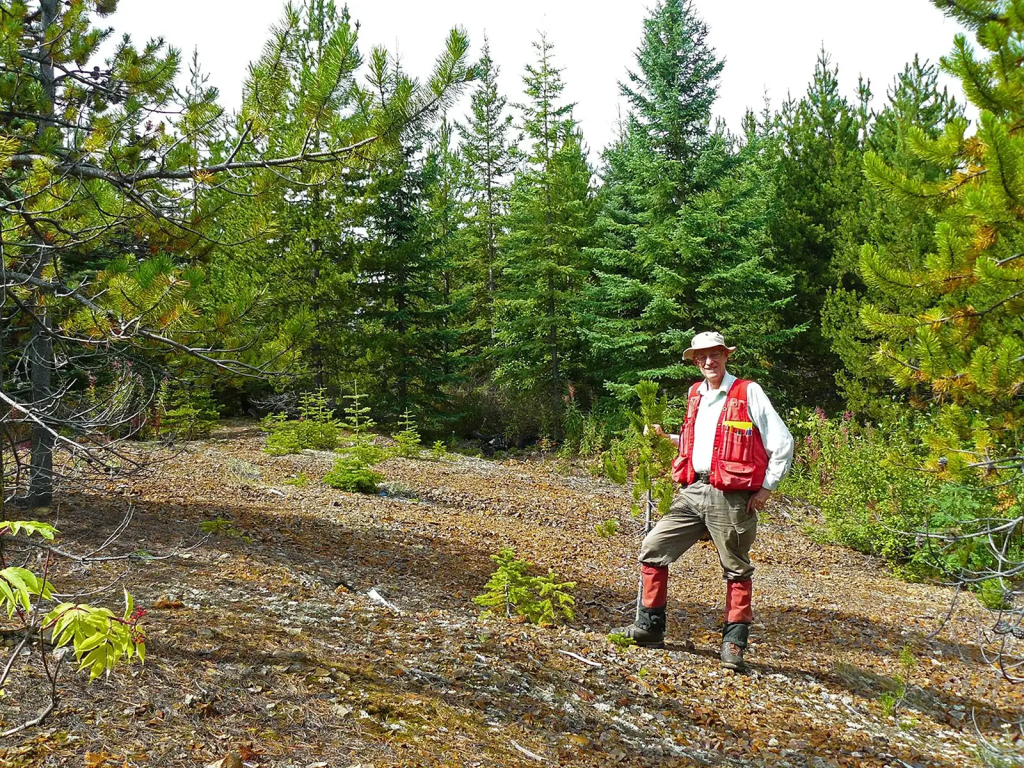
In Nevada, Maverick is working in established mineral districts while progressing the fieldwork and approvals needed for its own projects.
Foreman brings more than 30 years of mineral exploration experience across Canada, the US, Peru, Namibia, and Mexico. That technical background complements Watson’s capital markets and corporate development experience as Maverick prepares the next stages of its exploration strategy.
Turning targets into tests
Advancing three properties requires funding as well as geological targets.
As a result, Maverick plans to raise up to C$1.1 million ($1.11 million) through a non-brokered private placement of up to 22 million units at C$0.05 each.
Watson has outlined further financing ambitions to support exploration at Gator and Jericho, with additional Silver Vista work dependent on results.
The sequence is therefore as important as the ambition: assess the British Columbia drilling, refine the Nevada targets, and secure the resources to test them.
Speaking as Silver Vista drilling began, Foreman set out the broader objective: “We want to be drilling all three of our projects within the next 12 months.”
That is the proposition behind Maverick’s three-property strategy.
Silver Vista offers copper-silver exploration exposure in British Columbia, an established mining jurisdiction, while Gator and Jericho provide exposure to Nevada, which accounted for 68% of US gold production in 2024.
With drilling completed at Silver Vista, Maverick is now looking to advance Gator and Jericho towards their own drilling programs. The company’s strategy is simple: three properties across two established mining jurisdictions, each offering a new opportunity for discovery.
Write to Bruno Venditti at Mining.com.au
Images: Mining.com.au, Maverick Gold & Silver


