


Locksley Resources (ASX:LKY) has announced the launch of its technical program at the Greater Tottenham copper-gold district in central New South Wales.
The company initially outlined its strategy for Greater Tottenham on 15 October and has since moved into execution. This includes establishing an operations base, re-logging historical drill core, commencing metallurgical sampling, and advancing drill planning at Iron Duke, Carolina, and Mount Royal/Orange Plains.
Chairman Bevan Tarratt says the company has quickly progressed from strategy to execution at Greater Tottenham.
“The core facility is working, historical core is being re-logged, metallurgical samples are being collected, and drill planning is advancing across our priority areas,” Tarratt says.
“Each of these workstreams has the same goal: getting a drill rig onto the best targets in the district.”
The program will help convert the district’s historical dataset into a ranked pipeline of drill targets, with high-priority drilling to commence once approvals and site access are secured.
Turning data into drill targets
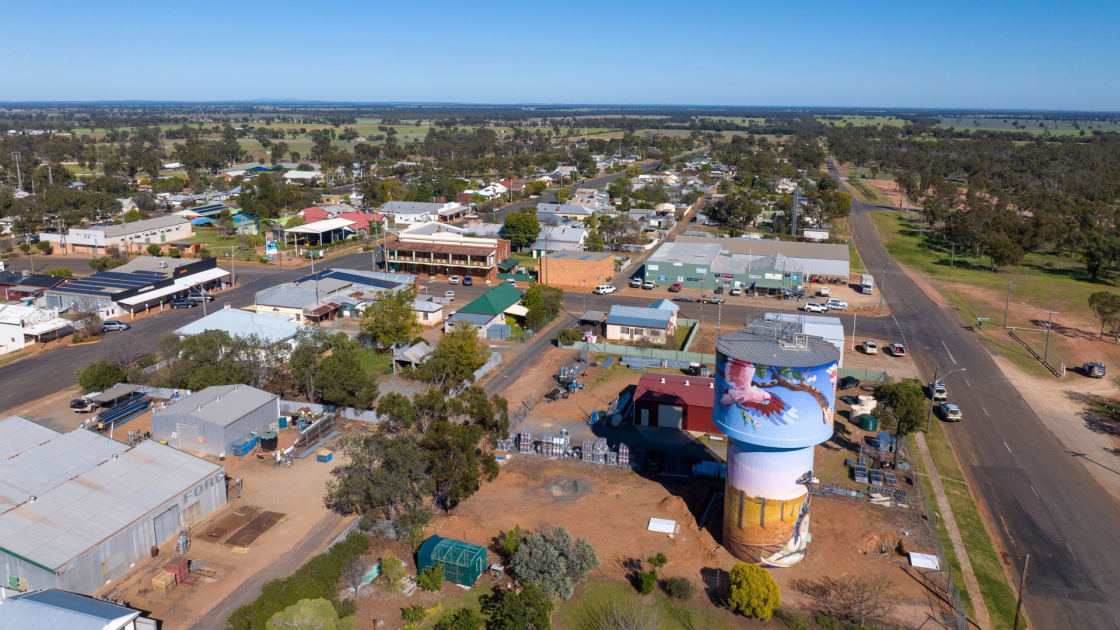
The local operating base has already been established at Tottenham. It will serve as the main hub for core processing, sampling, storage, and field logistics, with a generator, all-terrain forklift, and core saw already on site and operational.
Historical diamond core from over 70 holes is under review, with Locksley’s geologists aiming to establish a clear geological model to support future resource work and exploration targeting.
The core review is examining intervals from around 8,700m of core across 38 holes. Locksley expects this work to improve drill targeting and understanding of the controls on higher-grade copper-gold mineralisation. It also aims to establish a single district-wide geological model, better rank geophysical targets, and extract more value from the existing core.
Sample collection for metallurgical test work has commenced, with samples first taken from two historical diamond holes 100m apart at the Carolina mine.
The company notes that available material at the Mount Royal deposit includes limited oxide and fresh intervals. The team is therefore reviewing historical records and other sample sources to develop a representative sample set covering oxide, transitional, and fresh mineralisation.
Locksley is also integrating the historical electromagnetic and induced polarisation datasets with the geological and drilling information from across the district. Three-dimensional geological and GIS models are currently being finalised.
This will create a single target ranking framework from which the company can set the order for future drilling, which will commence following all necessary approvals.
At the Iron Duke Project, the approvals are well advanced, with strong landholder engagement. Locksley plans around 5,500m of drilling to target a 100–150m gap in the southern section of the known mineralisation, alongside infill and down-dip extensions in the north of the deposit.
At Mount Royal/Orange Plains, drill planning is underway for a program of around 10,000m that will test the sparsely drilled southern parts of the system.
Meanwhile, at Carolina, drilling will target extensions of the higher-grade mineralisation, which remains open along strike and down dip.
Finally, the independent mineral resource estimate for Tottenham and Iron Duke, along with the JORC exploration targets, is in its final stages. Both are expected to be released in the coming weeks.
Once drill targets are finalised and approvals, landholder access, and drill contractors are secured, Locksley will commence drilling, beginning with the highest-priority targets. Updates will be provided to the market as key milestones are achieved.
Locksley Resources is focused on Australian copper within the Girilambone Basin of the Lachlan Fold Belt.
Write to Amy Rotman at Mining.com.au
Main image: Locksley Resources


