For this year over year, indium has rallied 108.91% according to Trading Economics, as global demand continues to rise amid a supply deficit.
Indium is reported at ¥5,275 ($1,105) per kilogram, indicating a 86.73% increase for this year to date, despite a 1.40% decrease this month.
As a rather opaque market, the price of indium is determined by an aggregate of average price per kilogram, requiring buyers to report their buying prices — rather than a spot market used for metals such as gold and silver.
Demand for indium is expected to continue rising due to the metal’s use in compound semiconductors, according to the Department of Industry, Science, and Resources’ June 2026 Resources and Energy Quarterly report.
Compound semiconductors are used to make electronic and optical devices, replacing traditional single-element silicon semiconductors.
SFA Oxford reports that amid this growth of demand for indium, supply limitations, price volatility, and geopolitical risk may constrain availability of indium.
The metal appears as a byproduct of zinc ore processing from zinc sulphide concentrates.
Globally, China is the dominant producer of indium, accounting for most global indium output and refining capacity.
In Australia, Iltani Resources’ (ASX:ILT) Herberton Project in Far North Queensland is prospective for indium.
Within Herberton, Iltani’s Orient discovery is described as the “largest known silver-lead-zinc-indium deposit in Australia”.
Managing Director Donald Garner says the Orient discovery and its prospectivity for indium enable Iltani to access critical mineral funding.
“Indium, as you know, is a critical mineral and it’s on the federal government list. It’s on the US list, it’s on the Japanese list, and various sorts of lists globally,” Garner tells Mining.com.au.
“So, even though the majority of the revenue from the project will come from … 55–60% silver, maybe 30% zinc, you’ve got indium sitting there as well around 5–10% of the revenue stream, but because indium is a critical metal, it enables us to access the critical mineral funding to build the project.”
Late last year, Iltani received $8 million from the Queensland Investment Corporation’s Queensland Critical Minerals and Battery Technology Fund to accelerate work at the Orient Project.
Indium on the global scale
More globally, the world’s total refinery production of indium sat at 1,100 tonnes in 2025 — up from 1,090 tonnes in 2024.
Aside from China, which produced 760 tonnes in 2025, leading producers of indium include the Republic of Korea with 180 tonnes, Japan with 65 tonnes, Canada with 40 tonnes, and France with 21 tonnes last year.
South America and the Middle East-Africa region together contribute less than 10% of global indium output, although Peru leads South America’s output.
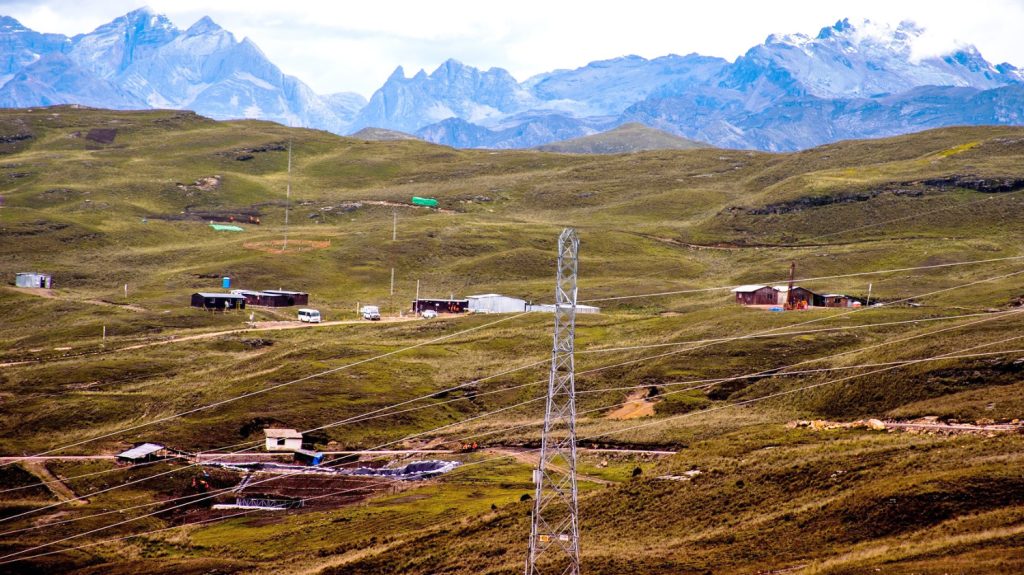
In central Peru, Tinka Resources’ (TSX–V:TK) Ayawilca Zinc-Silver-Tin Project is described as “one of the most significant emerging polymetallic deposits in the region”.
The project hosts an indicated resource of 28.3 million tonnes (Mt) grading 5.82% zinc, 16.4 grams per tonne silver, and 91g/t indium, along with an inferred resource of 31.2Mt grading 4.21% zinc and 14.5g/t silver.
Ayawilca benefits from nearby infrastructure, including access to roads, power lines, and proximity to a seaport, due to the project’s strategic location within a mining-friendly jurisdiction.
Peru itself accounted for around 11,080kg of indium (around 11.08 tonnes) between 2020 and 2024, according to Index Mundi.
Write to Maddison Elliott at Mining.com.au
Main Image: Iltani Resources