



Millions of players have entered the virtual streets of Vice City, but behind the world’s most anticipated video game is a very real battle for the materials powering the digital economy.
Grand Theft Auto VI (GTA 6), launching today (19 November), arrives at a time when demand for computing power is reshaping the global technology industry.
Pressure is being placed on semiconductor supply chains and intensifying competition for the components needed to power everything from gaming consoles to AI infrastructure.
The highly anticipated, billion-dollar game may be built around a fictional world, but the technology required to bring it to life is caught up in a real economic one.
AI infrastructure investment is driving demand for memory chips, graphics processing units (GPUs), and advanced computing capacity. This prompts manufacturers to prioritise high-performance applications, while costs rise across the consumer electronics market.
Gaming and AI serve entirely different purposes, but their supply chains are increasingly competing for the same technological foundations.
The question then becomes which sector gets priority when AI infrastructure and consumer electronics are vying for the same resources?
From Vice City to AI: GPUs connecting industries
At the centre of the convergence between gaming and AI is the GPU — a specialised electronic circuit designed to rapidly process and render images, video, and 3D graphics.
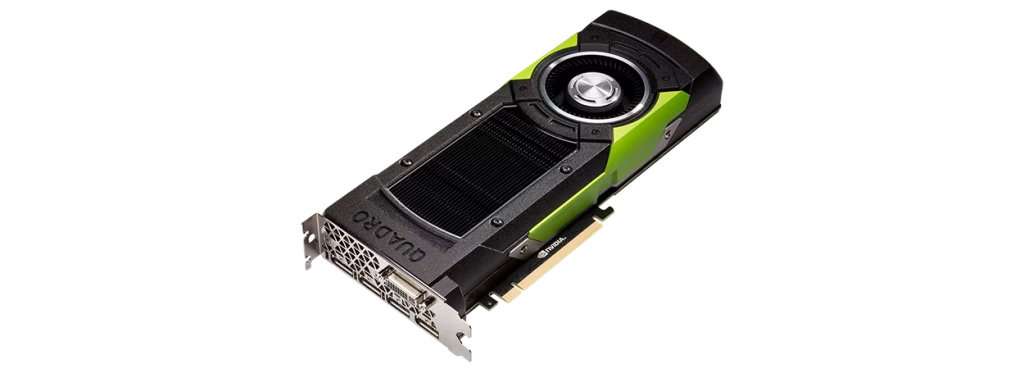
Originally developed to accelerate computer graphics, GPUs have also become essential to AI computing, where their ability to perform large numbers of calculations simultaneously makes them suited to training and running AI models.
That evolution has put GPUs at the centre of two markets with competing demands — consumer gaming hardware and the rapidly expanding AI infrastructure industry.
The technology is built from a range of minerals, including quartz, silica sand, copper, tantalum, gallium, germanium, palladium, cobalt, tungsten, and rare earths.
The commercial stakes are also growing rapidly.
According to KPMG, the global GPU market is estimated at around US$65 billion ($96.6 billion) and is expected to hit US$274 billion by 2029, at a compound annual growth rate of over 33%.
Meanwhile, the data centre market is estimated at around US$256 billion, and expected to reach US$450 billion by 2029.
The same technology that helps render GTA’s sprawling landscape, complex lighting, and detailed environments is also being deployed at scale to power AI models, data centres, and enterprise computing.
But as investment in machine learning accelerates, the balance of demand is shifting, and consumer technology could find itself competing for manufacturing capacity.
AI’s appetite for chips puts pressure on gaming
As technology companies pour billions of dollars into data centres and AI computing capacity, semiconductor manufacturers are prioritising production for higher-margin server and AI applications.
This creates potential supply constraints for other industries that rely on the same manufacturing ecosystem, including gaming, smartphones, and personal computers.
The pressure is evident in memory chips, which are essential for storing and accessing data across both consumer electronics and high-performance computing systems.
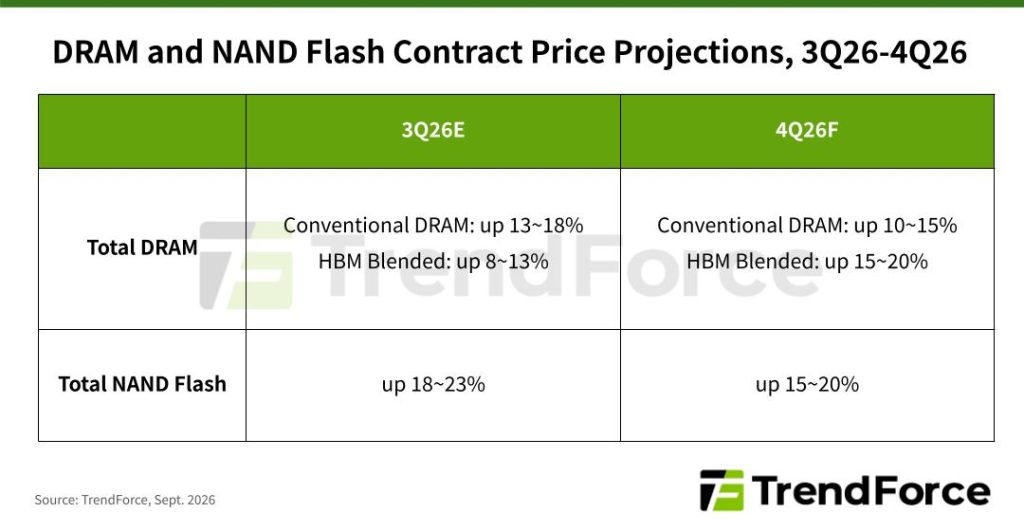
According to market researcher TrendForce, conventional dynamic random-access memory (DRAM) contract prices were forecast to increase by 10–15% quarter-on-quarter in the December 2026 quarter.
Meanwhile, the NAND Flash market is seeing a divergence between accelerating AI demand and weaker consumer demand. However, prices are still rising across segments.
Overall, TrendForce forecasts NAND Flash contract prices to increase by 15–20% quarter-on-quarter.
TrendForce attributes the increase to continued AI server demand and manufacturers prioritising advanced production capacity for high-performance server products.
The implications extend beyond the semiconductor industry itself.
In May 2026, Reuters reported that Sony (NYSE:SONY) and Nintendo (OTCQB:NTDOY) were grappling with sharply higher memory costs as AI data centre demand constrained supply.
Memory prices had doubled in the March quarter of 2026 and were forecast to climb up to 63% in the June quarter.
Sony subsequently acknowledged that rising memory prices were increasing manufacturing costs, although the tech firm had secured the memory volumes required to meet projected PlayStation 5 (PS5) sales for its 2026 financial year.
“Regarding the impact of memory market conditions on PlayStation 5 hardware, we have secured the quantity of memory necessary to meet our projected sales volume for fiscal year 2026,” the company said.
Nintendo also said that higher component costs, particularly memory, and the impact of tariffs were expected to add US$638 million to costs in FY2026.
“The very fact that Nintendo felt compelled to act (price increase) suggests the rise in memory costs has become severe enough that it could no longer be absorbed internally — and, crucially, that there is little prospect of those cost pressures easing in the near term,” Morningstar analyst Kazunori Ito said earlier this year.
For gaming manufacturers the challenge is balancing the cost of producing hardware against consumers’ willingness to pay more for increasingly expensive devices.
That challenge is particularly relevant as GTA 6 arrives with the potential to drive renewed interest in the current generation of consoles.
The GTA 6 effect on consumer technology
GTA 6 has launched exclusively on PS5 and Xbox Series X and S, placing renewed attention on the hardware required to play the game.
A major release of this scale could encourage consumers who have yet to purchase a current-generation console to enter the market.
But the timing also presents a challenge as the components powering gaming hardware become more expensive — potentially complicating the industry’s ability to capitalise on renewed interest.
Last week, Sony confirmed that PS5 shipments surpassed the 100 million-unit mark, making it the company’s fourth console to achieve this milestone.

Based on historical shipment figures, PS5 is currently around 2.4 million units behind the original PlayStation, which reached 102.4 million shipments.
At its current pace, the newer console could overtake that figure as soon as next quarter.
Alongside recent software momentum driving hardware demand, GTA 6 is expected to be one of the primary drivers for the console’s surge in sales.
However, higher component costs can diminish margins, while passing those increases on to consumers risks making consoles less affordable at a time when a major release could otherwise encourage more people to buy them.
For the mining industry, though, the console itself is only part of the story.
The same technology driving demand for gaming hardware is also underpinning a larger expansion in computing infrastructure.
Mining’s bigger stake in the AI race
While rising memory costs could complicate the gaming industry’s ability to capitalise on the release of new games, the broader competition for computing capacity presents a larger opportunity for the mining sector.
The expansion of AI infrastructure is driving investment well beyond semiconductor manufacturing.
Data centres require substantial electricity, cooling systems, power distribution equipment, and transmission networks to support intensive computing workloads.
That infrastructure alone carries its own material demands, particularly for copper. Copper is essential to electrical systems, power transmission, and the distribution networks connecting data centres to the grid.
A study published in ScienceDirect found that copper accounts for around 83% of the total modelled mineral mass across 20 minerals used in AI data-centre infrastructure.
For mining companies, this shifts the focus beyond the chips competing for manufacturing capacity to the infrastructure required to support the broader AI investment cycle.
The GPU may be the technological link between GTA 6 and AI, but the power networks, substations, and electrical infrastructure supporting the expansion of computing capacity could represent a larger source of long-term mineral demand.
Virtual worlds built on physical resources
GTA 6 may be designed to immerse players in an expansive virtual world, but its launch offers a glimpse into the physical demands of the digital economy.
The competition for memory chips highlights how investment in one technology sector can create ripple effects across unrelated industries.
For the mining industry, the more telling development is the accelerating material intensity of the digital economy.
As AI adoption expands, demand for the electricity networks, data centres, and electronic components supporting that growth can create opportunities for miners.
Millions of players may be spending hours — or the next few days — exploring Vice City, but the technology making that experience possible is part of a much larger industrial race.
From the chips inside consoles to the electrical infrastructure supporting AI, the digital world remains firmly rooted in the physical one.
As demand for computing power accelerates, the mining industry may find itself progressively indispensable to both.
Write to Aaliyah Rogan at Mining.com.au
Main image: Rockstar Games


