



The European Parliament and the Council have reached a provisional agreement on new rules to simplify and accelerate permitting procedures for grids and clean energy infrastructure.
The European Grids Package was proposed in December 2025 to upgrade and modernise Europe’s energy infrastructure. The recent interinstitutional agreement is a key precondition for integrating more clean energy, structurally lowering prices, and achieving energy independence.
The package aims to modernise and expand clean energy infrastructure to accommodate more renewables in the energy system.
The European Commission says the agreement on the permitting part of the Grids Package sends a clear signal that the EU is committed to strengthening and accelerating the build-out of clean energy infrastructure. This includes electricity grids, storage facilities, renewable energy projects, and recharging stations.
Following the provisional agreement, the European Parliament and the EU Council will have to formally adopt the text.
Parallel legislative negotiations are taking place on the second leg of the Grids Package, focusing on infrastructure planning.
How can mining companies contribute?
Transmission grid projects take more than 10 years to implement, with more than half of the time spent on permitting.
Slow permitting remains a major obstacle to the timely rollout of energy infrastructure and renewable energy in the EU.
The initiative aims to cut permitting timelines and simplify procedures.
The European Commission adds that the agreement, for the first time, introduces time limits for permitting procedures for projects involving transmission and distribution grids, standalone storage, and recharging stations.
It also enhances the current permitting rules for renewable energy projects by ensuring that permitting processes are fully digitalised, removing the need for permits for certain small-scale projects, and accelerating the upgrade of existing projects.
Transmission grids rely primarily on copper, aluminium, and steel for power cables, transformers, substations, and structural towers.
As transmission grids take more than 10 years to get off the ground, this provides an opportunity for explorers and developers with projects prospective for specific minerals to support Europe’s energy and climate ambitions.

AIC Mines: Producing and developing copper in Queensland
Copper is widely used in power grid infrastructure because its high electrical and thermal conductivity helps reduce energy losses.
The efficiency benefits improve the use of generated energy and reduce overall system losses, as reported by the Copper Development Association.
AIC Mines (ASX:A1M) is a copper and gold producer and developer that owns a portfolio of projects in Australia.
The company’s Eloise copper mine, located in North Queensland, was commissioned in 1996 and has since mined more than 14.5 million tonnes (Mt) of ore grading 2.7% copper and 0.8 grams per tonne gold.
Current operations consist of an underground mine accessed via a decline.
On the development front, AIC Mines owns the Jericho and Mt Cuthbert projects, also located in Queensland.
Underground development at Jericho began in 2024. The deposit, located 4km south of Eloise, will be mined by longhole open stoping, with all ore processed through the Eloise processing facility.
Companies such as AIC Mines have the potential to bring more copper to market through their development projects, supporting the expansion of transmission grids.
Alcoa: Expanding aluminium operations
Aluminium is the primary conductor material used in overhead high-voltage electrical transmission grids. This is because the metal offers roughly twice the conductivity per pound of copper, at a lower weight and cost.
The metal also offers a lower-cost alternative in selected photovoltaic technologies, as reported, making it a critical material for other clean energy objectives.
Alcoa (ASX:AAI) offers commodity-grade aluminium and low-carbon aluminium via its Sustana product line, in addition to proprietary alloys and value-add products.
In June, Alcoa proposed to acquire most of South32’s (ASX:S32) aluminium portfolio. The deal is expected to be completed in the first half of 2027.
The deal has an implied enterprise value of up to US$5.6 billion ($8.4 billion). The consideration comprises US$3.1 billion cash, around US$1 billion in Alcoa shares, and up to US$750 million in payments linked to aluminium and alumina prices through 2030.
Alcoa will also assume approximately US$750 million of net debt and lease liabilities.
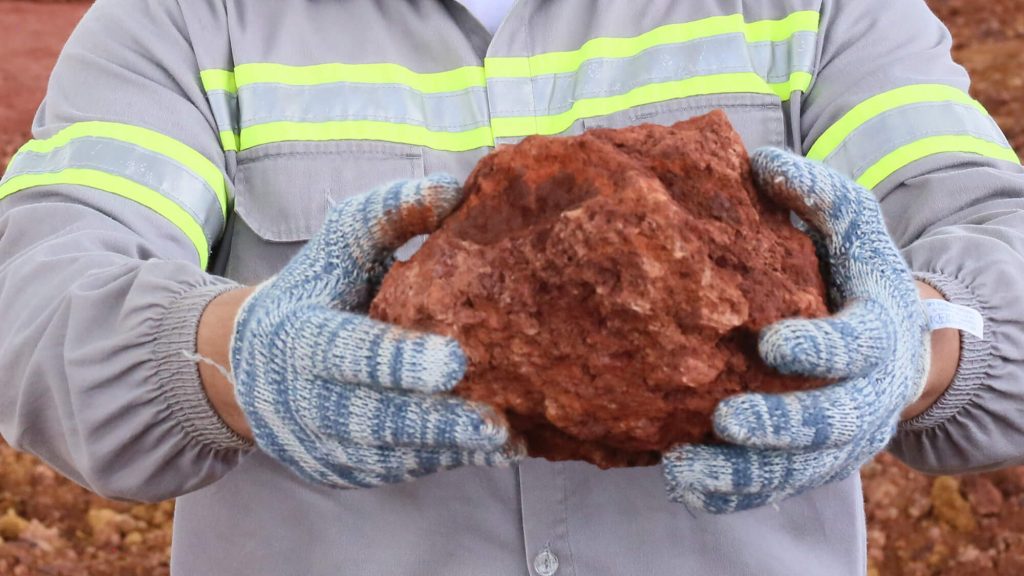
The assets comprise South32’s 86% interest in Worsley Alumina in Western Australia, its wholly owned Hillside aluminium smelter in South Africa, and interests in the MRN bauxite mine, Alumar alumina refinery, and Alumar aluminium smelter in Brazil.
German aluminium producer Trimet Aluminium recently urged Brazil’s competition regulator to block Alcoa’s acquisition of South32’s assets. Trimet argued that the transaction would reduce competition in the merchant alumina market.
As Alcoa potentially expands its aluminium production, the company, alongside other producers, could contribute to the transmission grids sector.
Write to Aaliyah Rogan at Mining.com.au
Main image: iStock


