MDF Global MDF Global
Apple’s iPhone boom highlights critical minerals powering smartphones•Presenting a united front for Queensland’s copper sector•Thailand seeks Myanmar mine access amid arsenic pollution•Egypt to set up state-backed company to license artisanal gold miners, free detainees•Brixton closes $7.4 million raise for Thorn, Langis projects•Heliostar banks record $78.7 million for Ana Paula push•Mining giants bet billions on 2030 supply crunch•Gunnison Copper reports Q3 output, revenue surge•Triumph Gold targets $15.46 million for Yukon push•African Rainbow Minerals faces a jobs dispute at Nkomati mine•Angola seeks 10% stake in De Beers under Anglo’s proposed exit•Gold price rebounds but heads for biggest weekly loss since June•Teck copper strike reaches BC port as operator sues union•Copper benchmark rocked by miner-smelter tug-of-war•Zimbabwe mining bill targets community, environmental safeguards•Mount Isa critical minerals hub secures Feasibility Study funding•Eramet initiates $814.5 million capital raise to reduce debt•Richemont backs natural gemstones, declines De Beers comment•‘Tis the season for administration as Comlek falls a second time•OceanaGold Philippines trials wireless blasting at Didipio mine Apple’s iPhone boom highlights critical minerals powering smartphones•Presenting a united front for Queensland’s copper sector•Thailand seeks Myanmar mine access amid arsenic pollution•Egypt to set up state-backed company to license artisanal gold miners, free detainees•Brixton closes $7.4 million raise for Thorn, Langis projects•Heliostar banks record $78.7 million for Ana Paula push•Mining giants bet billions on 2030 supply crunch•Gunnison Copper reports Q3 output, revenue surge•Triumph Gold targets $15.46 million for Yukon push•African Rainbow Minerals faces a jobs dispute at Nkomati mine•Angola seeks 10% stake in De Beers under Anglo’s proposed exit•Gold price rebounds but heads for biggest weekly loss since June•Teck copper strike reaches BC port as operator sues union•Copper benchmark rocked by miner-smelter tug-of-war•Zimbabwe mining bill targets community, environmental safeguards•Mount Isa critical minerals hub secures Feasibility Study funding•Eramet initiates $814.5 million capital raise to reduce debt•Richemont backs natural gemstones, declines De Beers comment•‘Tis the season for administration as Comlek falls a second time•OceanaGold Philippines trials wireless blasting at Didipio mine
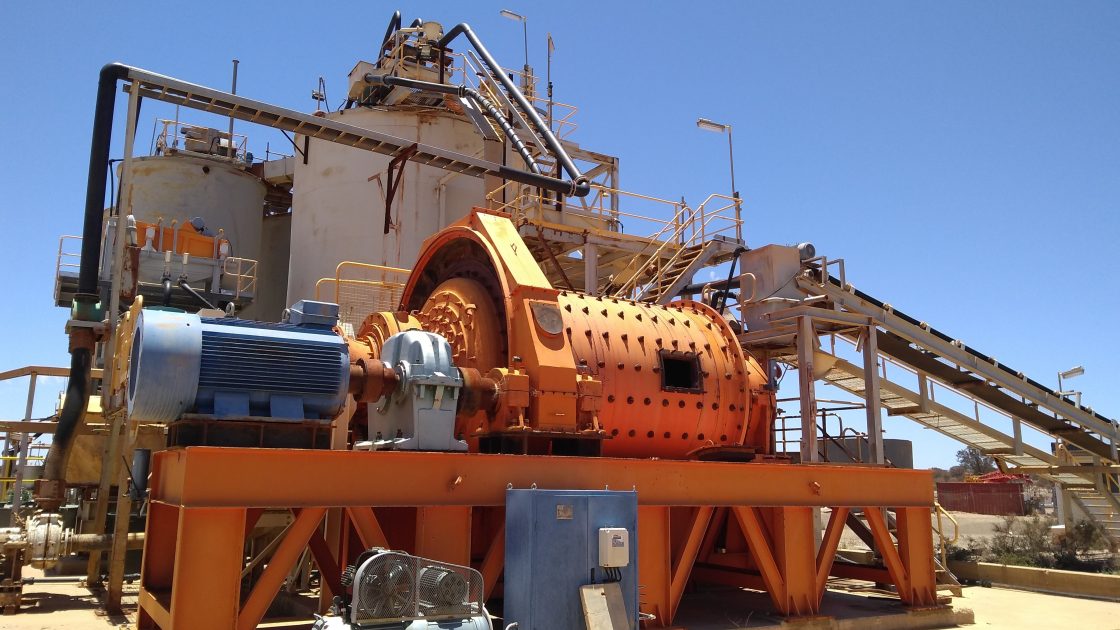
Brightstar Resources mining operation

Brightstar logs deep visible gold at Sandstone

Brightstar Resources (ASX:BTR) has logged 53 occurrences of visible gold across two deep diamond holes at the Two Mile Hill deposit within its Sandstone Gold Project in Western Australia.

The holes totalled 1,927.5m and form part of a four-hole, approximately 3,400m program testing tonalite-hosted mineralisation at depth.

Both intersected 400–500m downhole intervals of mineralised tonalite and continued beyond their planned depths, ending within the host unit. One hole reached 1,039.2m, making it Brightstar’s first diamond hole to exceed 1,000m.

The company cautions that visual observations cannot substitute for laboratory assays. The gold grains are typically less than 1mm across, while estimated gold abundance within the mineralised zones is below 0.01%. Assays are expected in late September.

Brightstar now interprets the tonalite to be more than 300m wide horizontally at a depth of around 700m. It has named the newly identified deep extension the Shirvington Zone.

The existing mineral resource estimate is constrained by the tonalite shape previously interpreted. Brightstar says future resource modelling will incorporate the wider Shirvington Zone, although further drilling and assays are required to determine its grade and continuity.

The program follows hole TMHRCD26020, which returned 305.4m @ 1.82 grams per tonne gold (Au) from 351.9m. This included 17.5m @ 9.68g/t Au from 351.9m and 13.4m @ 8.59g/t Au from 531m.

Managing Director Alex Rovira says the latest drilling indicates that the tonalite is thicker than previously modelled.

“We’re seeing notably thicker tonalite, with downhole widths of 400–500m in both completed holes, and gold-bearing quartz veins logged throughout the tonalite unit,” Rovira says.

Most visible gold was observed within quartz veins measuring from less than 1cm to more than 1m thick and associated with pyrite, galena, and occasionally sphalerite. Gold was also logged within the tonalite host rock itself.

The combined Two Mile Hill-Shillington deposit hosts 731,000 ounces @ 1.6g/t Au.

Two holes remain in the current program. Results from earlier Two Mile Hill drilling undertaken for the Prefeasibility Study are also expected shortly.

Brightstar says it is assessing up to 10 other potential felsic intrusions identified through geophysics near Two Mile Hill. The company notes these targets remain largely undrilled.

Brightstar Resources is a Perth-based gold developer with more than 4.5 million ounces across its Western Australian portfolio. Construction of a 1.5 million-tonne-per-annum processing plant at its Goldfields Hub is underway, with production targeted for June 2027.

Write to France Pinzon at Mining.com.au

Images: Brightstar Resources

Add to Watch List:
Author Image
Written By France Pinzon
France is an editor and writer with more than 15 years of experience in lifestyle media publishing, brand communications, and strategy. She has held senior editorial roles across print and digital publications and co-founded a boutique digital marketing agency. She is also a novelist and a collector of typewriters.