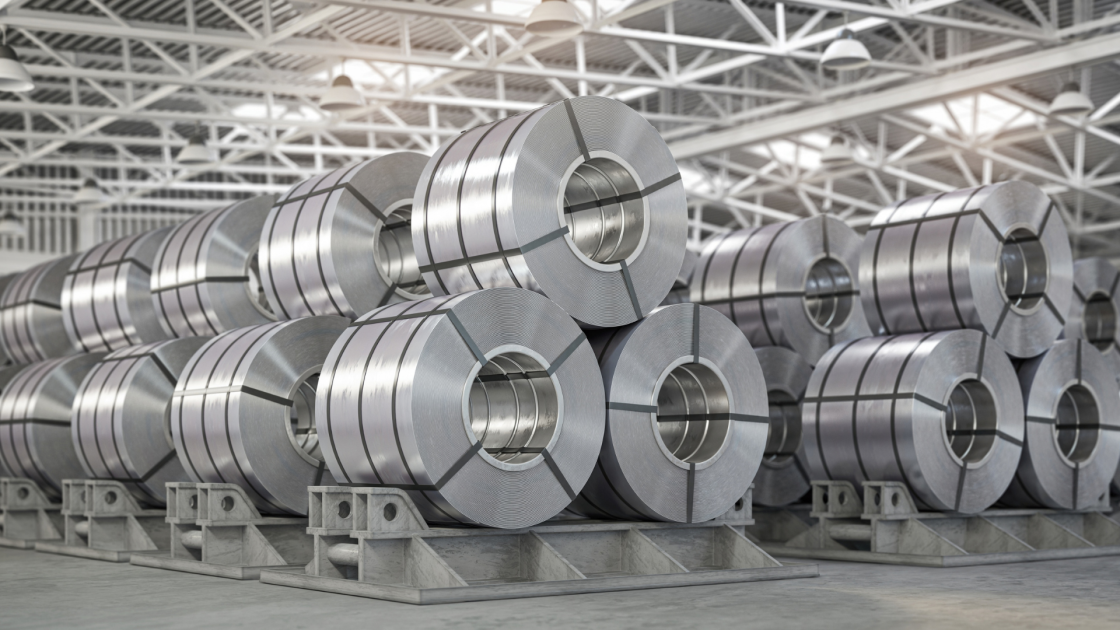
The price of zinc increased 1.19% yesterday (5 October) after futures fell to their lowest level in over six weeks late last week, according to Trading Economics.
Zinc rebounded to US$3,742.30 per tonne from below US$3,700 per tonne in last week’s trading.
The metal is expected to continue rising in Q4, with an overall forecast price of US$3,758.33 per tonne.
This year alone, zinc is up 23.05%, despite a 5.70% monthly drop. The recent decline in zinc prices is reportedly due to weaker demand in China, along with a stronger US dollar weighing on sentiment.
Traditional galvanising plants received fewer orders for zinc amid falling operating rates due to holidays.
After surging so far this year, zinc prices are forecast to ease through to 2031, according to the Department of Industry Science and Resources’ (DISR) Resources and Energy Quarterly: September 2026 report.
DISR reports that earnings will ease during the price decline as production remains subdued and older mines taper off.
During the June quarter, global zinc demand dropped 1% year-on-year as usage declined in Brazil, South Korea, and the US. The decline was offset by higher usage in parts of Europe, China, and India.
Australia holds 27% of globally known zinc resources and was the third-largest refined exporter in 2025, leaving it exposed to future price drops.
Export earnings are expected to fall $200 million in 2026–27, bringing the country’s total zinc export earnings to $4 billion.
By 2030–31, Australia is forecast to drop its yearly zinc export earnings to $3.1 billion, representing a significant drop.
Zinc discoveries on the rise
With zinc prices suffering, new Australian discoveries could help offset older mines that are tapering off and support the country’s export earnings.
Some of Australia’s largest zinc mines are located in Queensland, the Northern Territory, and Western Australia, with some approaching the end of their mine lives over the next decade.
In Queensland, this includes the major Mount Isa Mines operation, which hosts the George Fisher underground zinc mine.
Operated by Glencore (LSE:GLEN) in North West Queensland, Mount Isa Mines produced around 287,200 tonnes in 2023 and is expected to operate until 2036.
Further north in Queensland, zinc discoveries are still being made, including Iltani Resources’ (ASX:ILT) Orient deposit.
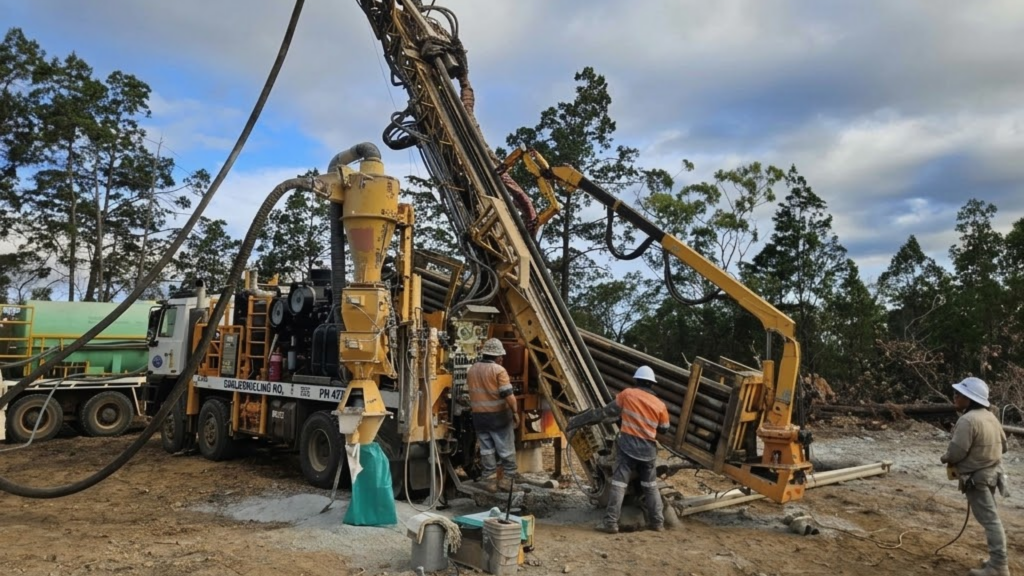
Orient is described as the largest known silver-lead-zinc-indium deposit in Australia. It features a maiden resource estimate of 62.5 million tonnes (Mt) @ 81.5 grams per tonne silver equivalent (AgEq), with a higher grade core of 34.2 Mt @ 110.4g/t AgEq combined for the Orient East and West deposits.
Located within the Herberton Project, historical metallurgical testing confirmed Orient is viable for producing two separate ‘high quality’ concentrates. One is a zinc-indium-silver concentrate grading between 47–48% zinc (Zn), 2,000g/t indium (In), and 200g/t silver (Ag).
Speaking to Mining.com.au, Managing Director Donald Garner says the value of metals at Orient through payable revenue streams includes 50–55% Ag, 30–35% Zn, 10% lead, and 5% In, subject to commodity prices.
“If you look at the economic background of the [Orient] silver-zinc project, and if you’re looking for exposure to zinc, there’s not much exposure on the ASX (Australian Securities Exchange),” Garner says.
“You’ve got Develop (ASX:DVP), who are building the Sulphur Springs projects in WA, but after that, the project pipeline is pretty bare.
“Orient has the potential of producing 25,000–30,000 tonnes a year of zinc in concentrate.
“We are actually one of the few exposures for zinc on the ASX as well, so silver-zinc-indium, bit of lead, and potentially antimony as well, but yeah, we are getting there.”
Iltani is on track to start production at the Orient deposit in 2029–30, adding to Australia’s zinc industry.
The company secured $4.6 million through an equity placement last week to accelerate Orient drilling, issuing 11.7 million shares at $0.39 each, representing a 14.5% discount to the five-day volume-weighted average share price.
This includes a $1.5 million commitment from the Queensland Investment Corporation (QIC) through its Queensland Critical Minerals Fund.
QIC’s involvement in the placement makes it Iltani’s largest shareholder, with a 10.1% undiluted stake.
Iltani directors will also subscribe for $150,000 worth of shares, subject to shareholder approval.
Iltani Resources is an explorer focused on base metals and critical minerals, with a portfolio of assets in Queensland.
Write to Maddison Elliott at Mining.com.au
Main Image: iStock