



Every resources investor watches commodity prices, drill results, and capital raises. But there’s another force, 15,000km away on Wall Street, quietly shaping the fortunes of Australian miners – the Cboe Volatility Index, better known as the VIX or Wall Street’s “fear gauge”.
Contrary to popular belief, the VIX doesn’t actually measure past volatility. Instead, it tracks how volatile traders expect markets to be over the next 30 days, based on S&P 500 index options. And when global traders expect turbulence, capital markets become cautious – often before the sell-off even begins.
For ASX-listed miners, especially juniors, this has enormous implications.
According to Investors.com, the VIX has become one of the most-watched indicators in global finance. While it’s based on US markets, its influence stretches across every major exchange, including the Australian Securities Exchange (ASX).
When the VIX is calm (below 20), global investors are confident. Money flows into growth sectors, speculative juniors, and long-horizon plays like exploration.
When it spikes above 30, capital retreats. Fund managers de-risk, sell mid-caps, delay IPOs, pull back on placements, and rotate into defensive plays.
That’s where the mining sector feels it most.
Liz Ann Sonders, Chief Investment Strategist at Charles Schwab, believes the VIX can actually force smart investing behaviour, noting when it is low and markets are complacent, it might be time to trim positions that have become oversized.
When the VIX spikes? That’s often when quality assets are on sale. Sonders says as such, it is important to have more opportunity to use volatility to one’s advantage via a process of rebalancing.
For mining investors, that might look like adding to quality producers during fear-driven sell-offs, hedging explorers with gold exposure, or taking profit when optimism pushes valuations too high.
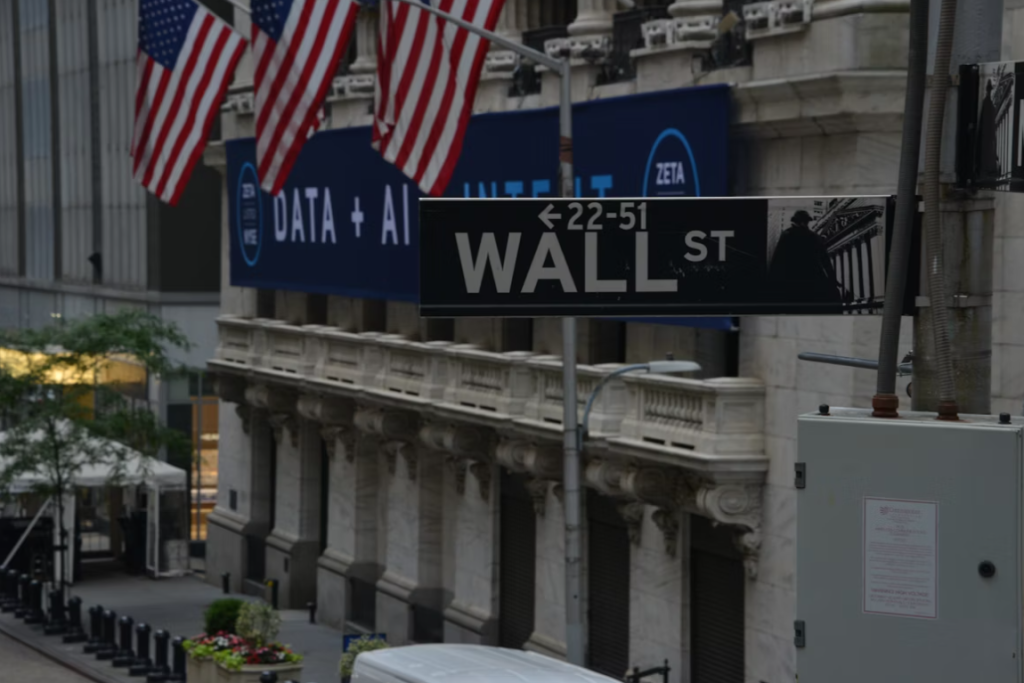
Global barometer of risk appetite
VIX tracks implied volatility – the market’s best guess of future swings in the S&P 500. It derives this from real-time prices of near-term put and call options on the index.
Put options are derivatives that give holders the right, but not the obligation, to sell an underlying asset whether it be a stock, currency, bond, commodity, future, or index, at a set price by a pre-established date.
With a call option, buyers have the right, but not the obligation, to purchase an underlying asset at a predetermined price before a set expiration date. Investors buy call options with the expectation the asset’s price will increase, providing a net profit by buying the asset below market value.
The VIX averaged just above 19 from 2015 to 2025. But during crises, it can explode. Examples include in March 2020 during the pandemic when VIX closed at 82.69 – a record.
In April 2025, during US President Donal Trump’s tariff turmoil, it hit 52.33, which was the highest at the time since 2020. During the global financial crisis (GFC) in 2008 it reached as high as 89.53.
Whenever the VIX climbs, gold stocks rally; speculative lithium and battery metals tend to sell off; major miners become safe havens, or sources of liquidity; and equity markets pause or cancel capital raises.
In other words, the VIX is a trigger for sector rotation.
While the VIX doesn’t predict direction, in essence it predicts behaviour. This is the key – it doesn’t say whether the market will go up or down. It measures how violent the move might be.
Even the ASX 200 VIX tends to track the US version, because sentiment flows globally at lightning speed.
In mining, geology matters. Grades matter. Management matters. But so does sentiment. When the VIX is calm, capital flows. M&A picks up. Juniors get funded. Commodity narratives gain traction.
When it screams? Even the best drill result can get lost in the noise, which has been evident for much of 2025.
For ASX resources investors, the VIX is touted as a global risk thermometer and one of the most important tools for timing, positioning and surviving the cycle. As market analysts will say, watch the rocks but monitor the fear, too.
When markets get shaky, Wall Street watches prices and fear. Therefore the VIX has become a key barometer for global markets, often spiking during political shocks, financial crises, or pandemics. And when fear surges in New York, investors from Sydney to Shanghai take notice.
Cboe Global Markets introduced the VIX in 1993 and originally tracked options on the S&P 100. At the time, the index only considered the implied volatility of eight separate S&P 100 put and call options.
After 2002, Cboe based the VIX on S&P 500 options to better capture market sentiment. VIX futures were added in 2004, and VIX options followed in 2006, turning volatility itself into a tradable asset.
Today, the VIX is traded, hedged, and baked into countless strategies across Wall Street and beyond.
On 18 November 2025, Cboe Global Markets announced plans to launch futures and options on the new Cboe Magnificent 10 Index on c]8 December 2025, subject to regulatory review.
The Cboe Magnificent 10 Index, which launched in October 2025, under the ticker MGTN, is designed to measure the price return of 10 US-listed large-cap stocks of technology and growth-oriented companies.
The index is equal-weighted and includes a fixed set of constituents, subject to change only following specific corporate actions. Current and back-tested values of the MGTN Index are available on the Cboe Global Indices Feed via the Cboe Global Indices Channel.
With MGTN futures and options, investors will be able to trade and seek to manage risk related to some of the most actively watched US stocks through a single tradable product without having to manage multiple positions across individual stocks.
Both MGTN futures and options will be cash-settled, eliminating the operational complexity of physical delivery and assignment risk associated with ETF or single-stock options.
Write to Adam Orlando at Mining.com.au
Images: Cboe


