


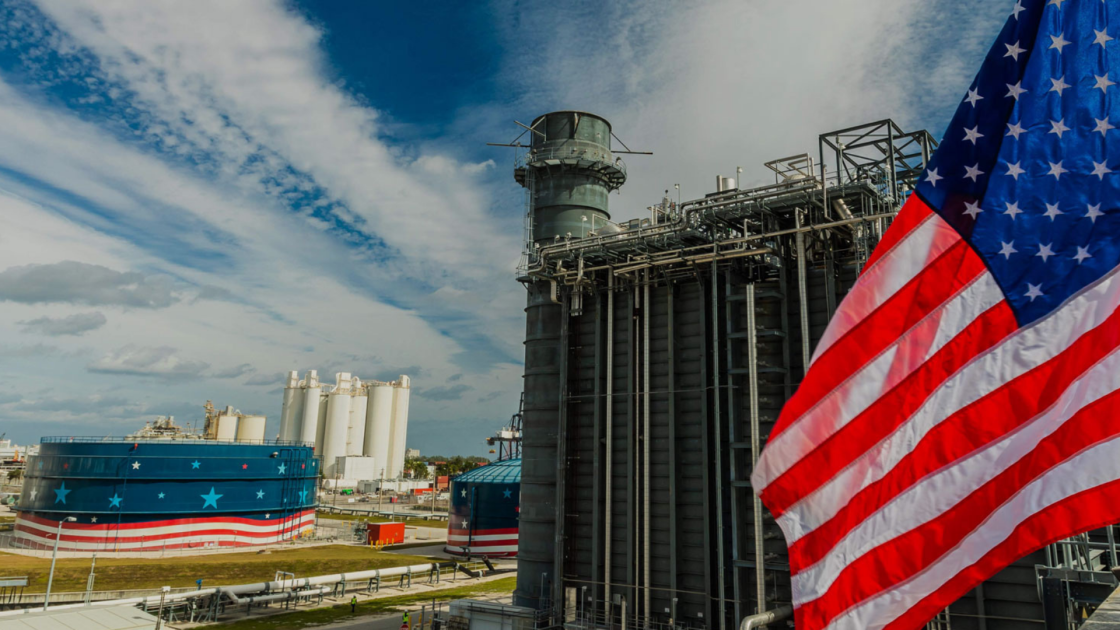
The US Department of Energy’s Office of Energy Dominance Financing (EDF) has announced the closing of a loan of up to US$1.9 billion ($2.63 billion) to NextEra Energy for the restart of its Duane Arnold Energy Center, Iowa’s only nuclear power plant.
The loan and the move to bring the plant back online are part of US President Donald Trump’s energy dominance agenda, falling under Executive Order 14302, Reinvigorating the Nuclear Industrial Base.
US Deputy Secretary of Energy James Danly says that this marks another step in the US’s nuclear renaissance as the country re-establishes its nuclear industry.
“Returning 615 megawatts of reliable baseload generation will drive down electricity costs, while supporting thousands of American jobs,” Danly says.
“This administration is pursuing a comprehensive nuclear strategy, restarting existing reactors, increasing the output of our nuclear fleet, and accelerating new construction, to build the abundant, affordable, and reliable power system required for American prosperity and reindustrialisation.”
EDF Director Gregory Beard says that the Department of Energy is focused on delivering President Trump’s vision for a nuclear industry in the US.
“Duane Arnold is exactly the kind of investment that will help restore American nuclear leadership, strengthen our energy security, and deliver the affordable, reliable power Americans need to fuel our nation’s future,” Beard says.
With the closing, the EDF has now financed three nuclear plant restarts and completed four concurrent conditional commitments and financial closings.
As of March 2026, the US had 96 operating nuclear reactors at 57 nuclear power plants across 28 states.
Under President Trump’s executive order, the aim is to increase US nuclear energy capacity to 400 gigawatts electric (GWe) by 2050, while facilitating 5GWe of power uprates and construction of 10 large reactors by 2030.
The nuclear revival now hinges on securing uranium supply in a race that could redefine the US’s energy dominance and set the stage for a new era of industrial power.
In 2025, the US’s uranium came predominantly from outside the country, with Canada delivering 32% of supply, Kazakhstan supplying 28%, and Australia at 15%. US-source material accounted for 7% of total supply.
While the US Government sharpens focus on its nuclear renaissance, demand is also coming from private industry. Meta, Microsoft, and Amazon have all signed long-term contracts for nuclear supply, highlighting how surging corporate demand is intensifying pressure on uranium procurement and underscoring the strategic need to secure reliable feedstock for the US’s nuclear build-out.
Explorers fuel supply for the nuclear renaissance
The World Nuclear Association notes that domestic US uranium mining has declined since peaking in 1980 and now supplies only around 5% of the country’s uranium needs. As of 2026, US nuclear power plans consume around 19,000 tonnes of uranium per year, while domestic mines produce just 260 tonnes.
As the focus on the US’s nuclear renaissance grows, the country now needs to secure the uranium supply needed to fuel it.
The US currently ranks 14th globally in known uranium resources. The World Nuclear Association notes that since 2022, exploration activity has been increasing.
Exploration companies are stepping into the spotlight, with juniors advancing projects across both the US and Canada to meet the surging demand for uranium feedstock.
As the US’s nuclear renaissance accelerates, these explorers will be critical in bridging the supply gap, converting resources into reliable production, and underpinning the secure fuel base needed to power the next generation of reactors.
American Uranium (ASX:AMU) is advancing the Lo Herma In Situ Recovery (ISR) Uranium Project in Wyoming, US. The company is currently navigating key technical, study, and permitting milestones as it works toward construction.
In early August, the company announced an increase in Lo Herma’s total resource estimate by 16%, up to 9.9 million pounds of triuranium octoxide (U3O8), including a 72% increase in the indicated resource to 4.79 million pounds of U3O8.
More recently, American Uranium has completed large-scale aquifer testing as it ramps up toward a targeted Q4 Scoping Study.
Dark Star Minerals (CSE:BATT) has announced its renewed strategic focus on uranium exploration, with the launch of a phased exploration program to advance uranium targets at the Ghost Lake Project in Newfoundland and Labrador, Canada.
The company is focused on systematically advancing high-priority targets for drilling, which will then guide subsequent exploration activities.
Dark Star Minerals is a mineral exploration company focused on the acquisition and advancement of uranium and critical mineral resources.
Skyharbour Resources (TSX-V:SYH) is focused on projects in Canada’s Athabasca Basin, with ownership interests in 44 uranium projects across 682,100 hectares. The company runs a hybrid strategy of exploration and prospect generation across multiple pathways for discovery and growth.
Skyharbour has recently reported a plan to uplist to the Nasdaq exchange, a pivotal step positioning the explorer to tap deeper capital markets while advancing the uranium supply needed to power the West’s nuclear revival.
Terra Clean Energy (CSE:TCEC) is an emerging North American uranium developer, advancing past-producing and brownfield assets in Utah and Wyoming in the US and Canada’s Athabasca Basin, with a view to helping build supply in a tightening market.
The company has shifted into active work programs on its Marysvale and South Falcon East uranium projects, digitising historical data, and launching new drill programs.
Terra Clean Energy’s focus is on reviving historic uranium mines and advancing US and Canadian deposits to quickly add pounds to the supply chain, while also building optionality for longer-term growth.
As the US’s nuclear renaissance gathers pace, uranium explorers are positioning to deliver the feedstock that will underpin energy security, industrial growth, and the next chapter of global power competition. As the US Government drives the growth of its domestic nuclear industry, it will increasingly rely on explorers in the US and Canada to deliver the next generation of uranium supply.
Write to Amy Rotman at Mining.com.au
Main image: NextEra Energy


