Major copper projects are on the rise in Australia, with Queensland and Western Australia leading the way.
Recent data from the Australian Resources and Energy Employer Association (AREEA) shows Queensland is home to 22 of the country’s 112 major projects, five more than the previous year, with copper among the leading commodities.
Copper is an increasing focus for Queensland, ranking behind coal and energy projects. The state now hosts four major copper projects, up from two in 2025.
It isn’t all sunshine and rainbows in the Sunshine State, with the broader mining project pipeline growing while workforce demand declines.
According to AREEA’s Resources and Energy Workforce Forecast 2026–2031 report, Australia’s major mining project pipeline has grown by 16 projects since 2025, representing $143.1 billion in published capital investment. However, projected employment across these projects is down 12% year on year.
Major projects are forecast to require just 19,549 additional operational employees. This represents a 12% annual decrease and a 30% drop from the 28,260 employees forecast in 2023, despite the continued growth in project numbers.
Across Queensland’s 22 major projects, an estimated 4,102 additional workers will be required, down 310 workers, or 7%, from the previous year.
Copper’s workforce equation
Copper projects will contribute 500 net new jobs, with Harmony Gold Mining’s (NYSE:HMY) Eva Copper Project expected to account for 400 roles when it starts up in the second half of 2028.
Across Queensland’s broader mining and energy sector, workforce demand for 2026–2031 is broken down by occupation.
Of the 4,102 forecast mining and energy jobs, mining occupations include 1,635 plant operators, 514 heavy diesel fitters, 262 other tradespeople (such as electricians and mechanics), 803 supervisors, management, and administration workers, and 803 workers in mine engineering, technical, geology, and data roles.
The Eva Copper Mine is forecast to produce 19,000 ounces of gold (Au) and 60,000 tonnes of copper (Cu) annually over a mine life of more than 15 years.
Harmony Gold reported a resource estimate of 8.6 million ounces of gold and 4.3 million pounds of copper, grading 0.86 grams per tonne Au and 1.2% Cu.
The mine is under construction, with production targeted for the second half of 2028. The project will use open-pit mining across six pits and a conventional copper concentrator incorporating crushing, grinding, and flotation.
The mine is expected to become the largest copper mine in North West Queensland and is approaching the peak workforce stage of the mining lifecycle.
Building the workforce from the ground up
Eva isn’t the only major copper project advancing in the Sunshine State, with Alma Metals (ASX:ALM) developing its Briggs Copper Project in Central Queensland. However, the two projects are at different stages of the mining lifecycle.
Briggs remains in the exploration stage, with drilling expected to continue into the first half of 2027 to support a Prefeasibility Study (PFS). Recent assay results indicate ‘higher-grade’ copper mineralisation at the project.
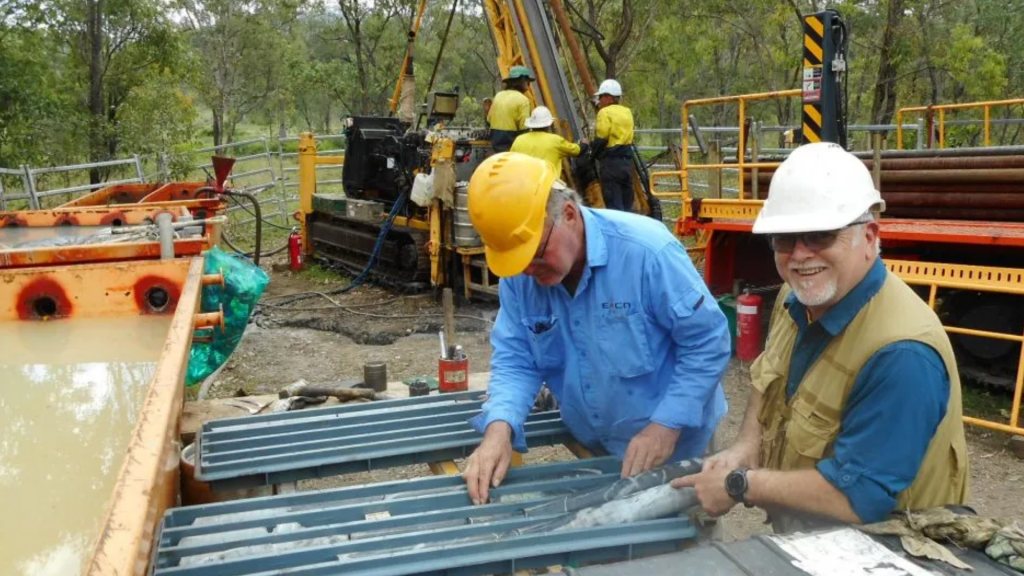
As reported, drilling at hole 26BRD0042 returned 383.8m at 0.25% Cu from 10.2m, including 76.7m at 0.34% Cu from 10.2m.
Infill drilling intends to upgrade the project’s existing resource estimate ahead of the PFS, with Briggs already hosting a resource of 415 million tonnes @ 0.25% Cu and 31 parts per million molybdenum at a 0.2% Cu cut-off grade.
Recent drilling results have met a key objective of the infill program, supporting the conversion of inferred resources to the indicated category.
As Alma advances towards the PFS, the company is assessing the Briggs site’s capacity to accommodate its future workforce.
In July this year, the company acquired a fully equipped modular exploration camp from South Australia, which more than doubled the company’s on-site operational capacity to fit 16 people.
By expanding its operational capacity at the project, Alma has confirmed that it will be able to deploy a second drill rig shortly, speeding up operational aspects of the project.
This stage of the mining lifecycle typically has the smallest workforce, with exploration projects often employing just a handful to a few dozen workers on site.
At this stage, the workforce typically includes geologists, field technicians, drillers, and environmental consultants, before the development and construction phases bring a broader range of roles to the project.
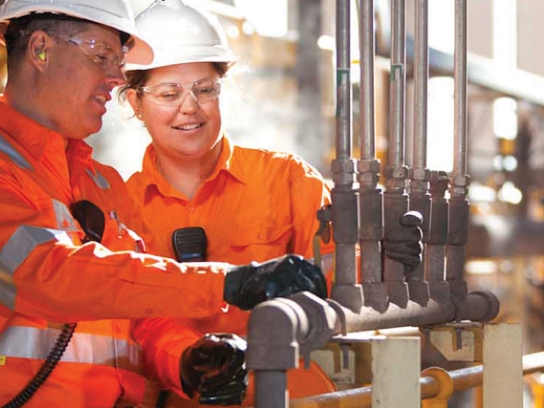
But that expansion wouldn’t be possible without that hard work of the exploration crew.
AREEA CEO Steve Knott says the resources and energy pipeline is as “healthy as it has ever been”, although there is a premium on finding the next generation of mines.
“If the only way to grow this workforce is to find and build new deposits, then governments have to back that pipeline from the very start,” Knott says.
“Exploration is lifting on the back of strong gold and copper prices, but it can take a decade or more for a discovery to become a mine. If Canberra and the states want resource jobs in the 2030s, they need to keep exploration incentives in place and make sure approvals can turn discoveries into projects.”
Beyond the major project count
While major copper developments such as Harmony’s Eva Project are expected to create hundreds of operational jobs, this demand could be partly offset by the broader workforce trends across Queensland’s exploration sector.
AREEA’s report mostly accounts for those in development and nearing production, but some juniors tell a different story.
Alma’s Briggs Project, for example, will have a very different development stage to Harmony’s Eva Project.
The explorer can leverage existing infrastructure and nearby facilities due to Briggs’ proximity to Gladstone.
Briggs is located within 10–15km of high-voltage power infrastructure and close to road, rail, and gas pipeline networks. This proximity could reduce the capital costs typically associated with mine construction and potentially accelerate the project’s path to production.
Beyond Alma, numerous junior explorers are advancing copper projects across Queensland, contributing to the sector’s future workforce pipeline.
Cannindah Resources’ (ASX:CAE) flagship project, the Mt Cannindah Project, sits 100km south of Gladstone, representing a ‘large, high-level’ porphyry-style copper-molybdenum-gold mineralised system that extends more than 9km2.
The project has historically produced significant copper and gold intercepts, including 82m @ 2.32% Cu, 0.88g/t Au, and 42.1g/t silver, along with 36m @ 8.65g/t Au and 52m @ 4.90g/t Au.
The mining component of the Mt Cannindah Project has a resource estimate of 14.5 million tonnes at 1.09% copper equivalent, based on a 0.3% cut-off grade. The estimate updates the project’s previous resource estimate from 2011.
Cannindah’s resource update represents a 183% increase in overall tonnes and a 117% increase in copper metal.
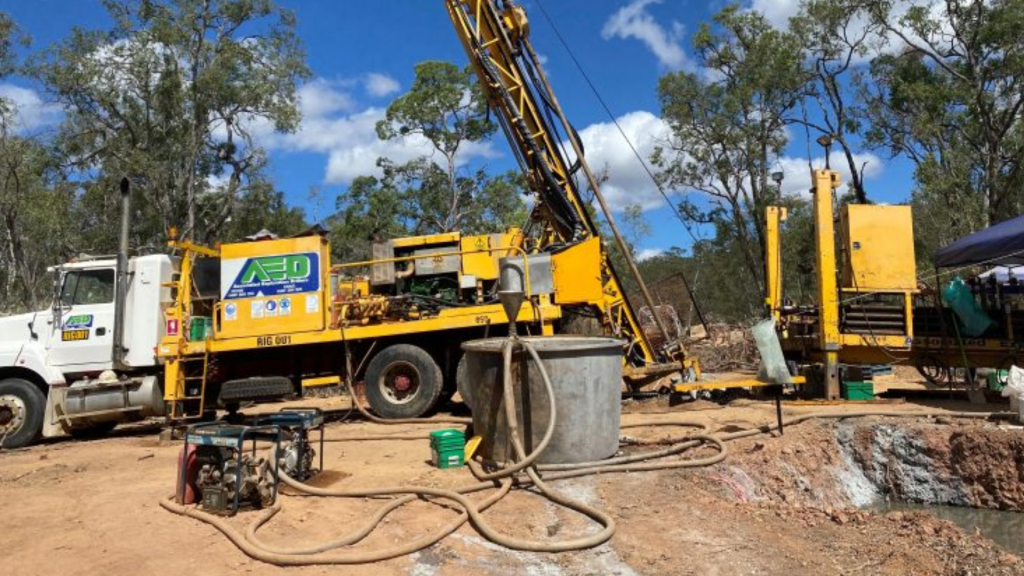
Similar to Alma, Cannindah is still in the drilling phase of exploration, with two rigs currently operating at the project to test extensions of the Cannindah Breccia along strike to the north and south and at depth.
Still in the earlier stages of the mining lifecycle, Cannindah has a relatively small on-site workforce. However, workforce requirements could increase as the company advances towards feasibility studies and potential development activities.
While AREEA forecasts fewer additional operational workers despite a growing project pipeline, these figures don’t tell the full story of Australia’s mining sector.
Instead, the figures indicate that exploration projects need more attention and support than ever to help develop and strengthen Australia’s resources and energy workforce, particularly in Queensland.
Write to Maddison Elliott at Mining.com.au
Main image: Mining.com.au