Bringing a copper mine to life has never been easy.
Copper mines need major surface, underground, power, and transport infrastructure to extract and process ore.
One example is BHP Group’s (ASX:BHP) Canadian venture, which has formed a joint venture company with Lundin Mining (TSX:LUN) to hold the Filo del Sol (FDS) and Josemaría copper deposits in the Vicuña district of Argentina and Chile — namely, the Vicuña Project.
The joint venture company, Vicuña, is equally owned by the two mining companies after BHP Canada acquired a 50% stake in the Josemaría Copper Project from Lundin Mining early last year.
Currently, Vicuña is moving through the development stage at both the Josemaría and FDS deposits, undergoing a phased development plan.
In February 2026, Vicuña shared the results of its preliminary economic assessment (PEA), valuing the total investment required for its namesake project at US$18 billion ($24.9 billion).
The development of this project has been split into three stages, with each aligned with the maturity of the assets and the infrastructure required.
With stage one focused solely on the Josemaría deposit, Vicuña will develop an open pit mine and a concentrator plant that will support future expansion. The aim of stage one is to accelerate initial production and generate early operating cash flow.
Stage two will focus on the development of FDS oxide resources, while building a plant to recover copper, gold, and silver. This intends to expand the project’s production capacity, while also removing the oxide layer covering sulphides at the FDS deposit.
The third stage will expand the concentrator plant and develop both deposits, bringing production levels to around 293,000 tonnes per day.
Stage three incorporates strategic infrastructure, under an outsourcing scheme, including a water desalination plant, a concentrate transport system, and the installation of a concentrate treatment plant.
First production at the copper mine is expected in 2030, with stage one being deployed from 2027 until first production.
With US$7 billion to be deployed in the first stage of the US$18 billion project, this figure is not out of the ordinary.
This follows a gradual increase in the cost of building open pit and underground mines.
Prestige Investment Group UK reports that the growing cost of building a mine reflects a depletion of easily accessible resources, more stringent environmental requirements, and increases in equipment and labour costs.
For some precious metals projects, capital costs per tonne have increased five to 10 times over the last two decades.
The price of a particular mine or quarry is dependent on the geological complexity of the project.
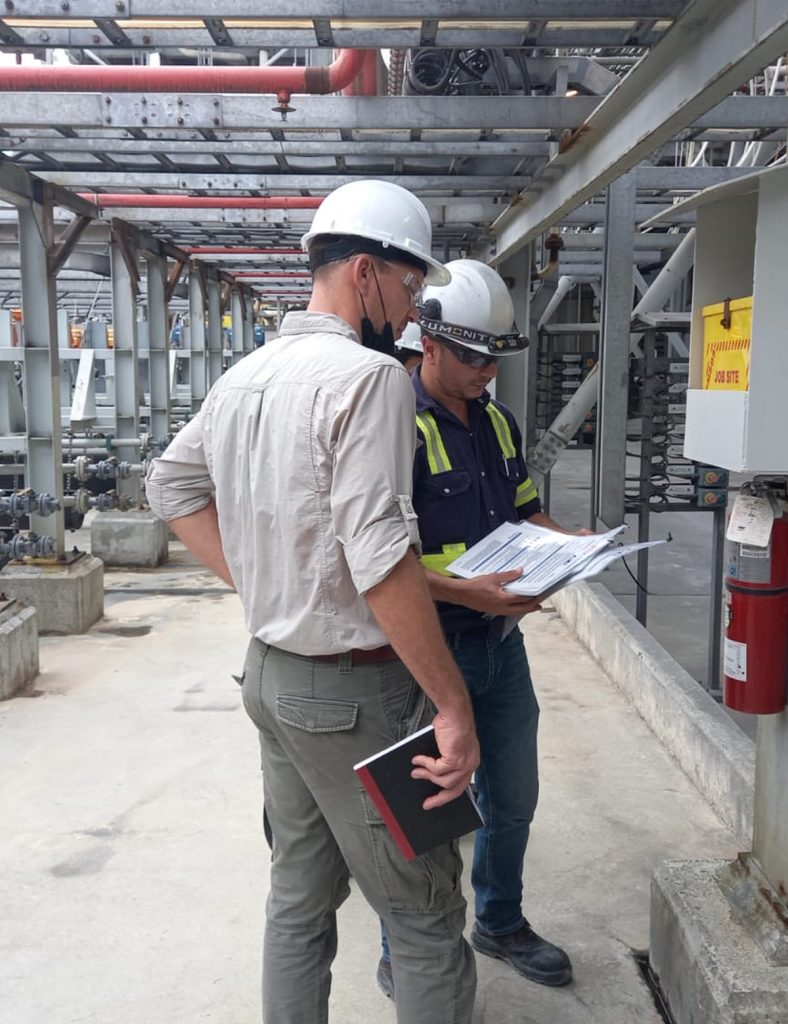
For example, one of the largest copper mines in Latin America is First Quantum Minerals’ (TSX:FM) Cobre Panama Project in the Donoso and Omar Torrijos Herrera districts of Colón Province, Panama.
The mine is reported to have originally cost US$6.2 billion when first financed and developed by Canadian company Inmet Mining Corporation.
This total investment cost includes US$1.36 billion in loans, which were agreed to be repaid through future supplies of gold and silver.
Cobre Panama has 3 billion tonnes of proven and probable mineral reserves, with two open pits with facilities for ore crushing, conveying, and stockpiling.
The project also hosts a multi-stream concentrator that processes ore before it is transported to the integrated port facility with dewatering and ship loading infrastructure.
Mineral processing company Mipac describes Cobre Panama as “one of the largest copper mines to come into production since 2010”. The project is fully self-sufficient, with an ancillary 300-megawatt power station and all services required to support the workforce and operation.
Investments beyond infrastructure
While the infrastructure required to bring a mine to life can be a significant burden on mining companies, there are ways to avoid such heavy costs.
Alma Metals (ASX:ALM) is one copper-focused explorer and developer that is well positioned to take advantage of this.
With its Briggs Copper Project located in Central Queensland, Alma Metals is focused on upgrading its resource estimate through an ongoing drilling campaign, while also progressing a Prefeasibility Study.
Drilling is currently one-quarter of the way through its program, with a second drill rig expected to be deployed to site in or around October, after receiving heritage clearance.
As reported by Mining.com.au at the beginning of August, Alma received assay results from the first three holes of drilling, returning 322.3m @ 0.17% copper (Cu) from 6.5m, including 18m @ 0.25% Cu from 156m and 86.9m @ 0.23% Cu from 207.1m from one hole.
To date, Briggs contains 2 million tonnes of copper metal in indicated and inferred resources at a 0.15% copper cut-off grade.
The infill drilling program intends to convert inferred resources to indicated at nominal 80m drill spacing.
And lucky for Alma, Briggs can leverage existing infrastructure to bring the mine to life.
Briggs is located only 60km west of Gladstone, with high-voltage power lines within 10–15km, as well as nearby road, rail, and gas pipelines.
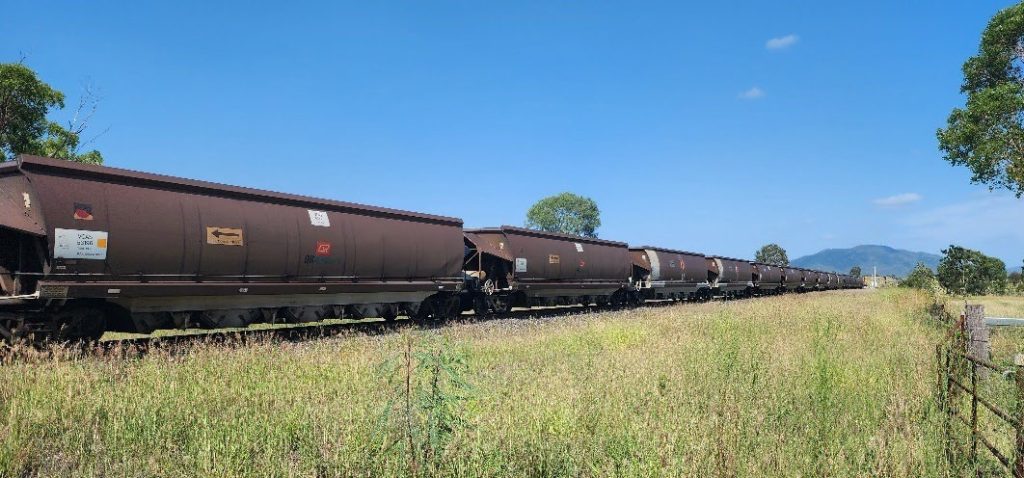
The nearby railway is used for heavy-haulage coal exports, with multiple gas pipelines and a water pipeline also in the area.
The Briggs Project also sits close to a major regional road — the Dawson Highway.
For Alma, it is all about location, with the company saying “good infrastructure reduces capital costs”.
At the beginning of the quarter, Alma acquired a fully equipped modular exploration camp to support ongoing exploration programs.
The exploration camp allows Alma to more than double its on-site operational capacity once fully commissioned, accommodating up to 16 people.
With the project’s proximity to Gladstone, Alma is able to draw on a local skilled industrial and mining workforce to advance Briggs.
Alma Metals is a copper-focused explorer advancing its flagship Briggs Copper Project in Queensland alongside the East Kimberley Copper Project in Western Australia.
Write to Maddison Elliott at Mining.com.au
Main Image: Vicuña