



Scandium Canada (TSX-V:SCD) is investigating alternate locations in Canada for its proposed hydrometallurgical plant designed to convert scandium concentrate into scandium oxide.
The Québec-based technology metals company has visited sites in Wabush, Labrador City, and Fermont over the past few days.
Scandium Canada says it will continue its efforts to identify and secure an ideal site for this major plant, so that it can be incorporated into the Prefeasibility Study (PFS) required to advance the project to the next stage.
Work on optimising the ore concentration process flow sheet and the process flow sheet for hydrometallurgical production of scandium oxide is underway at SGS Canada’s Lakefield, Ontario laboratory, using a 500kg sample.
The ore concentration steps have been validated and the hydrometallurgical process to transform the concentrate into scandium oxide is now Scandium Canada’s main focus.
Full testing is slated for completion in January 2025, with a final report due in March 2025.
Scandium Canada says certain steps in the flow sheet are subject to patent applications to protect the company’s intellectual property.
In late September, the company filed patent applications with the US Patent and Trademark Office for its two aluminium scandium alloys and their powders designed specifically for additive manufacturing (3D printing) applications.
In parallel with development work on its flagship Crater Lake Project, Scandium Canada undertook development work on aluminum scandium alloys to interest potential users in joining the project development.
This resulted in the development of two specific alloys, leading to the filing of a patent application for alloys A535 and AA7075, modified with scandium among other elements, to enable 3D printing.
Following the filing of this patent application, Scandium Canada began to approach potential users wishing to independently test the properties of parts to be manufactured by 3D printing.
The company is also working on the development of an aluminium scandium alloy suitable for extrusion, targeting new, specific uses for aluminum profiles.
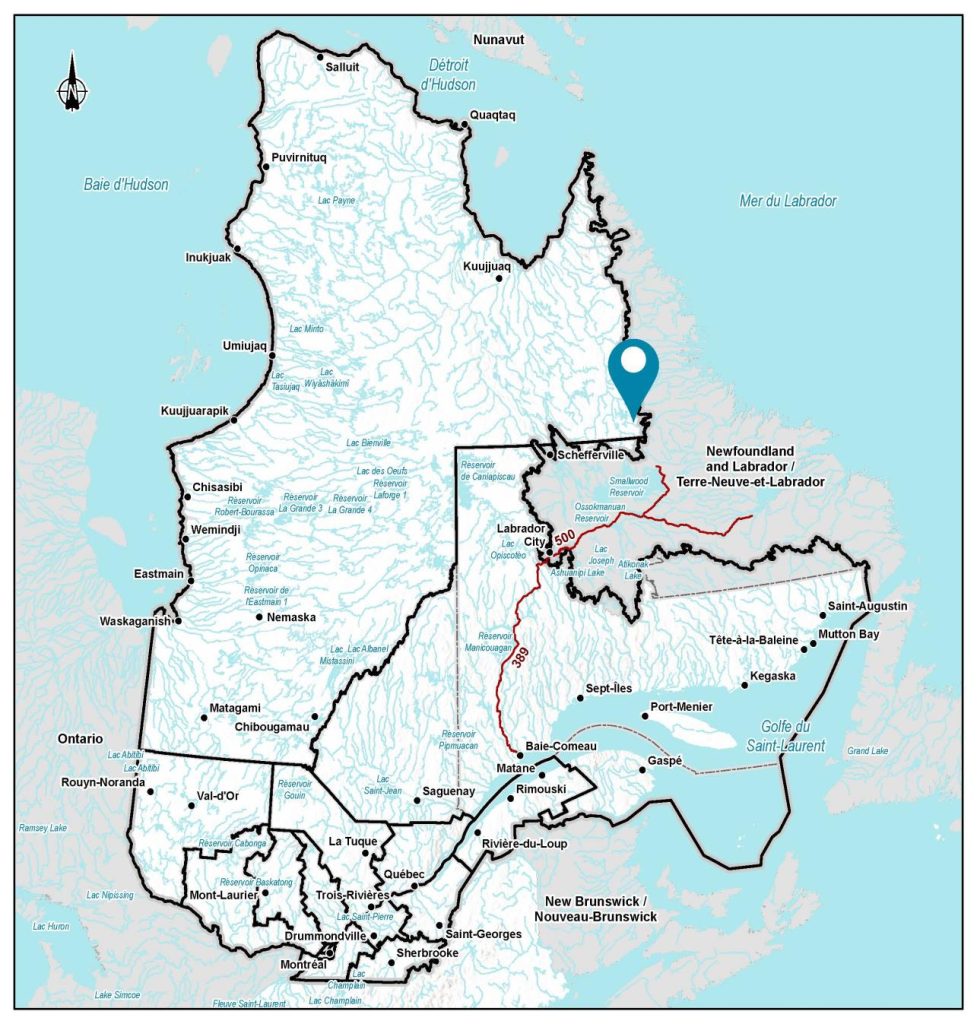
The Crater Lake Project has an indicated resource of 11.8 million tonnes @ 275.9 grams per tonne (g/t) and an inferred resource of 15.9 million tonnes @ 268.4 g/t for the Northern Lobe of the TG Zone.
Scandium Canada says it is the “world’s largest primary source of scandium currently being developed”, with a Preliminary Economic Assessment indicating a C$1.72 billion ($1.86 billion) net present value and a 32.8% internal rate of return.
During the Canadian 2024 summer, Scandium Canada completed a two-part drilling program at the project to confirm the potential extension of the TG Zone over an additional 250m.
Mineralisation was identified in the seven holes drilled, totalling 1,185m.
Assay results for the 954 samples sent for analysis are expected before the end of December. This paves the way for a resource update due for release in January 2025.
Drilling was also aimed at determining the optimum slope angles for the open pit design to be included in the PFS. A total of 1,669m was drilled across six holes in the northern lobe of the TG Zone.
Write to Angela East at Mining.com.au
Images: Scandium Canada


