September has arrived, which here in Australia means warmer weather, blooming flowers, and gleaming sapphires.
The September birthstone comes in almost every colour of the rainbow, with its different hues caused by trace minerals such as iron, titanium, and nickel.
And in 2025, sapphire even peaked at number five on the UK Singles Chart — well, that’s if you’re talking about the Ed Sheeran song.
There is something Sheeran got almost right in his hit single — while the gem doesn’t quite fracture light, a sapphire’s distinctive glow is partly shaped by birefringence, which causes light entering the gemstone to bend and split into two rays.
Some may say, exploding like fireworks in the sky.
The lights
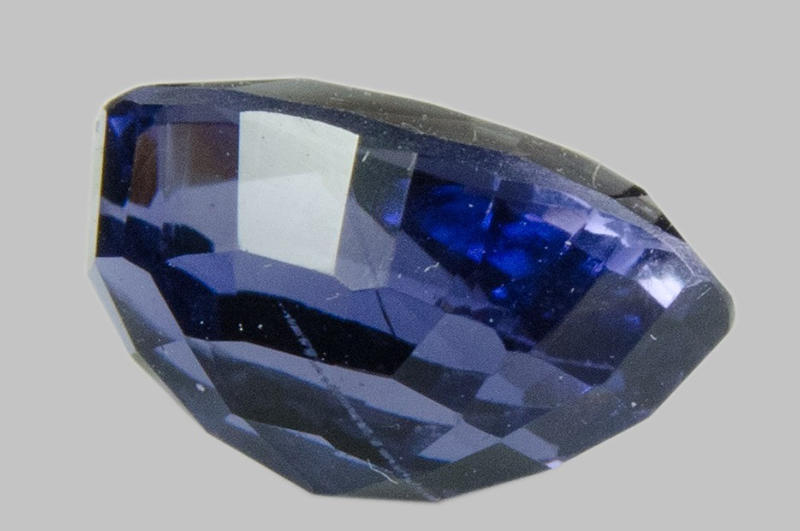
With numerous colour variants of the gem available, including pink, yellow, or green sapphires, the most common colour of the birthstone is blue.
That being said, ‘sapphire’ means blue corundum and is only referred to by its colour variant when it is not blue.
With so many colours to choose from, there is one variant that is simply not possible: red sapphire.
Sapphires are not available in a red hue, as that would make it a ruby. Sapphires and rubies are both gem-grade varieties of the same mineral, corundum (aluminium oxide).
Rubies are red due to the trace element chromium, while sapphires can come in other colours due to trace elements such as iron and titanium.
How a sapphire faces
Australia is no stranger to sapphires.
In true blue style, Australia was the source for around 70% of the world’s sapphires in the 1980s, with the majority of production coming from New South Wales.
As mechanised mining became more common globally, Australia’s share of output dropped to around 20–30%.
NSW isn’t the only state known for sapphire mining, with the gemstone found in all eastern Australian states — even Tasmania.
Currently, commercial mining of corundum occurs at the Anakie and Lava Plains placer deposits in Queensland, as well as NSW’s New England region.
Corundum ore is extracted from gravel using open pit mining, often from small mining operations with shallow pits.
However, high-pressure water mining is also prospective for producing large quantities of rough corundum gems in Africa and South America.
Corundum can be separated from clay and gravel once mined, as it is denser and heavier.
After being broken up and sorted by size in a rotating drum, the gravel is washed either by hand or with a high-pressure water jet and separated through a filter with various-sized holes. The heavy grains sink, while lighter materials rise and wash over the top.
Remaining materials often contain heavy minerals such as magnetite and zircon. Magnetic material can be removed using magnets, while zircons are removed by hand.
Corundum is then visually assessed and graded according to the material’s size and colour.
All eyes on sapphires
Sapphire pricing doesn’t follow a fixed or standardised formula.
The price of a sapphire is influenced by its natural characteristics, rarity, and overall market demand for the gem.
Pricing can also depend on whether the gem has been treated or not. While heat treatment is often used in the sapphire trade to improve colour and clarity, untreated sapphires command higher prices due to their rarity, according to the Natural Sapphire Company.
For the traditional blue sapphire, the gem can range from US$300 to over US$20,000 ($27,733) per carat. Sapphire prices are often driven primarily by the depth and saturation of the blue colour.
Don’t end the sapphire party
Before Sheeran wrote his hit song, sapphires were often associated with wealth and royalty — much like the August birthstone, peridot, and its ties to ancient Egypt.
In ancient Greek mythology, the famously beautiful Helen of Troy was believed to be associated with a magical star sapphire due to her appearance.
Ancient Greek and Roman royals are believed to have owned sapphires and rubies, convinced that the gemstones protected them from harm.
Former ruler of ancient Israel, King Solomon, is also reported to be a big fan of sapphires.
However, the more modern connection between royalty and sapphires is none other than the beloved Princess Diana.
Princess Diana’s engagement ring features one of the world’s most famous sapphires and is now worn by Kate Middleton.
If a connection to the People’s Princess or Ed Sheeran’s praises aren’t enough for the September-born, pop in next month for the October edition of Mining.com.au’s ‘A Taste of Birthstones’ series — where this news service will be diving into two different gemstones.
Write to Maddison Elliott at Mining.com.au
Main Image: Mining.com.au