



It’s been a tough time for the resources sector lately. Copper, for example, has fallen for six consecutive weeks.
That’s an unexpected turn for one of the market’s hottest trades earlier this year. Copper is now down around 19% from its previous high.
Copper stocks have fallen even further. One example on the ASX is Sandfire Resources (ASX:SFR).
The stock peaked at $25 per share in August before falling to $16.50 on Thursday (20 November). That’s a decline of nearly 34%, and there’s no guarantee the selling will stop there.
Of course, it’s also worth noting that, despite the recent sell-off, copper is still trading at a relatively high level by historical standards.
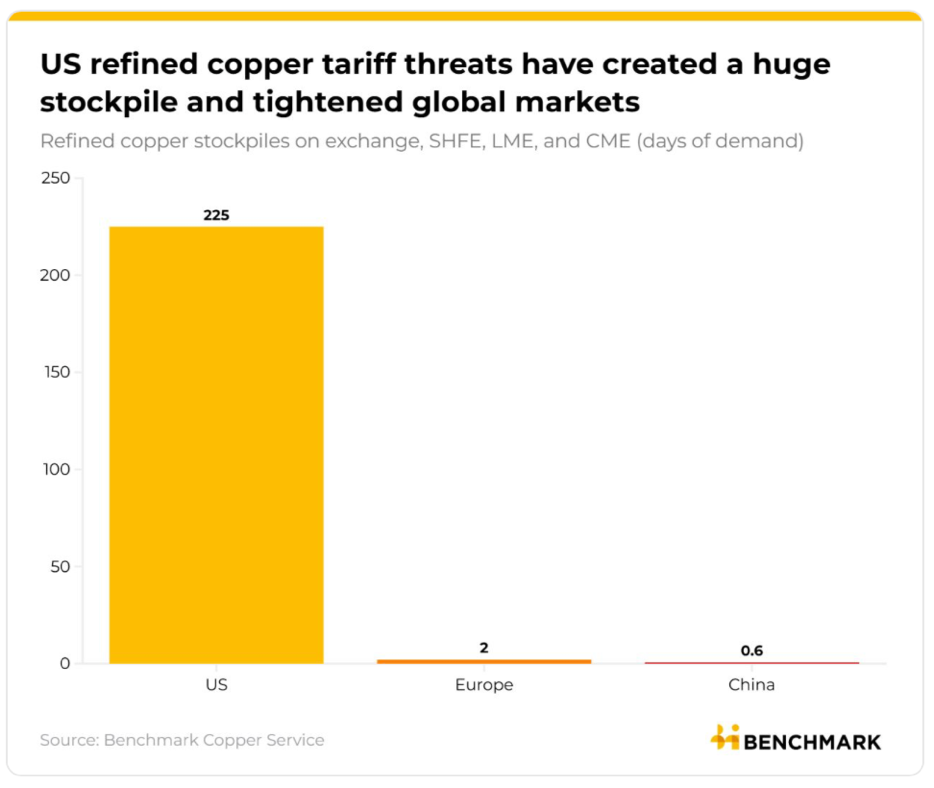
China’s copper inventories shrink as US stockpiles soar
Chinese copper inventories have fallen to record-low levels, while US stockpiles have surged as more of the metal flows into warehouses ahead of potential tariffs.
Source: Benchmark Mineral Intelligence
Anyone interested in copper will be familiar with this chart.
The build-up in US copper inventories has been underway for around 18 months. It began after President Donald Trump suggested tariffs could be imposed on imported copper.
This is creating difficulties for Chinese buyers, who are now bidding more aggressively to secure supply. The premium paid to import copper into China recently hit a record high, highlighting the competition for available metal. Europe also needs to secure supply.
Benchmark Mineral Intelligence Copper Analyst and Market Reporter Albert Mackenzie presented to investors on 11 November. He told them copper prices were high because the market was “dealing with a tightness that isn’t real”.
Nobody knows whether the proposed copper tariffs will go ahead. That makes forecasting the direction of the copper price particularly difficult, as it depends heavily on US Government policy. In other words, it depends on Donald Trump.
As things stand, the copper price could move in either direction.
If the US Government makes it more difficult to source copper, prices could rise further. If copper starts leaving the US, or imports moderate, prices are likely to weaken.
Could China’s copper shortage lift Sandfire?
There are still strong demand drivers for copper. Grid electrification, electric vehicles, and broader economic growth underpin the market.
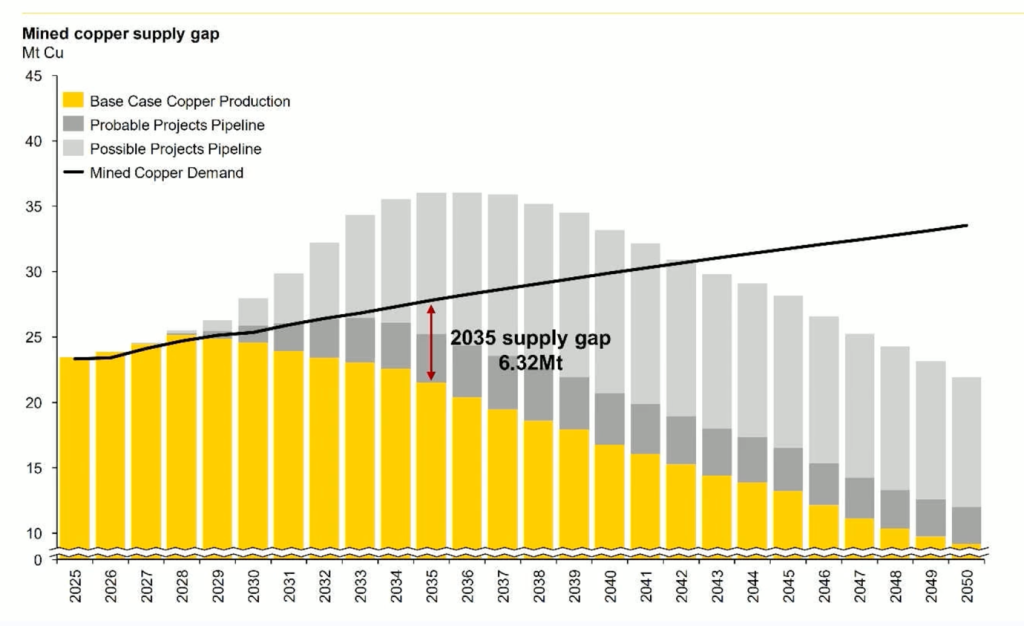
Benchmark forecasts that copper could enter a structural deficit around 2030. This outlook is based on the expectation that global electricity demand will continue to grow, requiring more copper, assuming no significant substitution.
Source: Benchmark Mineral Intelligence
That leaves Sandfire at an interesting juncture.
Fund manager James Gerrish commented back in August:
“Sandfire’s got a couple of great assets that are now producing very well. In years gone by they’ve had a few challenges operationally, but they’ve really got their book in order — and then they’ve got the copper price tailwind.”
One aspect that concerned him at the time was valuation. Sandfire was trading on a high price-to-earnings (P/E) ratio. The recent share price decline has brought that ratio down to 10, according to Stockopedia.
Of course, this metric can be tricky to apply to miners because earnings can fluctuate significantly depending on the price of the underlying commodity.
The market may perceive Sandfire as ‘cheap’ if copper prices hold around current levels.
Sandfire CEO Brendan Harris made the following comments at the company’s recent Annual General Meeting (AGM):
“With cumulative annual copper equivalent production of almost 160 kilotonnes and an average C1 cost of less than $1 per pound in the final quarter of FY26, we have entered FY27 with significant momentum and in the strongest position we have been in since I joined four years ago.”
No doubt Harris will be keeping a close eye on developments in the US and the build-up in copper inventories. Sandfire’s earnings could move higher or lower depending on how those developments unfold.
Write to Callum Newman at Mining.com.au
Main image: iStock


