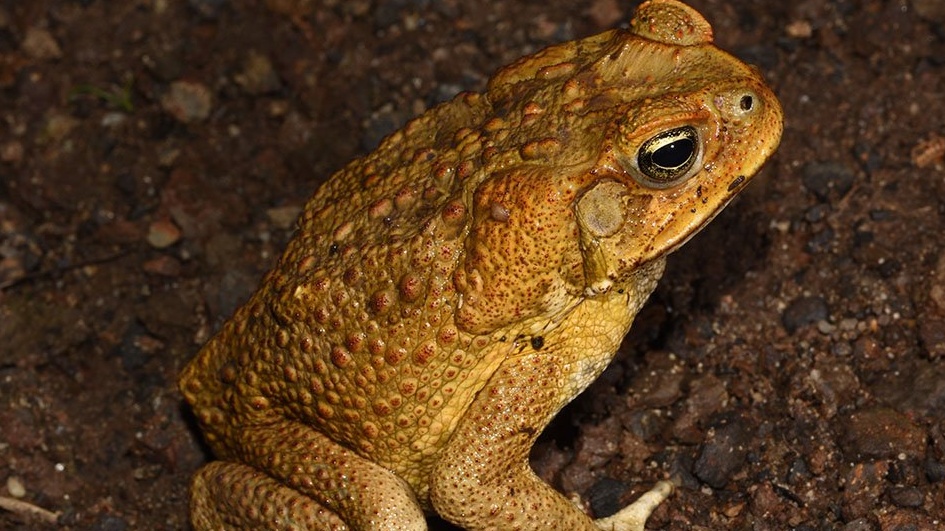
Rio Tinto (ASX:RIO) and its Rhodes Ridge joint venture partners have committed $28 million to an initiative aimed at preventing invasive cane toads from reaching Western Australia’s Pilbara region.
The funding will support the development of a 7,500km² toad containment zone (TCZ) between the Indian Ocean and the Great Sandy Desert, immediately south of Broome.
Rio Tinto will work with Curtin University on the project, with additional support from Deakin University, Traditional Owners, and local pastoralists.
The proposed zone will act as a “waterless barrier” to prevent cane toads from moving south into the Pilbara by restricting their access to water sources, according to Rio.
The Pilbara is home to several of Rio’s iron ore operations, as well as undeveloped assets including Rhodes Ridge. The company holds a 50% interest in the joint venture, while Mitsui (TYO:8031) and AMB Holdings own 40% and 10%, respectively.
‘Lethal’ to native wildlife
While cane toads pose no direct threat to these operations, their toxic secretions can be lethal to native wildlife, making them a significant threat to the region’s biodiversity.
“Cane toads produce toxins that can be lethal to native wildlife, posing a significant threat to the Pilbara’s ecosystems,” Rio Tinto Iron Ore Managing Director of Pilbara Rail, Port and Services Chris Osborn says.
Species at risk include the northern quoll, whose population is already declining, as well as goannas and ghost bats.
“Cane toads destroy the water and animals. When toads come close to our Country, we want to be there to stop them because we don’t want the Country to be destroyed,” Nyangumarta Ranger and Traditional Owner Roberta Hunter also says.
Cutting off toads’ water supply
The containment zone will involve modifications to pastoral water infrastructure across six stations to create a dry corridor that prevents cane toads from advancing into the Pilbara.
The project will involve upgrading or containing 685 infrastructure items, including dams, storage tanks, and other ground-level water sources.
By restricting access to these water sources during the dry season, the initiative aims to create a barrier that cane toads cannot cross.
The $28 million project is expected to run for five years, starting in 2027.
Major conservation concern
“The toad containment zone is a once-in-a-lifetime opportunity to stop one of the world’s worst invasive species in its tracks and protect the region’s unique wildlife,” Curtin University Professor Ben Phillips says.
Cane toads were first introduced to Australia in 1935 to control beetles damaging the sugar cane industry.
Since then, the invasive species has steadily spread westward across northern Australia, threatening native wildlife and ecosystems along the way.
According to the Australian Government, cane toads can spread 40–60km per year, making their continued expansion a significant conservation concern.
The proposed containment zone aims to stop the spread before cane toads reach the Pilbara, one of Australia’s 15 recognised biodiversity areas.
Write to Jackson Chen at Mining.com.au
Image: The Australian Museum