



This article is a sponsored feature from Mining.com.au partner Pilbara Gold. It is not financial advice. Talk to a registered financial expert before making investment decisions.
Pilbara Gold (ASX:PGL), formerly Kairos Minerals (ASX:KAI), has undergone a major strategic shift, not only in name, but in operational focus as it sets its sights on the development of its growing Mt York Gold Project in Western Australia.
Managing Director Peter Turner says that the company and its shareholders are all fully on board with this shift as the company drives Mt York into development.
“Mt York is a really exciting project, and we believe that is has a lot more ounces in the ground than what we’ve found so far,” Turner says.
“Our aim is to really place this project in the top three of resource projects in Western Australia that are not currently owned by mining companies.”
The company’s overall strategy is to build Mt York into a significantly large resource, larger than its current 2.1-million-ounce resource, which the company assures the market it can do.
“We deliver on promises,” Turner says.
“Shareholders are very happy with the fact that we’re drilling lots of holes and effectively delivering on our promises for growth.”
Alongside its strategic shift and name change, Pilbara Gold has undergone a share consolidation, with the company’s new non-executive Chairman Simon Lill helping to solidify the strategy and impact of that.
As the company undergoes this transformation, the share consolidation also represents a shift toward the institutional investment space.
“It’s not that we don’t love our retail shareholders, but we want our shareholders to be holding our shares over the long term,” Turner says.
Zhaojin Capital, a subsidiary of the world’s 16th largest gold mining company, Zhaojin Mining (HKG:1818), is now the single largest shareholder in Pilbara Gold and holds more than 8% of the company, alongside Franklin Templeton holding just below 7%, Eric Sprott with 4%, and other institutions taking up the total to around 25% of the share register.
“The strategy for the company was to move more into the institutional space, providing us with more market credibility from a marketing perspective and trading stability,” Turner says.
Strategic drilling and PFS progress reinforce Mt York’s development
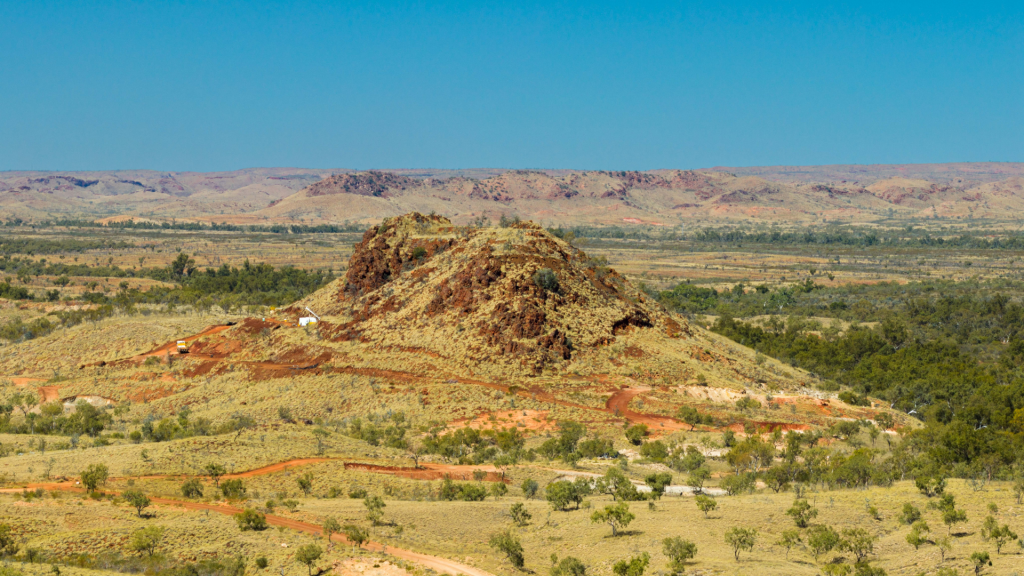
Pilbara Gold’s Mt York Gold Project in the Pilbara of Western Australia currently has 2.1 million ounces of gold in a JORC-compliant mineral resource, with 66% of the resource in an indicated category and 34% in inferred. The project sits in a premier location, just 100km south of Port Hedland, and is surrounded by lithium mines, meaning that the infrastructure is already in place to build a large-scale mine.
The company has just announced a 700,000-ounce increase in resources from the 2023 mineral resource estimate (MRE), which also includes a 5% increase in grade, with new, significantly higher-grade zones now defined within the deposit.
Ready to stay ahead of the market?
Get stories like this, delivered direct to your inbox.
As previously reported, the resource estimate for Mt York sits at 61.7 million tonnes at 1.05 grams per tonne gold for 2.08 million ounces.
Turner notes that the company’s experienced technical team, headed by Exploration Manager Mark Falconer, sees a lot of opportunity to increase the resource again in 2026 and the team is incentivised by performance rights to hit the target of 3 million ounces or more at the project.
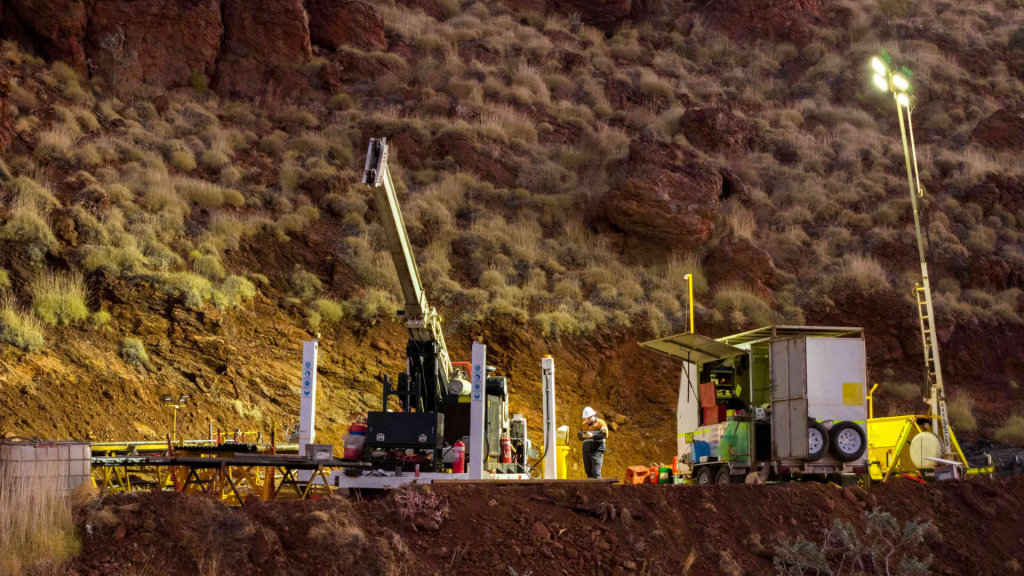
Pilbara Gold has yet again embarked on the largest drill program in the company’s history on this asset in 2026, with a huge 50,000m-plus drill program this year to achieve its goal.
“2025 was a very busy year and 2026 looks even busier,” Turner says.
“We said that 2025 was going to be our largest single drilling program ever at 27,000m of drilling, and we’re now looking to complete 58,000m, so it’s all hands on deck.”
All this drilling work will contribute to the company’s Prefeasibility Study (PFS), though with the significant drilling program planned again this year, the company is prioritising additional ounces in resource over studies. However, much of the work for a PFS has already been done and the company sees progress of the PFS to run in parallel with resource growth.
Turner points out that the growing resource at Mt York is optimised into a single open-pit shell, similar to the Super Pit in Kalgoorlie.
“This is going to be an extremely long, potential open-cut mining operation,” Turner says.
“The open-pit shell is currently 4.2km long and 350m deep at its current deepest point. The Super Pit in Kalgoorlie is only 3.7km long so you could say that we would like to develop the Super Pit of the north.”
Pilbara Gold is certainly ramping up to prepare for this ‘super’ stage in its development, having grown its team significantly to keep up with the pace of work.
“2026 is certainly going to be the biggest year for the company to date, and having support from major shareholders is crucial. It says to us that we’re moving in the right direction.”
Institutional appetite and M&A activity highlight sector-wide momentum
If there’s one direction that’s good to take at the moment, it’s into gold.
Turner explains that he’s been in the gold sector for more than 30 years now and notes that he’s never seen the market as good as it is now.
While he’s seen huge amounts of activity in the gold space, driven by an extremely buoyant gold price underpinned by financial instability, it has also enabled companies like Pilbara Gold to raise the capital needed to go out and drill their projects.
“Some of the projects we’re seeing being drilled today wouldn’t have been drilled if the market wasn’t as good as it is now,” Turner says.
“We’re going to be seeing a lot of other companies also moving into development in this market.”
Noting the state of the gold exploration and development space, particularly in Western Australia, Turner says that he would like to see more mergers and acquisitions.
He notes the 2025 takeover of Gold Road Resources by Gold Fields (JSE:GFI | NYSE:GFI), providing them with full ownership of the Gruyere Gold Mine, and the current takeover of Magnetic Resources (ASX:MAU) by Genesis Minerals (ASX:GMD) shows that there is an appetite from mining companies to acquire assets to improve their own operational bases.
“The companies that have been taken over provide a void that needs to be filled by resource companies with developing resource assets, and I believe that Pilbara Gold sits nicely in that space,” Turner says.
“Not only do we have the critical mass to develop Mt York now, but we are confident that the market will begin to see our strategy pay off as we grow the resources further over the project site.
“Time will tell if we will again deliver on our promise to grow the resource into a much larger gold project in 2026.”
Pilbara Gold expands exploration footprint
As to those promises, Pilbara Gold firmly believes that it will be able to grow Mt York into a much larger resource than it currently is. In addition to the current granted mining lease that the project sits on, the company has tied up more than 500km2 in exploration ground around the project that it knows to be prospective for gold.
“We think we’re going to find another gold discovery near Mt York,” Turner says.
Turner explains that there are two ‘cratons’ that hold most of the gold mines in Western Australia, with the Pilbara Craton being the lesser known. The vast majority of gold resources occur in the southern Yilgarn Craton, also known as the Eastern Goldfields region, which has seen significantly more historic exploration compared to its smaller Pilbara cousin.
The resources for the Eastern Goldfields are currently far superior to those in the Pilbara at the moment, which Turner notes is not a reflection of the prospectivity of the Pilbara but is a function of the lack of systematic modern gold exploration.
“The Pilbara is probably lagging a bit behind the Yilgarn in terms of being a well-known gold destination,” Turner says.
“There are fewer gold mines here, but it doesn’t mean to say it’s less prospective than the Eastern Goldfields. I think it’s just a factor of how much exploration has been conducted here.
“The giant Hemi Gold Mine containing over 12 million ounces of gold 50km to the northwest of Pilbara Gold’s Mt York Gold Project was only discovered in 2019 and is a clear indication that this area has many more mines under cover waiting to be found.”
Drill results and new resource estimate expected in H2
With Pilbara Gold’s push to get into development, the company expects to have drill results starting to flow from the major program now underway.
Turner also expects to have a new resource estimate for Mt York in the second half of 2026 as well the majority of the PFS work completed.
Pilbara Gold will also start drilling in June on another project in its portfolio in the Eastern Goldfields called Roe Hills, with the goal of turning this exploration project into the company’s second resource project by estimating a maiden MRE.
“This is an exciting project because it’s actually got 1.5km of known mineralisation and we feel that another 10,000m of drilling, which is quite small, will allow us to put together a maiden resource estimate for that project.”
Pilbara Gold’s transformation from explorer to developer is already resonating with the market, reflected in its growing institutional support and share price performance.
With Mt York on track to become a significant development project with a growing resource base, its second project, Roe Hills, gives the company optionality to develop a second gold project in Western Australia. The company is positioning itself as the “best-valued gold development company on the ASX today”, one with scale and momentum for the future.
Write to Amy Rotman at Mining.com.au
Images: Pilbara Gold and Mining.com.au


