
MDF Global MDF Global
Apple’s iPhone boom highlights critical minerals powering smartphones•Presenting a united front for Queensland’s copper sector•Thailand seeks Myanmar mine access amid arsenic pollution•Egypt to set up state-backed company to license artisanal gold miners, free detainees•Brixton closes $7.4 million raise for Thorn, Langis projects•Heliostar banks record $78.7 million for Ana Paula push•Mining giants bet billions on 2030 supply crunch•Gunnison Copper reports Q3 output, revenue surge•Triumph Gold targets $15.46 million for Yukon push•African Rainbow Minerals faces a jobs dispute at Nkomati mine•Angola seeks 10% stake in De Beers under Anglo’s proposed exit•Gold price rebounds but heads for biggest weekly loss since June•Teck copper strike reaches BC port as operator sues union•Copper benchmark rocked by miner-smelter tug-of-war•Zimbabwe mining bill targets community, environmental safeguards•Mount Isa critical minerals hub secures Feasibility Study funding•Eramet initiates $814.5 million capital raise to reduce debt•Richemont backs natural gemstones, declines De Beers comment•‘Tis the season for administration as Comlek falls a second time•OceanaGold Philippines trials wireless blasting at Didipio mine Apple’s iPhone boom highlights critical minerals powering smartphones•Presenting a united front for Queensland’s copper sector•Thailand seeks Myanmar mine access amid arsenic pollution•Egypt to set up state-backed company to license artisanal gold miners, free detainees•Brixton closes $7.4 million raise for Thorn, Langis projects•Heliostar banks record $78.7 million for Ana Paula push•Mining giants bet billions on 2030 supply crunch•Gunnison Copper reports Q3 output, revenue surge•Triumph Gold targets $15.46 million for Yukon push•African Rainbow Minerals faces a jobs dispute at Nkomati mine•Angola seeks 10% stake in De Beers under Anglo’s proposed exit•Gold price rebounds but heads for biggest weekly loss since June•Teck copper strike reaches BC port as operator sues union•Copper benchmark rocked by miner-smelter tug-of-war•Zimbabwe mining bill targets community, environmental safeguards•Mount Isa critical minerals hub secures Feasibility Study funding•Eramet initiates $814.5 million capital raise to reduce debt•Richemont backs natural gemstones, declines De Beers comment•‘Tis the season for administration as Comlek falls a second time•OceanaGold Philippines trials wireless blasting at Didipio mine
Middle Island Resources

Middle Island unlocks polymetallic potential at Bobija

Middle Island Resources (ASX:MDI) has received assay results from its expanded soil sampling program at the wholly owned Bobija Project in Serbia, defining large-scale silver, lead, zinc, and antimony targets east of the historic Tisovik Mine.

THe program comprised 243 samples from broad-spaced, north-south oriented lines, with 400m spacing between the lines and 100m spacing between samples along each line.

The program identified multiple anomalies across a five kilometre strike length, including the Tisovik, Crvene Stene (Red Rock), and Kozila target areas.

Peak soil assays returned values of 7.1 grams per tonne silver, 4,685 parts per million (ppm) lead, 969ppm zinc, and 1,049ppm antimony, reinforcing the scale and polymetallic nature of the mineralised system.

The anomalies remain open, particularly to the north, where prospective limestones have yet to be tested. Historic channel sampling at Tisovik previously reported up to 4m @ 62.4% lead, underscoring the area’s potential.

CEO Peter Spiers says that these results demonstrate the scale and consistency of the mineralised system at Bobija.

“The scale, continuity, and multi-element nature of the anomalism reinforce the potential for the discovery of significant polymetallic mineralisation within this under-explored area,” Spiers says.

“This finding builds on the initial success of drilling around the Boija Mine, which delivered broad intersections of gold-silver-lead-zinc mineralisation that remain open.

“Importantly, the soil anomalies at Tisovik remain open to the north into prospective limestone units that have seen little to no modern exploration.”
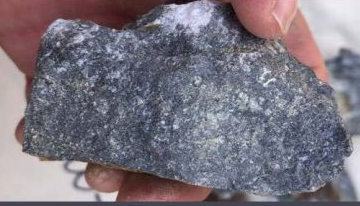
Middle Island, Bobija

Middle Island plans to extend soil sampling northward into a 10km2 untested area, supported by gravity surveys, trenching, and drilling. The company is also preparing to resume drilling at Bobija, following earlier gold-silver-lead-zinc intersections.

An expanded exploration team on the ground in Serbia will help to facilitate the expanded field activities.

The Bobija Project covers 208km2 across six licences, with Middle Island holding a 10-year option to acquire the Bobija and Tisovik mining licences. Historic exploration focused on barite, lead, and zinc, while more recent drilling has highlighted significant gold and silver potential.

The company’s Serbian portfolio spans 14 licences over 620km2 in the Western Tethyan Mineral Province, a region hosting world-class deposits including Zijin Mining’s Cukaru Peki and Rio Tinto’s Jadar Project.

As previously reported, these licences were acquired in September 2025 in conjunction with a $3.4 million placement so that the company could accelerate their Serbian exploration program.

Middle Island also holds projects in Australia’s Northern Territory and Queensland.

Write to Amy Rotman at Mining.com.au   

Images: Middle Island Resources

Add to Watch List:
Author Image
Written By Amy Rotman
Amy Rotman is a mining-focused editor and content strategist with extensive experience across industry media and investor engagement. She curates expert interviews, corporate news updates, and market insights that highlight global mining trends and investment opportunities.