



New research from Monash University has revealed that microscopic life is actively breaking down historical mining waste in South Australia, turning stable radioactive and toxic metals into mobile nanoparticles.
The study investigated historical uranium and rare earth element mine waste in a cluster of abandoned mine shafts located in the Mount Painter area of the Northern Flinders Range.
Uranium mining has widespread effects, contaminating the environment with radioactive dust, radon gas, water-borne toxins, and increased levels of background radiation. Meanwhile, inhaling rare earths can lead to long-term deposition in humans and produce chronic toxic effects.
Left largely undisturbed for more than 80 years and now part of the protected Arkaroola Wilderness Sanctuary, the Mount Painter site served as a natural laboratory for researchers to understand the long-term fate of these hazardous materials.
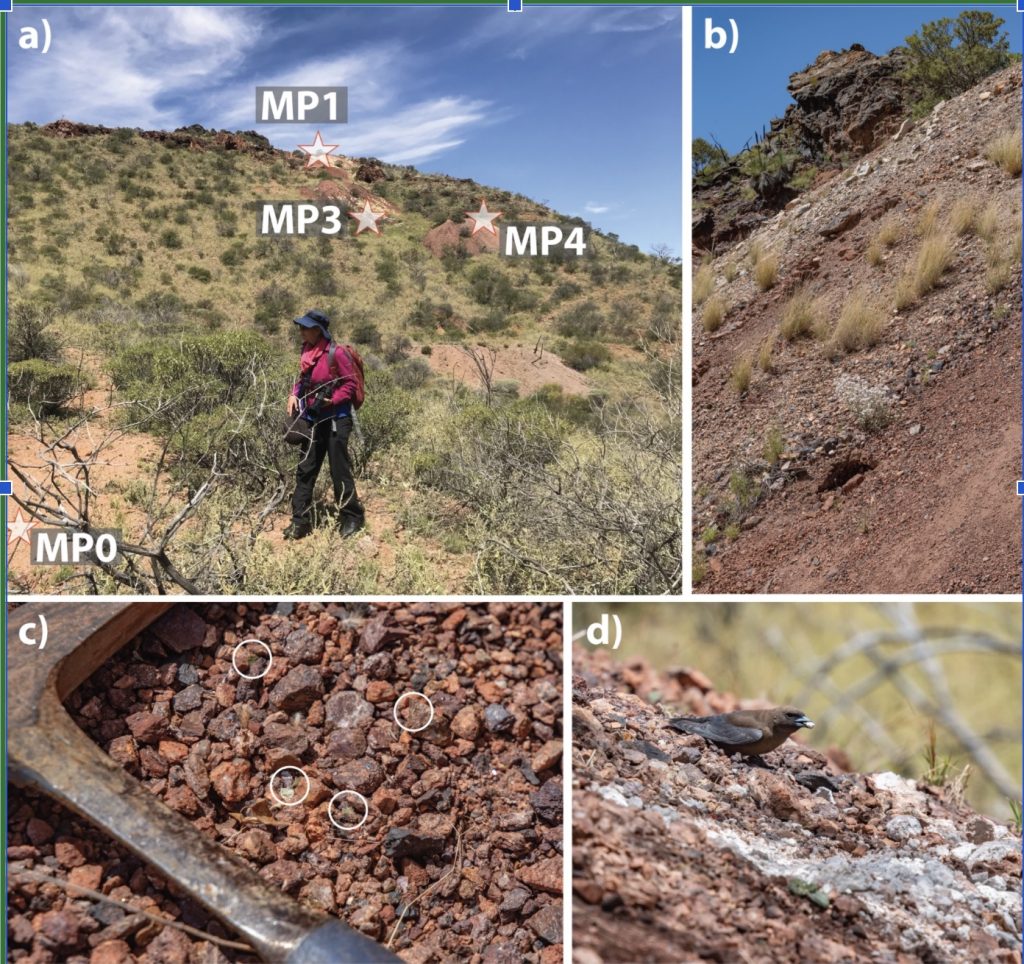
Previously, scientists believed that uranium and rare earths in dry settings were immobile, locked away inside insoluble phosphate minerals. However, using advanced single-particle analysis, the Monash University researchers discovered high concentrations of polymetallic nanoparticles near the surface of the waste piles.
Researchers identified a direct link between the highest concentrations of these nanoparticles and the areas of greatest microbial diversity. This suggests that specialised microbial communities are mining the minerals, extracting the metals and transforming them into colloidal forms that can easily move through soil and water systems during rain events.
Changing views
Professor of Synchrotron Geosciences Joël Brugger says this discovery changes how to view the stability of legacy mining sites.
“We have traditionally assumed that these toxic metals were securely locked away by nature in these arid environments, but these tiny organisms are proving us wrong,” Brugger says.
“They are essentially acting as microscopic factories, breaking down stable minerals and mobilising elements like uranium into the surrounding ecosystem. As we ramp up mining for the green energy transition, we must factor these invisible biological processes into our waste management strategies to prevent long-term environmental damage.”
Monash University researchers are now saying it is vital to understand how microbes interact with this waste for preventing unseen environmental contamination.
As with any complex biological system, Monash University says there is a flip side to the coin. The new mineral-microbe interaction pathways identified around Mount Painter could be harvested into new low-impact extraction technologies or new methods for the remediation of contaminated sites.
A surge in mine waste
Santonu Sanyal, from the environment research unit at the Commonwealth Scientific and Industrial Research Organisation (CSIRO), says the global push toward a green energy transition will inevitably lead to a surge in mining waste and a need for innovative and integrated approaches to mineral extraction and site remediation.
“As we rapidly scale up operations to meet the unprecedented demand for critical minerals, the volume of mining waste generated globally is going to rise significantly,” Sanyal says.
According to the Australasian Institute of Mining and Metallurgy (AusIMM), the mining industry produces 100 billion tonnes of waste per year, around 10% of which is tailings.
Mine waste is generally stored in an increasing number of high-risk tailings dams, posing permanent environmental and safety hazards.
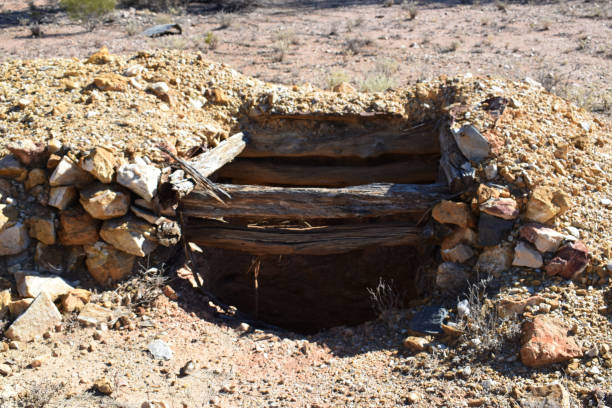
As this news service reported, a study published in Engineering Geology in 2022 shows almost 260 tailings dam failures have been recorded since 1915, accounting for 2,650 fatalities and the release of 250 million cubic metres of contaminated waste into the environment.
Almost half of that waste, roughly 115 million cubic metres, has been released since 2000. The study shows heavy rainfall is estimated to have triggered 25% of tailings dam failures globally, and 35% of collapses across Europe.
According to an Underwater Explorer for Flooded Mines (UNEXMIN) report, there are an estimated 30,000 closed or abandoned mine sites across Europe alone, many of which still have a considerable amount of essential raw materials.
UNEXMIN’s response is a step change in how the industry approaches legacy assets. The company aims to develop a fully autonomous, multi-platform robotic explorer. Three robots share the workload, using non-contact, non-damaging methods for exploration and 3D mine mapping of flooded and deep mines in Europe.
What’s being done
Alongside UNEXMIN, mining companies across the world are using their own techniques to take advantage of the opportunities that lie among abandoned mines and historical tailings sites.
One company is Halo Minerals (AIM:HALO), which owns the Playa Verde Project in Chile. Playa Verde’s initial mineable resources and reserves total 34.2 million tonnes (Mt) to produce 60,329 tonnes of refined copper.
Previously speaking to Mining.com.au, CEO Andrew Dennan explained that Playa Verde lies on a beach, meaning there is an additional 20Mt of resource in the western berm and on the shoreline area.
Around 250Mt of tailings were dumped in a riverbed, which migrated 120km downstream to form what is now Playa Verde and the Green Beach.
“We have this, effectively, artificial beach which has 53 million tonnes of resource at 0.24% copper, which is about 126,000 tonnes of contained metal,” Dennan told this news service.
In the US
Over in Nevada, Viking Mines (ASX:VKA) has confirmed that historical processing recovered the majority of tungsten from mined material at the Linka Project.
Earlier this month, a 52-sample program returned a thickness-weighted average of 0.03% tungsten trioxide, with a maximum of 0.15%. Results are considered ‘positive’ metallurgical context for Linka’s primary mineralisation and support confidence in the project’s processing characteristics.
“The tailings program has delivered a useful and positive result,” Managing Director Julian Woodcock says.
“Very little tungsten appears to have been left behind in the historical tailings dam, which supports the view that the historical operation recovered tungsten extremely efficiently from Linka ore.”
The Linka Project is a historical producing mine with a long history of underground mapping, drilling records, and high production data. Viking Mines’ strategy is to convert that historical advantage into a JORC-compliant resource on an accelerated timeline.

American Tungsten (TSX-V:TUNG) is another company in the US that has a historical tailings asset at its IMA Mine Project in Idaho.
In June 2026, American Tungsten received drill results from the historical tailings project within IMA, which showed tungsten mineralisation intersected in all bore holes. The tailings sample assays average 0.152% tungsten oxide and 0.269 ounces per tonne silver.
The results support the potential for eventual economic extraction of the tailings material. Ongoing work is focusing on establishing the historical tailings as a defined mineral resource, to underpin reserve definition.
American Tungsten recently began metallurgical testing and geotechnical studies at IMA, as it advances plans to restart the past-producing tungsten operation. The program will evaluate recovery methods for tungsten from the project.
Work is expected to provide key technical information for future engineering, environmental, and mine development studies.
Write to Aaliyah Rogan at Mining.com.au
Images: iStock, Monash University & American Tungsten


