

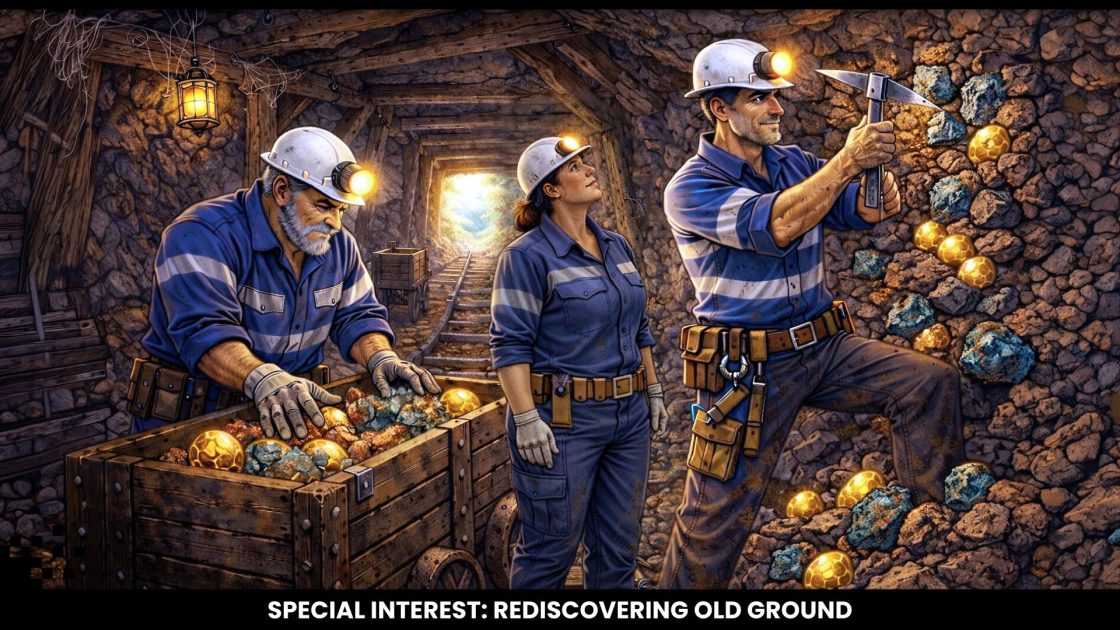
IN LONDON: From the Iberian Peninsula to the Nordic Shield, old districts across Europe are being re-examined through a new lens.
As geology, processing technology, and data analysis advances, key information is emerging – revealing that mines once written off may still hold value. In this sense, Europe’s mining past is starting to shape its future.
Across the continent, a quiet revival is underway, one that echoes the spirit of Easter.
As today marks Easter Monday (6 April), Mining.com.au is unravelling Europe’s mining sector through a three-part feature series exploring its untapped potential, a new lithium belt, and the continent’s critical minerals race.
According to a report from UNEXMIN, there are an estimated 30,000 closed or abandoned mine sites across Europe, many of which still have a considerable amount of essential raw materials.
However, most of these closed mines are flooded and the last piece of information of their status and layout is decades or more than a hundred years old.
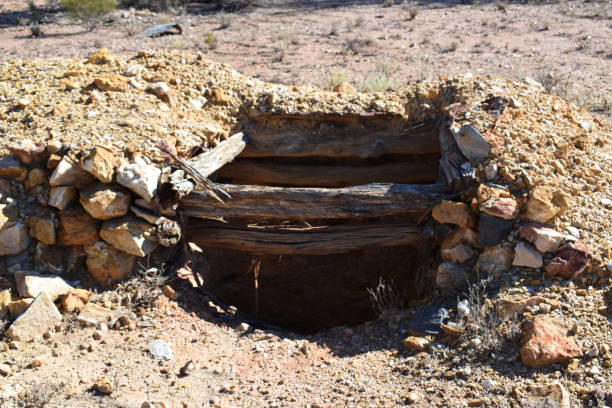
It is this information gap that has historically made re-entry into mines difficult, dangerous, and in some cases, impossible.
UNEXMIN’s response is a step change in how the industry approaches legacy assets. The company aims to develop a fully autonomous, multi-platform Robotic Explorer, comprising three robots sharing the workload, using non-contact, non-damaging methods for exploration and 3D mine mapping of flooded and deep mines in Europe.
As the global hunt for critical minerals intensifies, explorers and developers are given an opportunity to turn their attention back to old ground.
Speaking to Mining.com.au, reclamation-focused explorer Sasquatch Resources (CSE:SASQ) CEO Pete Smith says waste reclamation at legacy mine sites must be among the most, if not the most efficient ways to add critical minerals and other elements to the supply chain.
“Typically, the waste is piled at surface, and very easily accessible via old mining roads,” Smith tells this news service.
“No new significant mining infrastructure is needed, except in the final stages of processing, which would happen at an already existing facility. The crushing and ore sorting can be done using a mobile set-up, on a closed loop, so there is no newly created waste.”
As a result, permitting timelines can be reduced, allowing dormant piles to transition into production far more rapidly than greenfields exploration and development projects.
Hunting for hidden value
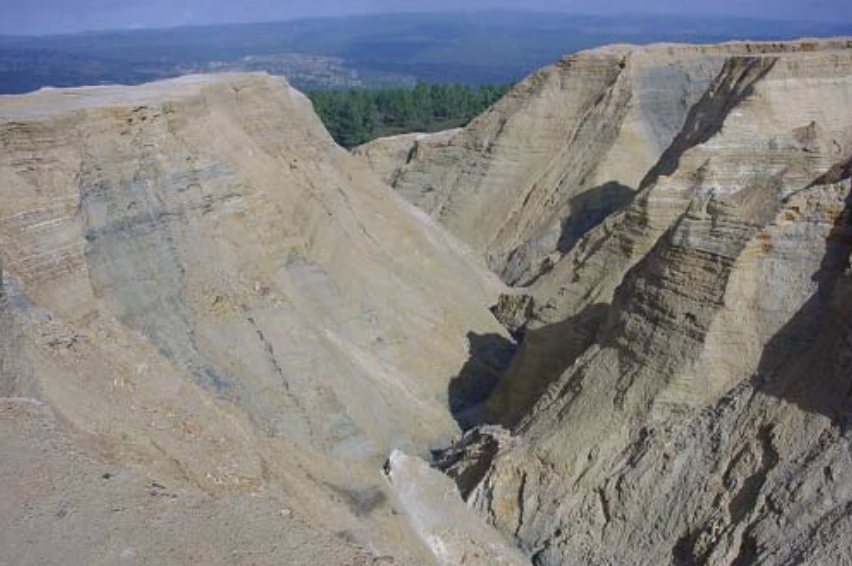
In Portugal alone, there are about 175 abandoned mining sites, of which 60 are old uranium workings, as previously reported.
Of these, 96 are considered to have a planned intervention, a report from Portuguese state-owned Empresa de Desenvolvimento Mineiro (EDM) says.
EDM is responsible for the environmental rehabilitation of abandoned and degraded mining sites, acting under an exclusive concession from the state. Most modern day mines are now reclaimed during and after the completion of mining activities,however, prior to the enactment of environmental laws, most abandoned mines were not reclaimed before the 1970s.
The Iberian Peninsula – covering 583,254km2 in southwestern Europe comprising Spain, Portugal, Andorra, Gibraltar, and a portion of France – hosts some of Europe’s oldest mining sites, notably Roman-era operations.
Spain’s Las Médulas, a vast Roman gold mining complex, and the 5,000-year-old Rio Tinto (ASX:RIO) mine in Huelva highlight the longevity of extraction in the region.
Rio Tinto’s Corta Atalaya open-pit, once considered the largest in Europe, remains a stark reminder of the region’s industrial past. The site features abandoned industrial railways and toxic tailings.
Back in Portugal, the São Domingos Mine, which operated for 112 years, now contains a large flooded acid pit. The mine has endured environmental hazards that have been partially repurposed for industrial heritage tourism.
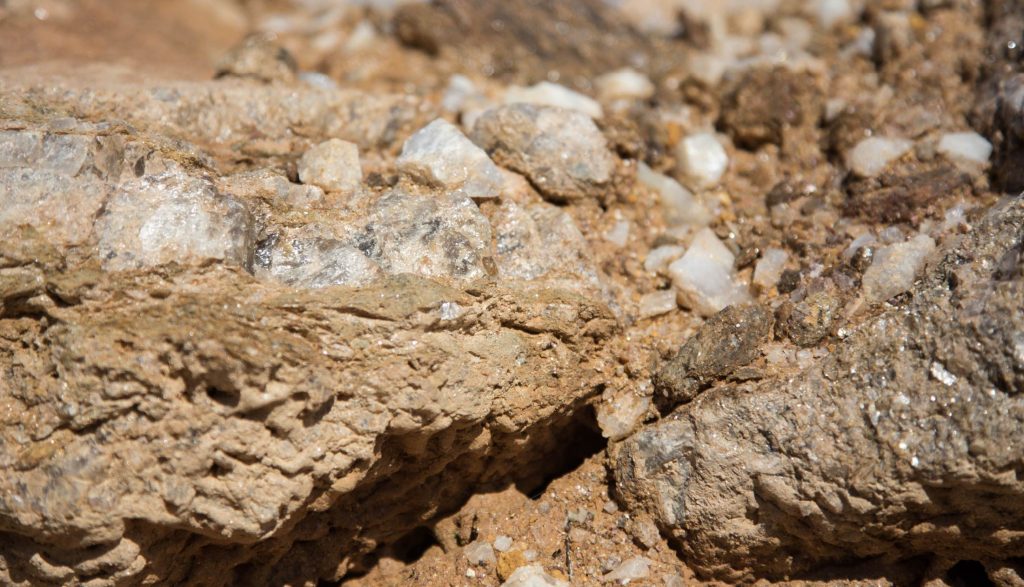
Further challenges persist at sites like the Penouta Tin-Tantalum-Niobium Mine in Spain, where historical abandonment led to heavy metal contamination. Operated by Strategic Minerals Spain, the mine focused on reprocessing historical waste, but faced legal suspensions regarding its permits in late 2023.
Strategic Minerals Spain is currently operating the project of this mining site and will continue to do so for 30 years.
Meanwhile, the Azuaga-Berlanga Mining Complex situated in Extremadura, Spain contains over 200 sites of abandoned lead-zinc mines, notably the San Rafael Mine which closed in the mid-20th century.
According to the National Institutes of Health, lead-zinc mining is a source of highly toxic metal pollution, including pollution from arsenic, tin, thallium, nickel, and silver – to name a few.
This legacy has left a long environmental shadow across former mines and mining regions, where abandoned sites continue to pose risks to ecosystems and surrounding communities decades after operations cease.
It is this lingering impact that is now driving renewed interest in reassessing and, in some cases, rehabilitating these historical assets.
“I think there is simply a great case for revisiting historical sites generally,” Smith says.
“The added benefit to the environment also can’t be ignored. The plain fact is that many of these sites come from an era when there were no reclamation and closure requirements.
“The sites are often dangerous and environmentally hazardous.”
Revival in the Nordic Shield
Further north in Europe is the Fennoscandian Shield, also known as the Nordic Shield, covering much of Norway, Sweden, and Finland, which tells a similar story.
The Nordic Shield has a long mining history, leaving behind a plethora of abandoned or decommissioned mining sites. These sites range from historical ore mines to Arctic coal facilities, presenting similar environmental challenges and opportunities for industrial heritage exploration as across Spain and Portugal.
Sweden’s Blötberg Mine is an underground iron ore deposit that is currently being redeveloped for a potential restart by Nordic Iron Ore (FRA:NIO). The mine is one example of how modern permitting, environmental oversight, and improved economics are enabling previously unviable projects to be reconsidered.
The processing concession, granted in 2011, runs for 25 years with the right to extend. The processing concession entails the right to extract and use iron, lanthanum and apatite. An environmental permit was granted in 2014.
Meanwhile in Svalbard, Norway, Mine Number Two, also referred to as the Santa Mine, is an abandoned coal mine. The mine was opened in 1913, operating until 1964. It was heavily damaged by a German battleship during the second world war in 1942.
The mine is known for being partially preserved, with mining equipment still inside, though many parts are sealed by ice or structural collapse.
What is emerging across Europe is a shift in perception. Abandoned mines are no longer liabilities, but potential opportunities. Some of these mines hold critical minerals, data, and infrastructure ready to be rediscovered.
Technologies like those developed by UNEXMIN or reclamation strategies held by Sasquatch Resources enable safe, scalable access to previously unreachable environments.
As Europe pushes toward supply chain security and the energy transition, reviving historical mining districts may prove to be essential. In many ways, the sector is having its own Easter moment, bringing once forgotten assets back into the spotlight.
Write to Aaliyah Rogan at Mining.com.au
Images: Mining.com.au, iStock, EDM, Strategic Minerals & Nordic Iron Ore