



Kodal Minerals (AIM:KOD) has entered into a binding agreement with GH Geo-Consult to earn up to an 80% interest in the Asamankese Lithium Project in Ghana.
Under the agreement, Kodal has already acquired an initial 10% interest in Asamankese, following an exclusivity period for US$300,000 ($428,934).
The company will also commit to a minimum spend of around US$13 million over five years to acquire the entire 80% interest. Kodal is also required to conduct a resource estimate and a Definitive Feasibility Study for the project.
CEO Bernard Aylward says Asamankese represents a strategic expansion of the company’s lithium footprint in West Africa and provides a new growth opportunity in Ghana.
“Exploration to date has identified well-developed pegmatite trends at Amantra and Nfranta, with high-grade rock chip sampling returning up to 3.02% lithium oxide,” Aylward says.
“Our ongoing field program is focused on refining target zones to guide our upcoming reconnaissance diamond drilling, with the results guiding the next stages of exploration.”
Asamankese is a greenfield lithium exploration project located in Ghana’s Eastern Region. The licence area covers 156km2 within the Birimian sequence, a geological province known for gold, base metals, and lithium-bearing pegmatites.
Africa is considered a fast-growing hub for global lithium production, led by Zimbabwe, which accounted for 9.6% of the world’s production in 2025. Output is also rising in Mali, Ghana, Namibia, and the Democratic Republic of the Congo.
Niobium in Malawi and Angola
Africa is at the centre of rising global demand for critical minerals such as lithium, graphite, cobalt, coltan, manganese, platinum, tantalum, and bauxite — to name a few.
The scale of Africa’s endowment is considerable. The African Development Bank estimates that the continent holds around 30% of the world’s critical mineral reserves, as previously reported.
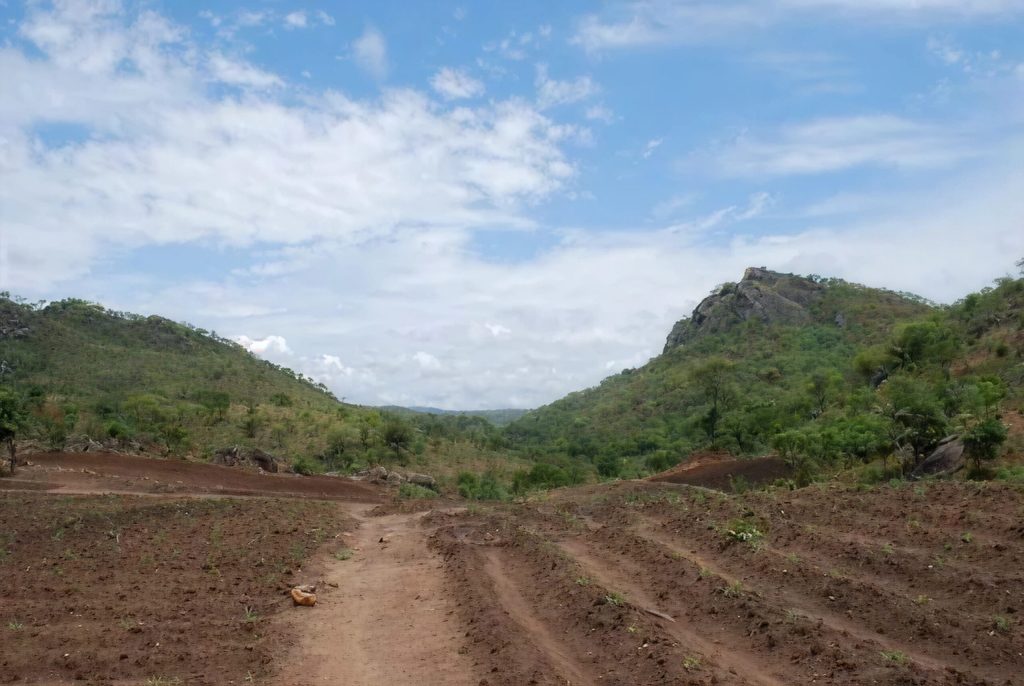
Niobium is also emerging as a prominent critical mineral in Africa, with Globe Metals & Mining’s (ASX:GBE) Kanyika Project in Malawi moving towards production.
Africa currently has no large-scale commercial niobium producing mines, though the continent contributes a modest output totalling 730 tonnes.
However, Globe Metals & Mining’s project is slated to become one of the continent’s primary niobium mines.
Kanyika is designed to produce around 3,000 tonnes of high-purity niobium pentoxide per year at full scale. Production is targeted for 2028 as financing and study activities continue.
Connected Minerals (ASX:CML) also owns the Bailundo Niobium and Rare Earth Element (REE) Project in Angola. The project contains a well-mapped carbonatite complex spanning 7km in diameter and is connected to the strategic Lobito Atlantic Railway corridor.
In mid-September, Connected began diamond drilling at Bailundo targeting the Central/Southern zone. A reverse circulation drill rig is also expected to arrive onsite shortly.
“This is the first systematic drill testing of the priority targets at the project, across what is a large prospective carbonatite system,” CEO Stephen Wetherall says.
Uranium in Namibia
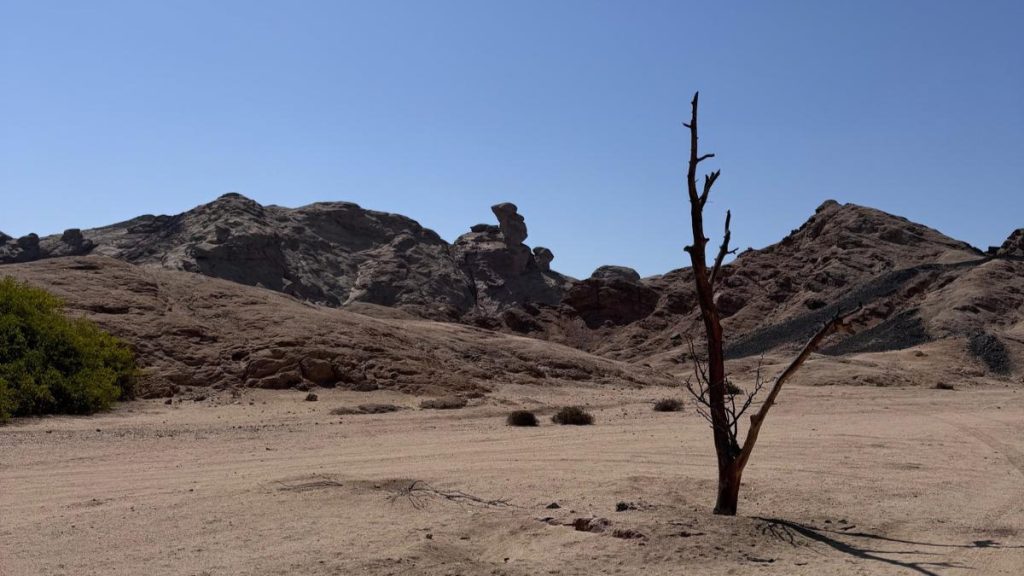
In addition to its Angola project, Connected Minerals explores for uranium in Namibia via its Etango North-East and Swakopmund projects.
Africa accounts for roughly 18% of global annual uranium production, making the continent a major supplier for international nuclear energy expansion.
Namibia is ranked the continent’s largest uranium producer and the world’s third-largest. In 2024, the country produced 7,333 tonnes of uranium, as reported by the World Nuclear Association.
Etango covers 30km2 and is close to advanced uranium projects. Meanwhile, Swakopmund covers 125km2 and demonstrates potential for calcrete-hosted uranium deposits within channels running off nearby ‘hot’ granites with prospective targets.
Gold in Eritrea
Alongside lithium, niobium, uranium, and rare earths, Africa is a leading gold-producing region, with total mine production surpassing 1,000 tonnes annually.
Africa’s gold potential has attracted many explorers and developers, including Danakali (NSX:DNK), which has submitted an application for an exploration licence for the Ela Gedel Gold and Base Metal Project in Eritrea.
In September, Danakali announced it remains positive for the project’s development after the US Treasury Department’s Office of Foreign Assets Control confirmed a national emergency had expired.
The company, which is awaiting the Ela Gedel exploration licence, believes this change will be positive for foreign investment in Eritrea and may assist in the licence application.
An exploration licence application was submitted in November 2023, with the licence area spanning 1,500km2.
If Danakali is granted the Ela Gedel licence, the company intends to open a branch in Asmara and create a local exploration team.
Kodal Minerals’ recent binding agreement for the Asamankese Lithium Project is just one example of the exploration and development opportunities emerging across Africa.
Write to Aaliyah Rogan at Mining.com.au
Main image: Kodal Minerals


