


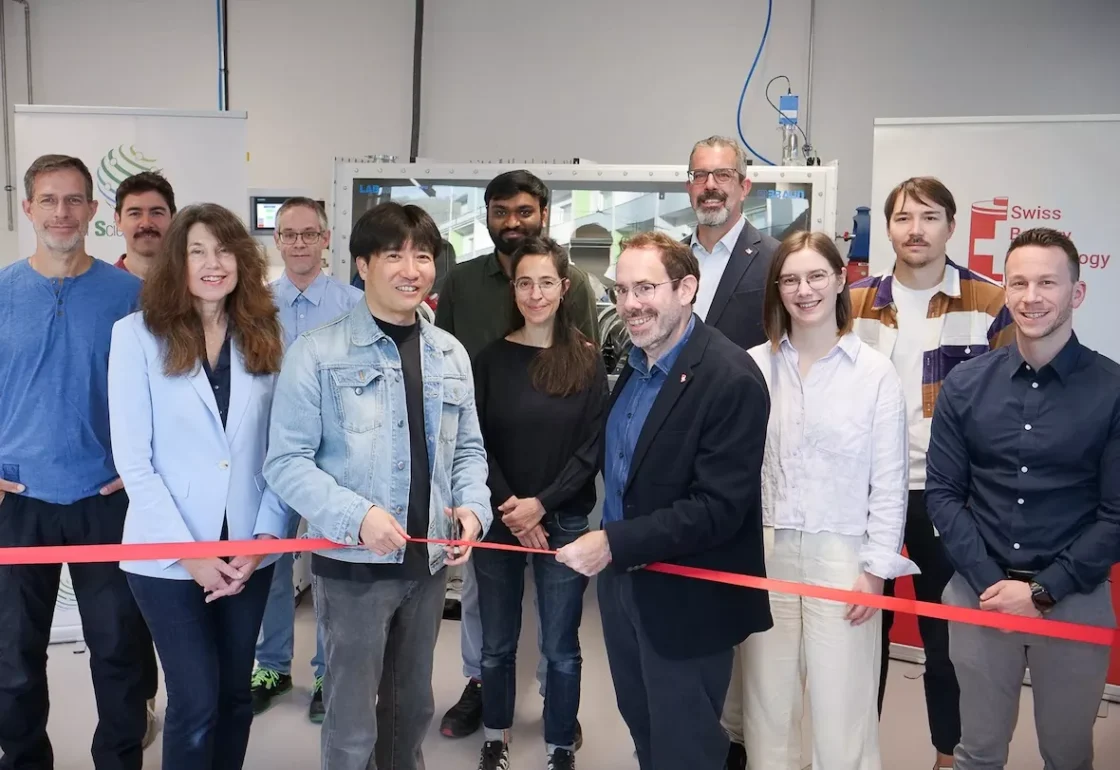
Japanese technology company Green Science Alliance and the Swiss Battery Technology Center have opened a battery direct regeneration laboratory at the Swiss Innovation Park in the canton of Bern, Switzerland.
Battery direct regeneration is a recycling method that repairs and reuses spent lithium-ion battery components, including cathodes and anodes, without breaking them down into basic chemical elements.
It restores the damaged crystal structures and replenishes lost lithium directly, cutting energy use and costs compared to traditional smelting or acid leaching.
Under the collaboration, Green Science Alliance provides the technology. Meanwhile, the Swiss Battery Technology Center contributes research capability, infrastructure, and laboratory facilities.
Both parties will conduct materials assessment, electrode and cell manufacturing, and performance testing, alongside industrialisation and scalability evaluation.
The technology directly regenerates cathode active materials from mechanically processed black mass without acid-base leaching for individual metal extraction. This covers both nickel-manganese-cobalt (NMC) and lithium-iron-phosphate (LFP) chemistries.
The new laboratory in Switzerland aims to demonstrate advantages in environmental sustainability and economic feasibility, providing an emerging technological pathway towards a low-carbon circular economy.
Circular economies
A circular economy is a system designed to minimise waste by keeping materials, products, and resources in use for as long as possible. It is considered a key strategy for helping societies become more resource-efficient and environmentally friendly.
The European Union’s transition to a circular economy is crucial for reducing pressure on natural resources, halting biodiversity loss, and achieving climate neutrality by 2050.
Due for adoption this year, the Circular Economy Act seeks to establish a single market for secondary raw materials, increase the supply of recycled materials, and stimulate demand for those materials.
Currently, Europe’s circularity rate is about 12%. The goal is to double it to 24% by 2030.
Write to Aaliyah Rogan at Mining.com.au
Main image: Greater Geneva Bern area


