
MDF Global MDF Global
Apple’s iPhone boom highlights critical minerals powering smartphones•Presenting a united front for Queensland’s copper sector•Thailand seeks Myanmar mine access amid arsenic pollution•Egypt to set up state-backed company to license artisanal gold miners, free detainees•Brixton closes $7.4 million raise for Thorn, Langis projects•Heliostar banks record $78.7 million for Ana Paula push•Mining giants bet billions on 2030 supply crunch•Gunnison Copper reports Q3 output, revenue surge•Triumph Gold targets $15.46 million for Yukon push•African Rainbow Minerals faces a jobs dispute at Nkomati mine•Angola seeks 10% stake in De Beers under Anglo’s proposed exit•Gold price rebounds but heads for biggest weekly loss since June•Teck copper strike reaches BC port as operator sues union•Copper benchmark rocked by miner-smelter tug-of-war•Zimbabwe mining bill targets community, environmental safeguards•Mount Isa critical minerals hub secures Feasibility Study funding•Eramet initiates $814.5 million capital raise to reduce debt•Richemont backs natural gemstones, declines De Beers comment•‘Tis the season for administration as Comlek falls a second time•OceanaGold Philippines trials wireless blasting at Didipio mine Apple’s iPhone boom highlights critical minerals powering smartphones•Presenting a united front for Queensland’s copper sector•Thailand seeks Myanmar mine access amid arsenic pollution•Egypt to set up state-backed company to license artisanal gold miners, free detainees•Brixton closes $7.4 million raise for Thorn, Langis projects•Heliostar banks record $78.7 million for Ana Paula push•Mining giants bet billions on 2030 supply crunch•Gunnison Copper reports Q3 output, revenue surge•Triumph Gold targets $15.46 million for Yukon push•African Rainbow Minerals faces a jobs dispute at Nkomati mine•Angola seeks 10% stake in De Beers under Anglo’s proposed exit•Gold price rebounds but heads for biggest weekly loss since June•Teck copper strike reaches BC port as operator sues union•Copper benchmark rocked by miner-smelter tug-of-war•Zimbabwe mining bill targets community, environmental safeguards•Mount Isa critical minerals hub secures Feasibility Study funding•Eramet initiates $814.5 million capital raise to reduce debt•Richemont backs natural gemstones, declines De Beers comment•‘Tis the season for administration as Comlek falls a second time•OceanaGold Philippines trials wireless blasting at Didipio mine
Antimony Reward

‘High-grade’ Antimony Reward for Iltani ‘far beyond’ historical drilling  

Iltani Resources (ASX:ILT) is gearing up to start drilling its Antimony Reward Project in northern Queensland after grades reached up to 46.5% antimony in recent sampling.

Fourteen samples collected from Vein System 1 returned an average grade of 16.2% and a peak result of 46.5%, while five samples taken from Vein System 2 showed an average grade of 10.9% and a top result of 17.7%.

Managing Director Donald Garner says it is good to see the presence of high-grade antimony mineralisation in both mapped vein systems, and more importantly, extending far beyond the area of historical drilling.

“We are focused on commencing drilling at the project as soon as we can – and we are targeting end of September as a start date,” he says.
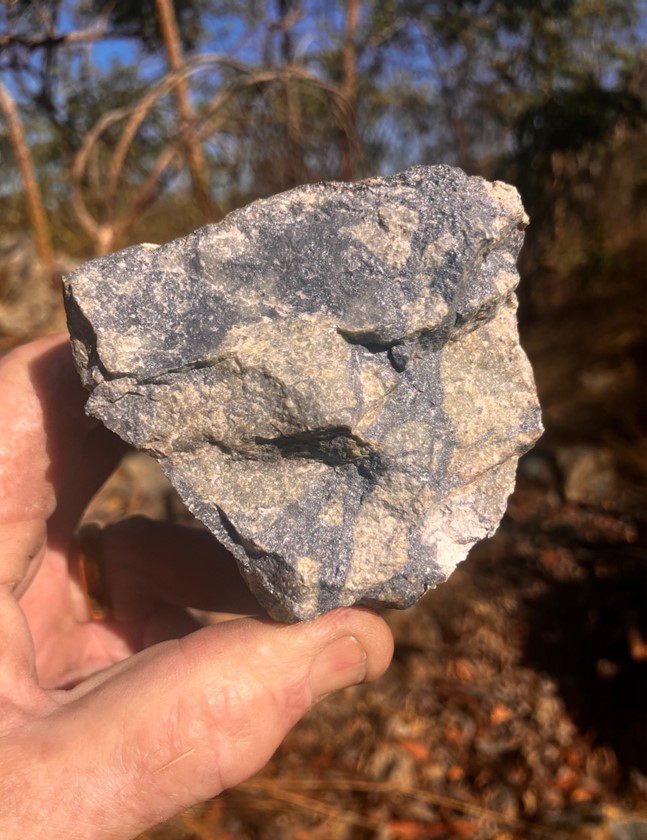
Iltani is planning a 1,500m reverse circulation drilling program comprising about 15 to 20 holes.  

Garner says with antimony currently trading around US$25,100 ($37,440) a tonne, “there is not a better time to be doing this work”.

This follows China’s recent introduction of export restrictions on some antimony products. China is the world’s largest producer of the critical mineral. 

The “high-grade” results from the Antimony Reward Project extend beyond the zone of historical drilling on Vein System 1, which has a strike extent of over 500m so far, while Vein System 2 has a current strike extent of over 300m and has never been drilled. 

Part of Vein System 1 was drill tested in 2008.

Garner also notes that the antimony mineralisation sampled so far contains “exceptionally low” arsenic.

“Arsenic is a key penalty element with regards to antimony concentrates, so this is another good sign,” he says. 
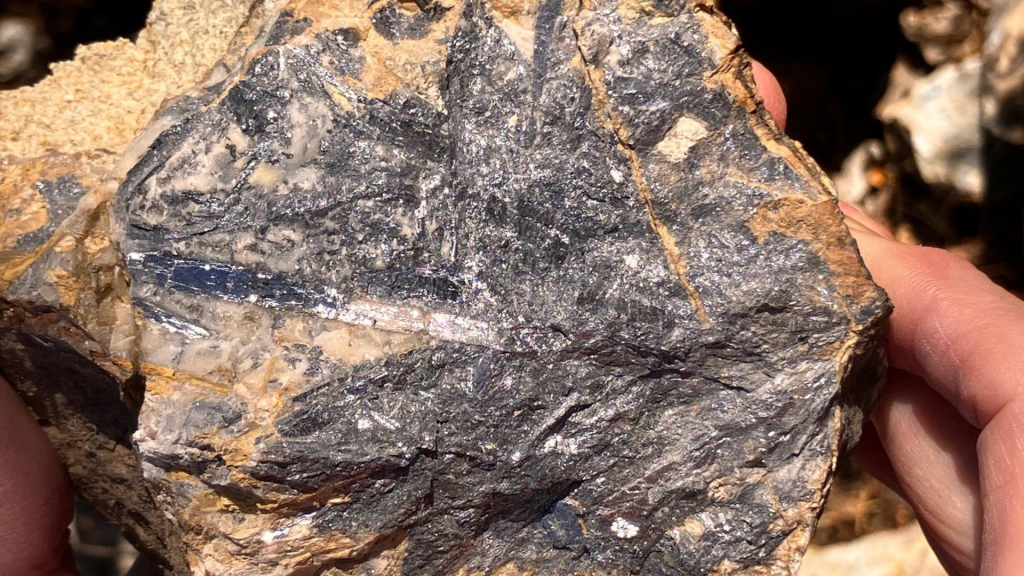
Iltani has signed a Conduct and Compensation Agreement with the landowner and is in talks with the First Nations group to begin clearance activities.

The Antimony Reward Project forms part of the larger 330km2 Herberton Project that sits about 150km west of Cairns.

Mining activity commenced in the Herberton Region in 1880 following the discovery of tin. There are over 2,400 known historical mines and mineral occurrences – including tin, copper, zinc, lead, silver, antimony and tungsten – in the area.

Antimony Reward is located within the same structure, the Featherbed Volcanic Complex, that hosts Iltani’s Orient Silver-Indium deposit. 

Write to Angela East at Mining.com.au 

Images: Iltani Resources

Add to Watch List:
Author Image
Written By Angela East
Content Director Angela East is an experienced business journalist and editor with over 15 years spent covering the resources and construction sectors and more recently working as a communications specialist handling media relations for junior resources companies.